

Is ovulation painful after IVF?
Medically reviewed by Dr. Aarti Deenadayal Tolani, Fertility Specialist & IVF Expert, Mamata Fertility Hospital, Hyderabad
Yes, many women notice that ovulation feels sharper or more pronounced after IVF. Your ovaries undergo significant stimulation during an IVF cycle, and residual sensitivity, small functional cysts, or temporarily enlarged follicles can make subsequent natural ovulations more noticeable.
Most ovulation pain after IVF is mild, one-sided, and resolves within a few hours. If pain is severe, bilateral, or comes with rapid bloating, fever, reduced urine output, or difficulty breathing, contact your doctor immediately these are not ovulation symptoms.
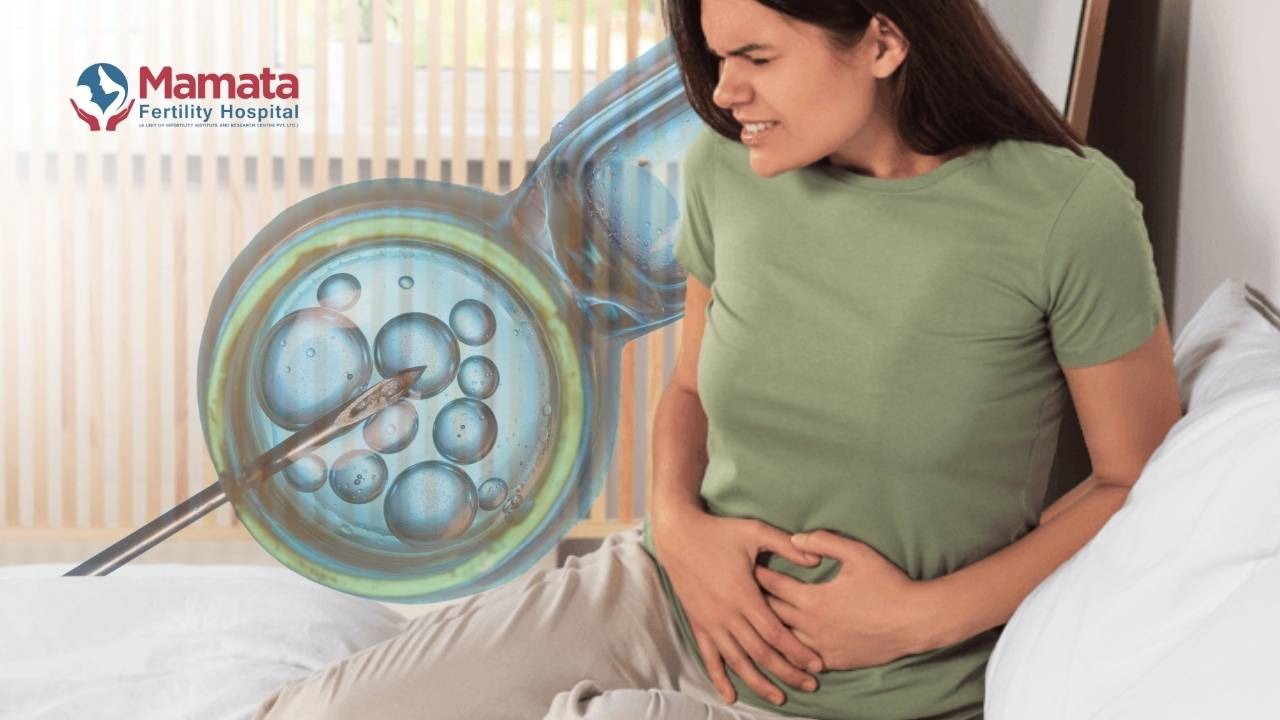
What Ovulation Pain Actually Is?
Mittelschmerz — German for “middle pain” is the pelvic discomfort some women feel at the moment of egg release. It typically presents as a dull ache or sharp twinge on one side of the lower abdomen, corresponding to whichever ovary is ovulating that month. It lasts minutes to a few hours, occasionally up to 48 hours, and may be accompanied by light spotting.
Roughly 20–40% of women experience Mittelschmerz regularly in a natural cycle. After IVF, a noticeably higher proportion report it, partly because the ovaries are genuinely more reactive post-stimulation, and partly because patients are paying far closer attention to their bodies than before.
Understanding Ovulation in the Context of IVF
In a natural menstrual cycle, ovulation is when your ovary releases one egg, typically around day 14 of your cycle. Some women feel a sharp twinge of pain on one side of their lower abdomen during this time, known as ovulation pain.
But during IVF, ovulation doesn’t happen the usual way. Instead, you take fertility medications to stimulate your ovaries to produce multiple eggs. This process is called ovarian stimulation, and it can make your ovaries enlarge significantly. After several days of injections and monitoring, your doctor performs an egg retrieval procedure to collect those eggs before they are naturally released.
So if you’re feeling IVF ovulation symptoms like bloating, cramping, or abdominal discomfort, it’s most likely related to your stimulated ovaries or the recovery from egg retrieval—not actual ovulation.
Ovulation Pain in FET Monitoring Cycles
In a natural cycle FET (frozen embryo transfer), ovulation is not suppressed — it is actively tracked. Your doctor monitors follicle growth via transvaginal ultrasound until the dominant follicle reaches 18–20mm, then waits for the natural LH surge. The embryo is transferred at a precise number of days after ovulation is confirmed.
This means ovulation happens in real time, and many patients feel it very clearly — because they know exactly what to look for and they are being scanned every 1–2 days.
Normal in a natural cycle FET:
- Mittelschmerz on the side of the dominant follicle at mid-cycle
- Light spotting or a slight temperature rise around the time of the LH surge
- Shift from watery, stretchy cervical mucus to thicker mucus within 24–48 hours of ovulation
- Pelvic fullness for 12–24 hours after the LH surge
Hormone-replacement cycle (HRT) FET is different. In HRT-FET, oestrogen and progesterone are administered externally, follicle development is suppressed, and no ovulation occurs. If you’re on an HRT protocol, any pelvic pain you feel during stimulation or around transfer time is not ovulation pain and should be reported to your clinic.
For a full explanation of FET protocols and timelines, see our frozen embryo transfer treatment.
Why You Might Feel Pain After IVF?
After egg retrieval, it’s very common to feel some pelvic soreness. I often describe it to my patients as “feeling like a very full balloon in your lower belly.” That sensation is primarily due to the enlarged ovaries, and in some cases, mild fluid retention in the abdomen.
Ovarian stimulation pain is usually a result of:
- Swollen ovaries that have developed multiple follicles
- Small amounts of fluid leaking into the abdomen after retrieval
- Trigger shot effects (used to mature the eggs before retrieval)
- Minor cramping or tenderness from the retrieval procedure itself
This pain can sometimes mimic natural ovulation discomfort, but it’s a post-procedural side effect rather than a biological egg release. If you’re in the “two-week wait” phase after embryo transfer, this discomfort may persist as your body adjusts hormonally.
Is Cramping During Ovulation Normal After IVF?
I’m frequently asked, “Is cramping during ovulation normal after IVF?” The answer is: yes, cramping can be normal, but it isn’t always ovulation-related. After egg retrieval, your ovaries may remain enlarged and sensitive for days, even weeks. This lingering cramping is expected and not usually a cause for concern.
However, we do advise watching out for severe or worsening symptoms, especially if they include:
- Sudden or intense pelvic pain
- Severe bloating or rapid weight gain
- Shortness of breath
- Nausea or vomiting
These could be signs of Ovarian Hyperstimulation Syndrome (OHSS)—a rare but important complication where the ovaries become too swollen and leak fluid into the abdomen. In most IVF patients today, careful medication planning keeps this risk low, but we remain vigilant in monitoring every patient.
Ovulation Pain vs OHSS: A Critical Distinction
The single most important distinction to make after IVF is between normal ovulation pain and Ovarian Hyperstimulation Syndrome (OHSS). OHSS is a medical complication; Mittelschmerz is a physiological norm.
| Feature | Ovulation Pain (Mittelschmerz) | OHSS |
|---|---|---|
| Timing | Mid-cycle, during natural ovulation | 3–10 days post-retrieval (early); 10+ days post-retrieval if pregnant (late) |
| Location | One side only | Both sides; generalised abdominal bloating |
| Duration | Minutes to 48 hours | Days to weeks if untreated |
| Severity | Mild to moderate | Moderate to severe |
| Associated symptoms | Possible light spotting | Nausea, vomiting, rapid weight gain (>1 kg/day), shortness of breath, reduced urine output |
| Abdominal appearance | Normal | Visible distension |
| Action required | Monitor at home | Contact clinic immediately |
Late OHSS triggered by rising hCG in early pregnancy can occur even in women trying to conceive naturally after IVF, not just those who transferred an embryo. If you have bilateral ovarian pain, rapid bloating, or difficulty breathing after a positive pregnancy test following IVF, this is an emergency.
How We Evaluate and Manage IVF-Related Pain?
When someone shares that they’re feeling unusual pain after IVF, our first step is a gentle but thorough evaluation. We ask questions about when the pain started, where it’s located, and what other symptoms you’re feeling. We might recommend:
- Pelvic ultrasound to check ovary size or fluid in the abdomen
- Blood tests to look for signs of hormonal imbalance or early pregnancy
- Regular weight and fluid checks to rule out OHSS
Most of the time, the discomfort settles with time and supportive care—like rest, hydration, and simple pain relief. We usually suggest over-the-counter medications like ibuprofen or paracetamol, and we always encourage our patients to take it easy for a few days post-procedure.
If you have a history of endometriosis, fibroids, or pelvic infections, the pain might feel more intense—but it’s still something we can manage together.
Tips to Ease Discomfort After IVF
From what I’ve seen in clinical practice, here are a few simple, effective ways to feel more comfortable during your post-IVF recovery:
- Apply a heating pad to your lower abdomen to soothe cramping
- Stay hydrated—water helps reduce bloating and supports ovarian recovery
- Avoid heavy lifting and intense exercise until cleared by your fertility specialist
- Wear loose clothing—your belly may feel more sensitive than usual
- Track your symptoms so you can report any changes to your doctor right away
Most of all, try to rest. I know the waiting and uncertainty can be emotionally draining, but this is also a time to listen to your body and give yourself permission to heal.
What’s Normal vs What Needs Urgent Attention?
Normal after IVF:
- Mild, one-sided cramping at mid-cycle (Mittelschmerz)
- Pelvic fullness or pressure for a few hours around ovulation
- Light spotting at the time of the LH surge
- Mild bloating in the 1–2 weeks post-retrieval that gradually resolves
Seek same-day medical attention for:
- Severe or worsening pelvic pain not responding to paracetamol
- Pain on both sides of the pelvis simultaneously
- Abdominal distension that develops rapidly (measure your waist gain of 3–4 cm in 24 hours is a warning sign)
- Fever above 38°C combined with pelvic pain (possible infection)
- Positive pregnancy test with one-sided severe pain and spotting — rule out ectopic pregnancy (see our guide on pain and heavy bleeding after IVF)
- Shoulder tip pain (referred pain from diaphragmatic irritation by ascitic fluid a severe OHSS sign)
- Shortness of breath or passing significantly less urine than usual
Managing Ovulation Discomfort After IVF
For mild Mittelschmerz that is clearly ovulation-related and not a red flag, the following are safe and effective:
Warm compress. A warm water bottle or heat pad applied to the lower abdomen relieves pelvic cramping for most women. Safe at any stage of the natural cycle.
Paracetamol (acetaminophen). Effective for mild-to-moderate ovulation pain. Take as directed on the packet.
Avoid NSAIDs around ovulation if trying to conceive. Ibuprofen, diclofenac, and other non-steroidal anti-inflammatory drugs can theoretically interfere with follicle rupture. The prostaglandin pathway these drugs inhibit is the same mechanism that drives the follicle to release the egg. If you are monitoring for ovulation in a natural FET cycle or trying to conceive naturally, use paracetamol instead.
Stay hydrated. Adequate fluid intake supports pelvic fluid reabsorption and reduces the risk of functional cysts persisting. Aim for at least 2 litres of water daily in the weeks after retrieval.
Avoid intense exercise in the periovulatory window post-IVF. Ovarian torsion though rare is a recognised complication in enlarged post-stimulation ovaries. Light walking is fine; high-impact or twisting exercises should be avoided until your ovaries return to normal size (confirmed by ultrasound, typically 2–4 weeks after retrieval).
Track side, severity, and timing. Noting which side hurts and precisely when allows your doctor to distinguish true Mittelschmerz from cyst pain, residual post-retrieval discomfort, or a structural issue. A simple one-line note in a period-tracking app is sufficient.
When Should You Call Your Doctor?
At Fertility Hospital Hyderabad, we always tell our patients: no concern is too small. If something feels “off” or if the pain seems unusual for your body, we want to hear about it. You should definitely call if:
- The pain becomes sharp or one-sided
- You develop a fever or chills
- You have trouble urinating or breathing
- You feel dizzy or faint
These could indicate complications like ovarian torsion or infection, both of which are rare but need urgent attention.
Final Thoughts
While you may experience ovulation pain after IVF, it’s usually not true ovulation pain, but rather a result of ovarian stimulation pain or healing from the egg retrieval process. Cramping, bloating, and mild discomfort are common and typically resolve with rest and supportive care.
If you’re feeling unsure or overwhelmed by these symptoms, please know you’re not alone. Many women in the IVF process experience similar sensations, and there are safe, compassionate ways to ease your discomfort.
At Mamata Fertility Hospital Hyderabad, we’re here to guide you through every step of your fertility journey—not just the procedures, but the emotions and physical changes that come with it. Whether you’re recovering from egg retrieval or preparing for your next step, your comfort and peace of mind matter deeply to us.

Dr Aarti Deenadayal Tolani
MBBS, MS ( OBGYN), FICOG
Clinical Director, Scientific In- Charge & Fertility Consultant with 20+ years Of Experience
Her Expertise:
CONSULT FERTILITY SPECIALIST

BLOGS & ARTICLES
Why Am I Not Getting Pregnant? Common Causes in Couples
Don’t start IVF without asking these critical questions. From success rates to lab quality and costs — get fully prepared at Mamata Fertility Hospital Hyderabad.
How Long Should You Try to Conceive Before Seeing a Fertility Doctor?
Daily masturbation doesn’t harm health or fertility. Learn the facts and bust myths with expert advice from Mamata Fertility Hospital.
IVF Cost in Hyderabad 2026 — Full Breakdown & Transparent Pricing
Confused about IVF pricing in Hyderabad? Get a clear, itemised breakdown of costs, advanced procedures, and what to watch out for — by Mamata Fertility Hospital.
Choosing a Fertility Gynaecologist & Fertility Testing in Hyderabad
Nervous about your first fertility clinic consultation in Hyderabad? Get a step-by-step guide on what to expect, which tests are involved, and how to prepare — by Mamata Fertility Hospital.
What to Expect During Your First Fertility Consultation in Hyderabad?
Need a fertility clinic consultation Hyderabad? Learn how to choose the best specialist and what to expect from fertility testing in Hyderabad to build your family.
High Risk Pregnancy: How Frequently Should I Visit My Doctor
High-risk pregnancy requires closer monitoring. Know how often doctor visits are needed, tests involved, and why regular checkups are important.
How To Stop Prolonged Periods Naturally?
Discover effective natural remedies for prolonged periods. Learn tips and techniques to manage your menstrual cycle and regain your health today!
Factors Influencing Endometrial Thickness in Postmenopausal Women
Discover ideal endometrial thickness for postmenopausal health at Mamata Fertility Hospital, your trusted fertility hospital Hyderabad. Get expert care & peace of mind today!
Is Bleeding After Menopause Always Cancer?
Bleeding after menopause is not always cancer. Understand possible causes, risk factors, and when postmenopausal bleeding needs urgent evaluation.
Is Sleeping on Your Back During Pregnancy Risky?
Is sleeping on your back during pregnancy poses risks? Discover expert insights and tips for safe sleeping positions for a healthy pregnancy.
