

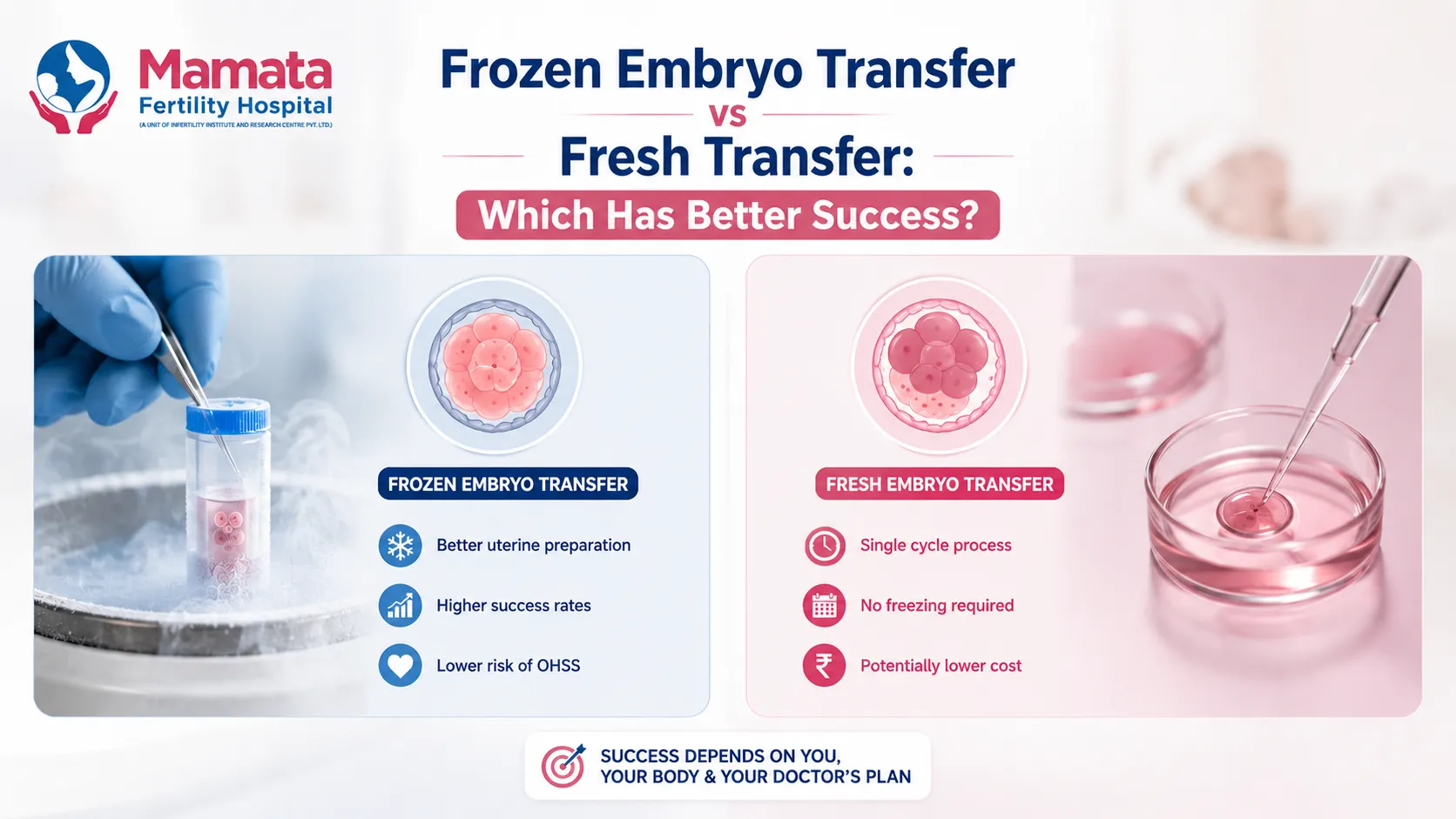
Frozen Embryo Transfer vs Fresh Transfer: Which Has Better Success?
Welcome. I am Dr Mamata Deenadayal. In my decades of practice as a fertility specialist at Mamata Fertility Hospital, Hyderabad, I have supported countless women facing a diagnosis of uterine fibroids. When you are trying to conceive, or simply hoping to preserve your future fertility, discovering that you have fibroids can be deeply distressing.
Often, women come into my consultation room feeling entirely overwhelmed by the medical advice they have received. You might be feeling confused about whether to choose fibroid removal surgery (myomectomy) or uterine fibroid embolization (UFE). You are likely asking yourself: “Which option is safer? What will it cost? And most importantly, which treatment will protect my ability to have a baby?”
Please know that you do not have to make this significant decision alone. The choice between myomectomy vs UFE requires careful, expert guidance tailored entirely to your unique reproductive goals. In this comprehensive guide, I will walk you through the biological, practical, and financial realities of both procedures, helping you understand exactly which path offers the best outcome for your fertility and your overall health.
What Are Uterine Fibroids?
Before we compare the treatments, it is essential to understand the condition. Uterine fibroids (leiomyomas) are non-cancerous growths that develop in or on the muscular walls of the uterus. They are incredibly common, particularly for women in their reproductive years.
Fibroids can range in size from a tiny seed to a large melon. Depending on their size and precisely where they grow within the womb, they can cause a variety of distressing symptoms. Common signs include exceptionally heavy menstrual bleeding, severe pelvic pain, frequent urination, and lower back ache.
Crucially, fibroids can also be a significant cause of infertility. If a fibroid distorts the inner cavity of the uterus, it can block the fallopian tubes or prevent a healthy embryo from implanting in the uterine lining. When fibroids begin to interfere with your quality of life or your ability to conceive, we must look at targeted uterine fibroids treatment.
Treatment Options for Fibroids
If we determine that your fibroids need to be treated, you generally have two main pathways to consider, aside from simple symptom-management medications.
These are:
- Myomectomy: This is the surgical removal of the fibroids.
- Uterine Fibroid Embolization (UFE): This is a minimally invasive procedure designed to shrink the fibroids by cutting off their blood supply.
Both are effective at relieving pain and heavy bleeding, but they operate very differently and have vastly different implications for your future fertility.
What Is Fibroid Removal Surgery (Myomectomy)?
A myomectomy is a surgical procedure specifically designed to remove fibroids while meticulously preserving the healthy tissue of your uterus. This makes it a fertility-preserving surgery.
Depending on the size, number, and location of your fibroids, a myomectomy can be performed in three different ways:
- Hysteroscopic Myomectomy: Used for fibroids bulging directly into the uterine cavity. We pass a small camera and instruments through the vagina and cervix to shave away the fibroid. There are no incisions on your abdomen.
- Laparoscopic Myomectomy: A minimally invasive “keyhole” surgery. We make tiny incisions in your abdomen to insert a camera and delicate instruments to remove fibroids growing on the outer wall or within the muscle of the uterus.
- Open Myomectomy (Laparotomy): Reserved for very large or numerous fibroids. This involves a larger incision across the lower abdomen, giving the surgeon direct access to reconstruct the uterus safely.
The primary goal of any myomectomy is to physically eliminate the growths, instantly restoring the normal shape and function of your womb.
What Is Uterine Fibroid Embolization (UFE)?
Uterine Fibroid Embolization (UFE) is a fundamentally different approach. It is not a surgery; it is an interventional radiology procedure.
During an embolization procedure, you remain awake but lightly sedated. A specialist radiologist makes a tiny puncture in the artery of your groin or wrist. Using real-time X-ray guidance, they thread a very fine catheter up into the uterine arteries that supply blood to your fibroids.
Once the catheter is in the perfect position, tiny particles (like grains of sand) are injected. These particles block the blood flow to the fibroids. Starved of oxygen and nutrients, the fibroids gradually shrink and die off over the following weeks and months, which often alleviates the heavy bleeding and pelvic pressure.
Need Help Understanding Your Fibroid Treatment Options?
Navigating your choices can be overwhelming. Book a consultation at Mamata Fertility Hospital, Hyderabad today to receive a personalised assessment and clear, compassionate guidance tailored to your fertility goals.
Key Differences: Surgery vs Embolization
To help you visualise the choice between these two distinct paths, I have created a straightforward comparison table outlining the key differences between myomectomy and UFE.
| Factor | Myomectomy (Fibroid Removal Surgery) | UFE (Uterine Fibroid Embolization) |
| Procedure Type | Surgical (removing the tissue). | Minimally invasive (blocking blood supply). |
| Fertility Impact | Highly preferred. Restores uterine cavity for pregnancy. | May negatively affect fertility and blood flow to ovaries. |
| Recovery Time | Moderate (2 to 6 weeks depending on method). | Shorter (usually 1 to 2 weeks). |
| Hospital Stay | Day-case up to 3 days. | Same day or overnight discharge. |
| Recurrence Risk | New fibroids can grow later in life. | Treated fibroids shrink, but new ones can occasionally form. |
| Best For | Women actively planning future pregnancies. | Women who have completed their family and want to avoid surgery. |
Do You Need a Doctor Consultation
Cost Comparison in Hyderabad
Financial planning is a very real aspect of your healthcare journey. I believe in total transparency so you can make decisions without unnecessary stress.
When comparing fibroid removal surgery vs embolization, the costs can vary significantly based on several factors.
For a myomectomy, the cost depends heavily on the surgical method. A hysteroscopic procedure is generally more affordable than a complex, robotic-assisted laparoscopic surgery. The cost also covers the operating theatre, anaesthesia, and the surgeon’s fee.
For UFE, the cost is influenced by the advanced radiological imaging equipment required and the specialised particles used to block the arteries.
In general, the costs for both procedures in Hyderabad are comparable, though a complex open myomectomy with a longer hospital stay may be slightly higher than a standard UFE.
At Mamata Fertility Hospital, Hyderabad, we provide a clear, itemised understanding of the costs associated with your specific treatment plan after your initial consultation. We ensure you understand exactly what the procedure entails financially.
Fertility Outcomes: Which Option Is Better?
If you are hoping to carry a child in the future, this is the most critical section of this guide. When evaluating fibroid treatment for fertility, the medical consensus is incredibly clear.
Myomectomy is the gold standard for women who want to preserve their fertility.
By physically removing the fibroid, we instantly restore the anatomical integrity of your uterus. If a fibroid was previously blocking your fallopian tube or distorting the cavity where an embryo needs to implant, a myomectomy directly solves that mechanical problem. Once your uterus has healed from the surgery, it is fully capable of carrying a healthy pregnancy.
Why UFE is generally not recommended for fertility:
While UFE is fantastic for symptom relief, it poses unique risks to women wanting to conceive.
- Uterine Lining Damage: The particles used to block the blood supply can sometimes inadvertently reduce blood flow to the healthy endometrial lining, making it difficult for an embryo to implant.
- Ovarian Reserve: There is a known risk that the embolic particles can migrate into the ovarian arteries. This can severely damage your egg supply and, in some cases, trigger early menopause.
- Pregnancy Complications: Women who conceive after UFE have a statistically higher risk of miscarriage, preterm birth, and abnormal placenta attachment because the uterine wall contains dead, shrinking fibroid tissue rather than healthy, reconstructed muscle.
As your doctor, my priority is your safety and your dream of motherhood. If pregnancy is your goal, I will almost always advise against UFE and guide you towards a fertility-preserving myomectomy.
Which Treatment Is Right for You?
Choosing between myomectomy vs UFE is not a one-size-fits-all decision. We will make this choice together based on your unique circumstances:
- You Are Planning a Pregnancy: If you want to have a baby,now or in the future,a myomectomy is the safest, most effective choice to protect your reproductive organs.
- You Have Completed Your Family: If you do not wish to have any more children and your primary goal is to stop heavy bleeding without major surgery, UFE is an excellent, highly effective option.
- You Have Very Large Fibroids: If your fibroids are exceptionally large, UFE may not shrink them enough to relieve your symptoms completely. A myomectomy physically removes the bulk immediately.
Risks and Safety Considerations
Both procedures are generally very safe when performed by experienced specialists, but they carry distinct risk profiles.
Surgical Risks (Myomectomy):
As with any surgery, risks include bleeding, infection, and reactions to anaesthesia. There is also a risk of scar tissue (adhesions) forming in the pelvis, which is why choosing a highly skilled fertility specialist who uses delicate, tissue-preserving techniques is crucial. In exceedingly rare emergencies, severe bleeding could require a hysterectomy, though this is highly unusual in planned fibroid surgeries.
Embolization Risks (UFE):
UFE carries a risk of “post-embolization syndrome,” which involves a few days of pelvic pain, low-grade fever, and nausea as the fibroids begin to die. As mentioned, there is also the risk of premature ovarian failure if the particles affect the blood supply to your ovaries.
Looking for an Expert Fertility Specialist in Hyderabad?
Your reproductive health deserves the highest standard of clinical excellence. [Contact Mamata Fertility Hospital, Hyderabad] to schedule an appointment with our specialist surgical team.
Recovery and Results Timeline
Knowing what to expect after the procedure helps alleviate anxiety.
Fibroid Surgery Recovery:
If you undergo a hysteroscopic myomectomy, you can usually return to normal activities within a few days. For a laparoscopic procedure, recovery takes about two weeks. An open myomectomy requires about four to six weeks of rest. Symptoms like heavy bleeding and pelvic pressure are usually resolved immediately. If you are planning a pregnancy, I typically advise waiting three to six months for your uterine muscle to heal completely before trying to conceive.
Embolization Recovery:
Recovery from UFE is typically swift. Most women return to work within one to two weeks. However, because the fibroids shrink gradually, it can take three to six months to experience the full relief of your symptoms.
Why Expert Consultation Matters?
Fibroid treatment is never a straightforward, tick-box exercise. Achieving pain relief while protecting a future pregnancy requires precise timing, advanced technology, and deep clinical expertise.
A trusted fertility specialist in Hyderabad will not push you down a path that does not serve your long-term goals. The right doctor will meticulously map the location of your fibroids using advanced ultrasound or MRI, give you an honest appraisal of how they are impacting your fertility, and help you weigh the realities of surgery versus interventional radiology.
What Most Women Don’t Know Before Choosing Fibroid Treatment?
Before we conclude, I want to share a few critical insights that often surprise my patients:
- Not All Fibroids Need Treatment: If your fibroids are small, not distorting the uterine cavity, and not causing pain or heavy bleeding, we often choose to simply monitor them. Surgery is only for fibroids causing harm.
- The Wrong Choice May Affect Fertility: Many women opt for UFE because they fear surgery, only to discover years later that it has damaged their ovarian reserve or uterine lining. Always prioritise your future goals over short-term convenience.
- Early Diagnosis Improves Outcomes: Do not ignore heavy, painful periods. Diagnosing fibroids when they are small makes surgical removal much easier and far less invasive.
Conclusion
The decision between fibroid removal surgery vs embolization is one of the most important choices you will make regarding your reproductive health. While UFE is a brilliant, minimally invasive option for symptom relief in women who have completed their families, myomectomy remains the undisputed gold standard for women who wish to protect their fertility. By physically removing the fibroids and meticulously reconstructing your uterus, we provide the safest, healthiest environment for your future baby to grow.
You do not have to figure out this complex medical puzzle on your own. With expert guidance, you can make a choice that resolves your pain and protects your dreams of motherhood.
Take the Next Step Towards Relief and Motherhood
If fibroids are impacting your quality of life or your ability to conceive, it is time to seek trusted, expert advice. Do not navigate this journey alone. Book your consultation with Dr Mamata Deenadayal at Mamata Fertility Hospital, Hyderabad today. Let our dedicated team provide the accurate diagnosis, the advanced surgical skill, and the compassionate care you need to secure your family’s future.
Call us or click here to schedule your comprehensive evaluation for fibroid treatment in Hyderabad.
Frequently Asked Questions (FAQs)
-
-
- Will my fibroids grow back after a myomectomy?
A myomectomy removes the fibroids you currently have, but it does not cure the underlying genetic or hormonal reasons why your body produces them. There is a chance new fibroids could grow in the future. This is why we often recommend trying to conceive as soon as it is medically safe after your surgery. - Can I give birth naturally after fibroid removal surgery?
This depends on the depth and size of the fibroids removed. If the surgeon had to make a deep incision into the uterine muscle, we will strongly recommend a Caesarean section (C-section) for your safety to prevent the uterus from tearing during labour. If the fibroids were superficial, a vaginal delivery may be perfectly safe. - Is UFE painful?
The embolization procedure itself is not painful because you are sedated and given local anaesthetic. However, it is very common to experience moderate to severe pelvic cramping for a few days afterwards as the fibroids lose their blood supply. We manage this with strong pain medication. - How soon after UFE can I try to get pregnant?
If you have had UFE (which, again, we generally advise against if you want children), you must wait at least six months to a year before attempting pregnancy. This allows the dead fibroid tissue to shrink and the uterus to stabilise. - Does a hysteroscopic myomectomy require cuts on my stomach?
No. A hysteroscopic myomectomy is performed entirely through the vagina and cervix. There are absolutely no incisions on your abdomen, which means you will have no visible scars and a very rapid recovery. - Do fibroids cause miscarriages?
Yes, certain types of fibroids,specifically submucosal fibroids that bulge into the uterine cavity,can significantly increase the risk of miscarriage by preventing the embryo from receiving proper blood flow or taking up the space the baby needs to grow. - Why should I choose Mamata Fertility Hospital, Hyderabad for my fibroid treatment?
As a dedicated fertility centre, our surgical approach is fundamentally different from a general hospital. Our primary objective is to preserve your delicate reproductive tissue. We utilise advanced, tissue-sparing techniques that general surgeons may not prioritise, ensuring your uterus is optimally prepared for a future healthy pregnancy.
- Will my fibroids grow back after a myomectomy?
-

Dr Aarti Deenadayal Tolani
MBBS, MS ( OBGYN), FICOG
Clinical Director, Scientific In- Charge & Fertility Consultant with 20+ years Of Experience
Her Expertise:
CONSULT FERTILITY SPECIALIST

LATEST BLOGS

How to Read and Interpret a Semen Analysis Test Report?
Learn how to read and interpret a semen analysis report, including sperm count, motility, morphology, semen volume, vitality, Total Motile Count, and WHO 2021 reference values.

How to Choose an IVF Clinic: A Patient’s Checklist
Choosing an IVF clinic? Use this patient checklist to compare diagnosis, ART registration, success rates, costs, treatment teams, add-ons and support.

Understanding Sperm DNA Fragmentation Test and IVF Success
Understand sperm DNA fragmentation testing, DFI levels, causes of high sperm DNA damage, and how SDF can affect IVF, ICSI, embryo quality and miscarriage risk.

Oligospermia Treatment: Low Sperm Count & Pregnancy Options
Oligospermia means a low sperm count. Learn its causes, diagnosis, treatment options, IUI, IVF with ICSI, and chances of conception.
