
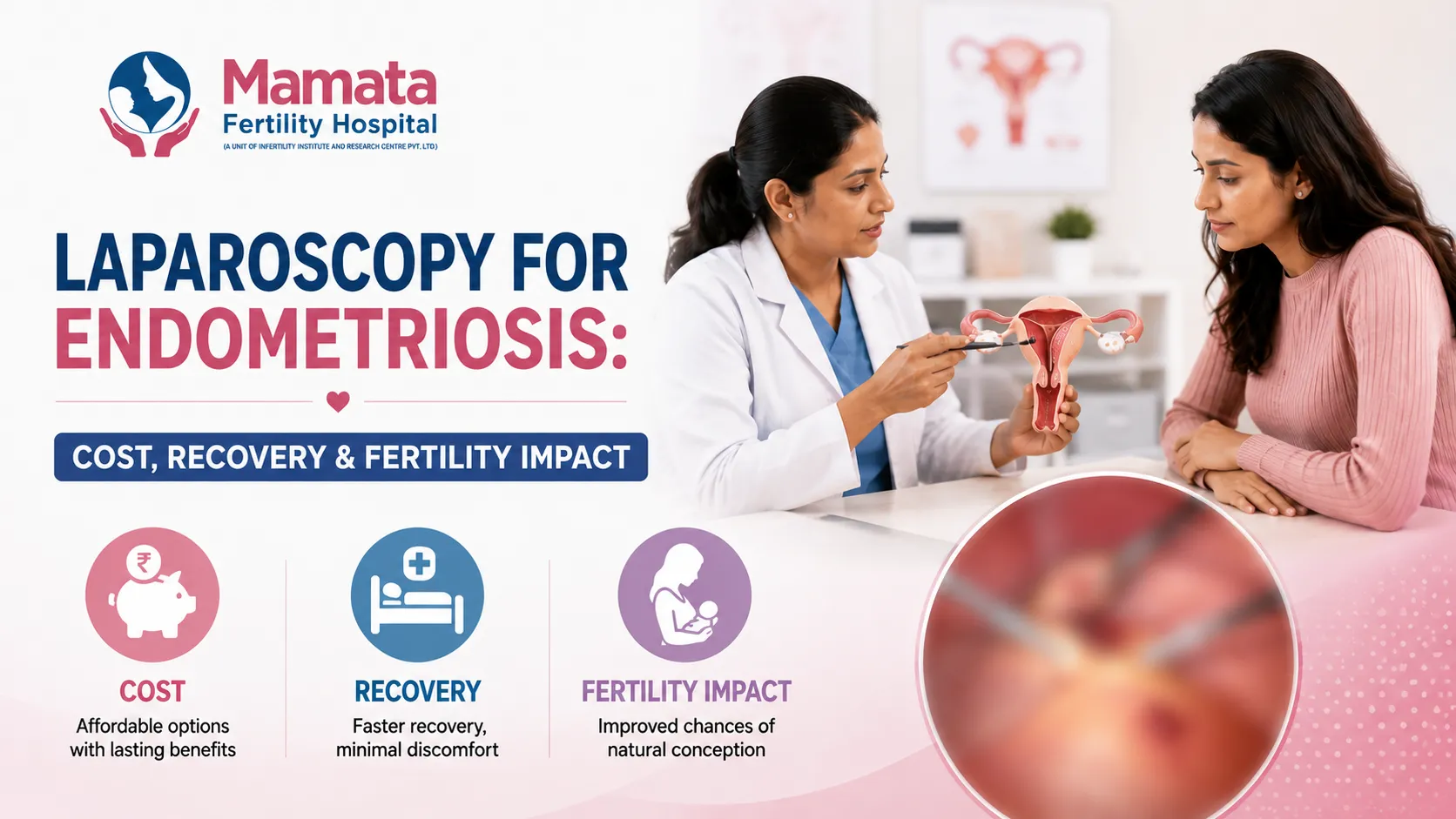
Laparoscopy for Endometriosis: Cost, Recovery & Fertility Impact
Welcome to our clinic. I am Dr Mamata Deenadayal. Throughout my years of practice as a fertility specialist in Hyderabad, I have met countless women enduring silently. They come to me suffering from debilitating pelvic pain, excruciatingly heavy periods, or the quiet heartbreak of struggling to conceive month after month. Far too often, these women are unaware that a hidden condition called endometriosis might be the root cause of their suffering.
When pelvic pain or infertility begins to control your life, simply taking painkillers or hoping for the best is not enough. You need precise answers and effective solutions. Endometriosis can be notoriously difficult to diagnose through standard scans, leaving many women feeling dismissed or misunderstood. This is where advanced medical intervention becomes necessary.
If you have been told you might need surgery, it is entirely normal to feel anxious. You likely have dozens of questions about what the procedure entails, how long the recovery will take, and whether it will genuinely help you have a baby. In this comprehensive guide, I will explain everything you need to know about laparoscopy for endometriosis. Together, we will explore the costs, the recovery process, and the profound fertility impact, helping you make a confident, informed decision for your health at Mamata Fertility Hospital, Hyderabad.
What Is Endometriosis?
Before we discuss the surgical solution, we must understand the condition itself. Endometriosis is a chronic, often painful disorder that affects a woman’s reproductive organs and pelvic region.
The condition occurs when tissue that is similar to the lining of the inside of your uterus,known as the endometrium,begins to grow on the outside of your uterus. This rogue tissue can attach itself to your ovaries, fallopian tubes, the outer surface of the uterus, and the lining of your pelvis.
During your regular menstrual cycle, this misplaced tissue acts just as it would inside your womb. It thickens, breaks down, and bleeds. However, because this blood has no natural way to exit your body, it becomes trapped. This trapped blood causes intense local inflammation, leading to the formation of painful scar tissue (adhesions) and fluid-filled cysts on the ovaries called endometriomas.
This chronic inflammation and anatomical distortion are precisely why endometriosis causes such severe pelvic pain and represents a major hurdle for women trying to conceive.
What Is Laparoscopy for Endometriosis?
When we suspect this condition is affecting your quality of life or your ability to get pregnant, we often turn to laparoscopy. Laparoscopy for endometriosis is a minimally invasive surgical procedure, commonly referred to as “keyhole surgery.”
Unlike traditional open surgery, which requires a large abdominal incision, a laparoscopy uses tiny incisions. Through these small entry points, we insert a specialised, lighted camera called a laparoscope. This high-definition camera projects a magnified view of your pelvic organs onto a screen in the operating theatre.
Laparoscopy is unique because it is both a diagnostic and a therapeutic tool. It allows us to physically see the endometriosis lesions,confirming the diagnosis with absolute certainty,while simultaneously giving us the ability to safely remove or destroy that rogue tissue during the very same procedure.
When Is Laparoscopy Recommended?
As a responsible medical professional, I do not recommend surgery lightly. However, there are specific clinical scenarios where laparoscopic surgery for endometriosis becomes the most effective path forward.
I typically recommend this procedure in the following situations:
- Severe Pelvic Pain: When your daily life, work, and relationships are severely impacted by pelvic pain that does not improve with standard pain relief or hormonal medications.
- Infertility Due to Endometriosis: If you are struggling to conceive and scans or symptoms suggest that endometriosis is distorting your pelvic anatomy or creating a toxic, inflammatory environment for embryos.
- Failure of Medical Treatment: When non-surgical options, such as contraceptive pills or hormonal therapies, fail to control your symptoms or halt the progression of the disease.
- Suspected Advanced Endometriosis: If an ultrasound or MRI reveals large ovarian cysts (endometriomas) or suggests that organs may be fused together by dense scar tissue, surgery is essential to clear the disease and restore normal function.
Are You Struggling with Pelvic Pain or Infertility?
Do not let undiagnosed endometriosis control your life. Book a consultation at Mamata Fertility Hospital, Hyderabad today for a precise diagnosis and an expert, compassionate treatment plan.
How the Laparoscopy Procedure Is Performed (Step-by-Step)
Understanding exactly what happens in the operating theatre is one of the best ways to ease surgical anxiety. Here is a clear, step-by-step look at how we perform a laparoscopy for endometriosis.
1. Administering Anaesthesia
Your comfort and safety are our top priorities. The procedure is performed under general anaesthesia, meaning you will be completely asleep and entirely pain-free throughout the operation.
2. Making Small Incisions
Once you are asleep, I will make a tiny incision,usually no larger than a centimetre,in or just below your belly button. Depending on the complexity of your case, one to three additional tiny incisions may be made lower down on your abdomen.
3. Creating Working Space
We will gently inflate your abdomen with a harmless carbon dioxide gas. This creates a dome-like space, separating your abdominal wall from your internal organs. This space gives us a clear, unobstructed view and room to work safely.
4. Inserting the Camera and Instruments
The laparoscope is inserted through the belly button incision. We meticulously examine your uterus, ovaries, fallopian tubes, and the entire pelvic cavity, looking for endometriosis lesions, cysts, and scar tissue.
5. Removal of Endometriosis Tissue
Using specialised micro-instruments inserted through the other small incisions, we carefully remove the endometriosis. We aim to excise (cut out) or ablate (destroy with heat) as much of the diseased tissue as possible while meticulously preserving your healthy ovarian tissue and fallopian tubes.
6. Closure and Recovery
Once the disease has been cleared, the instruments are removed, and the carbon dioxide gas is safely released. The tiny incisions are closed with dissolvable stitches or surgical glue and covered with small dressings. You are then gently woken up in the recovery room.
Benefits of Laparoscopy for Endometriosis
Choosing surgical intervention is a significant step, but the benefits of this minimally invasive approach are profound for women suffering from this condition.
Firstly, because the incisions are so small, laparoscopy causes significantly less trauma to the body than open surgery. This translates to less postoperative pain, minimal scarring, and a drastically faster recovery time.
Secondly, it provides an unparalleled, definitive diagnosis. Scans can only tell us so much, but seeing the pelvic cavity with a high-definition camera leaves no room for doubt.
Most importantly, it allows us to immediately treat the problem. By removing the inflammatory tissue and clearing away scar bands that may be tying organs together, we can often provide dramatic, long-lasting relief from pelvic pain and significantly improve the function of your reproductive organs.
Fertility Impact: Can Laparoscopy Improve Chances of Pregnancy?
One of the most urgent questions I hear from my patients is regarding the endometriosis fertility treatment aspect: “Will this surgery help me have a baby?”
The short answer is yes, in many cases, laparoscopy profoundly improves your chances of achieving a successful pregnancy.
Endometriosis harms fertility in multiple ways. Thick scar tissue can physically block the fallopian tubes, preventing the egg and sperm from meeting. Even if the tubes are open, the disease creates a highly inflammatory, toxic environment in the pelvis that can damage egg quality and prevent an embryo from successfully implanting in the uterus.
By surgically excising this tissue, we achieve two major fertility goals. We physically unblock anatomical pathways, freeing the ovaries and fallopian tubes to move naturally. We also drastically reduce the inflammatory burden in the pelvis, creating a healthier, more welcoming environment for conception.
For women with mild to moderate endometriosis, we often see successful natural conception within the first six to twelve months following surgery. However, if the disease has severely diminished your ovarian reserve, or if there are other contributing factors like male infertility, we may recommend moving directly to IVF. Even in these cases, clearing the endometriosis first often leads to a much healthier uterus and a higher IVF success rate.
Laparoscopy vs Medication: A Clear Comparison
When discussing pelvic pain treatment, patients frequently ask why they cannot simply take medication. To provide clarity, I have outlined the key differences between surgical and medical management.
|
Factor |
Laparoscopy (Surgical) |
Medication Only (Hormonal/Pain Relief) |
|
Diagnosis Accuracy |
High. Provides a definitive, visual diagnosis. |
Limited. Relies on symptom management without visual proof. |
|
Pain Relief |
Highly effective. Removes the root cause of the pain. |
Temporary. Masks symptoms while medication is being taken. |
|
Fertility Impact |
Can significantly improve natural and IVF conception chances. |
Limited. Most hormonal medications actually prevent pregnancy. |
|
Long-Term Results |
Better. Excising the disease offers prolonged relief. |
Variable. Symptoms often return immediately once medication stops. |
Recovery After Laparoscopy
Because laparoscopy is minimally invasive, the recovery process is much smoother than you might expect.
Usually, this is a day-care procedure, or it requires just a single overnight stay in the hospital. When you wake up, you may feel groggy from the anaesthesia and experience some mild cramping, similar to period pain.
A unique aspect of laparoscopic recovery is shoulder pain. This is caused by tiny amounts of the carbon dioxide gas remaining in the abdomen, which can irritate the diaphragm nerve that refers pain to the shoulder. This is entirely normal and resolves within a few days.
You will need to rest at home for about one to two weeks. During this time, you should avoid heavy lifting, strenuous exercise, and intense household chores. Most of my patients find they can return to desk work and light, normal daily activities within 10 to 14 days, feeling significantly better than they did before the surgery.
Cost of Laparoscopy for Endometriosis in Hyderabad
I believe in absolute transparency when it comes to medical finances. The cost of endometriosis treatment in Hyderabad varies, and it is important to understand why.
There is no single, flat fee because every case of endometriosis is entirely unique. The overall cost depends heavily on the severity of the disease. Stage I endometriosis might require a relatively brief, straightforward procedure. Stage IV, involving deeply infiltrating lesions and complex scar tissue adhering to the bowel or bladder, requires a much longer surgery and highly advanced surgical skills.
The cost is also influenced by the hospital’s infrastructure, the precision of the laparoscopic equipment, and the expertise of your surgical team.
At Mamata Fertility Hospital, Hyderabad, we provide a detailed, itemised estimate after your comprehensive initial consultation and ultrasound assessment. We ensure you understand exactly what the procedure entails financially, allowing you to plan your treatment without any hidden surprises.
Need Clarity on Your Treatment Plan and Costs?
Our team is here to provide transparent, expert guidance. Contact Mamata Fertility Hospital, Hyderabad, to schedule a consultation and receive a personalised care plan tailored to your needs.
Risks and Safety Considerations
Patient safety is the cornerstone of everything we do. Laparoscopy is a very common and generally safe procedure.
However, as with any surgery requiring general anaesthesia, there are inherent, albeit low, risks. These include the possibility of minor bleeding, infection at the incision sites, or an adverse reaction to the anaesthetic.
Because endometriosis can distort the pelvic anatomy, there is a very small risk of unintentional damage to surrounding organs, such as the bladder or bowel. This is precisely why it is critical to choose an experienced, highly skilled surgeon who specialises in complex pelvic anatomy and fertility-preserving techniques. Under expert care, the complication rates for this procedure remain exceedingly low.
Who Is the Right Candidate?
Not every woman with pelvic pain requires surgery. Determining the right candidate requires careful clinical evaluation.
You are likely an excellent candidate for a laparoscopy if:
- You have confirmed or highly suspected endometriosis based on advanced ultrasound or MRI scans.
- You are an infertility patient whose history suggests endometriosis is acting as a major barrier to conception.
- You have tried hormonal medications and painkillers, but your quality of life remains severely compromised by pain.
- You have a large endometrioma (chocolate cyst) on your ovary that is threatening your healthy ovarian tissue.
During your consultation, we will meticulously review your medical history to determine if this surgery is the most logical, beneficial next step for you.
Why Choose Mamata Fertility Hospital, Hyderabad
When you are dealing with a complex, chronic condition like endometriosis, the expertise of your medical team is everything.
As a trusted fertility hospital in Hyderabad, Mamata Fertility Hospital has decades of experience navigating the intricate relationship between endometriosis and infertility. We do not just treat the disease; we treat the woman.
Couples choose us because of our highly specialised approach to fertility care. When I perform a laparoscopy, my goal is twofold: to drastically reduce your pain and to fiercely protect and enhance your ovarian reserve. We utilise state-of-the-art laparoscopic technology that allows for incredible precision, ensuring we remove the disease while leaving your healthy reproductive tissue perfectly intact. From your very first consultation to your post-operative recovery, you will receive compassionate, world-class care from a team dedicated to restoring your health and your hopes for a family.
Things Most Patients Don’t Know About Endometriosis & Laparoscopy
Before we conclude, I want to share a few critical insights that often surprise the patients sitting in my clinic:
- Endometriosis Can Go Undiagnosed for Years: The average delay from the onset of symptoms to an accurate diagnosis is often seven to ten years. Do not accept that severe pain is just “normal period pain.”
- Laparoscopy is the Gold Standard: No blood test or scan can diagnose endometriosis with 100% certainty. A laparoscopy is the only definitive way to officially diagnose and simultaneously stage the disease.
- Early Treatment Improves Fertility Outcomes: Endometriosis is a progressive disease. It often worsens over time, causing more damage to the ovaries and tubes. Seeking expert surgical intervention early is one of the best ways to protect your future fertility.
Conclusion
Living with pelvic pain and the heartbreak of infertility due to endometriosis can make you feel powerless. But you are not powerless, and you are certainly not out of options. Laparoscopy for endometriosis is a highly advanced, minimally invasive solution that offers definitive answers, profound pain relief, and a significantly improved chance of achieving a healthy pregnancy.
By excising the disease and restoring the natural anatomy of your pelvis, we can help your body function the way it was meant to. You do not have to endure this journey alone. With precise surgical skill and a deep understanding of reproductive medicine, we can help you reclaim your health and your future.
Take the First Step Towards Relief and Motherhood
If severe period pain or difficulty conceiving is controlling your life, it is time to seek expert answers. You deserve an accurate diagnosis and a compassionate, highly effective treatment plan. Book your consultation with Dr Mamata Deenadayal at Mamata Fertility Hospital, Hyderabad today. Let our dedicated team provide the advanced laparoscopic care and personalised fertility guidance you need to move forward with confidence.
Frequently Asked Questions (FAQs)
- How long does a laparoscopy for endometriosis take?
The duration of the surgery depends entirely on the severity of the disease. A mild case may take 45 minutes to an hour, while severe, deeply infiltrating endometriosis can take several hours to meticulously excise. - Will my endometriosis grow back after surgery?
While laparoscopy is highly effective, endometriosis is a chronic condition. There is a chance that lesions can return over time. However, a thorough, expert excision surgery significantly lowers the recurrence rate compared to simply burning (ablating) the surface of the tissue. - When can we start trying to conceive after the surgery?
For most patients, we recommend waiting until you have had at least one normal menstrual cycle after the surgery to allow your internal tissues to heal completely. After that, depending on your specific fertility plan, you can begin trying naturally or proceed with IVF. - Will the laparoscopy damage my egg reserve?
Protecting your ovarian reserve is our highest priority. When removing cysts from the ovaries, an experienced fertility specialist uses micro-surgical techniques to carefully peel the cyst away while preserving as much healthy, egg-bearing ovarian tissue as possible. - Do I have to stay in the hospital for a long time?
No. Laparoscopy is typically performed as a day-care procedure or requires just one overnight stay. You will recover comfortably in the hospital for a few hours before being discharged to rest in your own home. - Can I avoid surgery if I want to have a baby through IVF?
Not always. While IVF bypasses the fallopian tubes, severe endometriosis can create a toxic environment in the uterus that causes IVF to fail. In many cases, we strongly advise a laparoscopy to clear the inflammation before starting an IVF cycle to maximise your chances of success. - Why should I see a fertility specialist for this surgery instead of a general gynaecologist?
A general gynaecologist focuses on overall pelvic health, but a fertility specialist in Hyderabad focuses specifically on preserving and optimising your reproductive potential. Our surgical techniques are explicitly designed to protect your delicate ovarian reserve and enhance your chances of conception.
Do You Need a Doctor Consultation
What to Expect During Each Treatment Stage?
Knowing what is coming helps calm the mind. Here is a brief look at your journey with us:
- Consultation: We will talk extensively about your medical history, your menstrual cycles, and your emotional wellbeing.
- Diagnosis: We will run precise blood tests and perform a transvaginal ultrasound to assess your ovarian reserve and confirm the PCOS diagnosis.
- Stepwise Treatment: We will start with the least invasive option suitable for your profile, whether that is lifestyle coaching or ovulation medication.
- Monitoring: You are never left alone. We monitor you closely with blood tests and scans to ensure the medications are working safely and effectively.
Success Rates and Realistic Expectations
It is my duty to be completely honest with you: no fertility treatment guarantees a 100% success rate on the very first try.
Patience is your greatest ally here. Sometimes, it takes a few cycles for us to find the exact dosage of medication your body needs to ovulate. Sometimes, an IUI cycle fails simply due to statistics, not because your body is “broken.”
However, the outlook for women with PCOS is incredibly bright. Because women with PCOS generally have a very high egg reserve, your overall chances of taking a baby home,when guided by the correct, step-by-step medical approach,are exceptionally good. Success improves drastically when you partner with a clinic that prioritises accurate, sequential treatment over rushed procedures.
Why Choose Mamata Fertility Hospital, Hyderabad?
When you are facing a complex hormonal condition like PCOS, the expertise of your medical team matters more than ever.
As a leading IVF center in Hyderabad, Mamata Fertility Hospital is built on a foundation of profound clinical excellence and unwavering ethical care. Under my guidance, our team ensures you receive deeply personalised treatment. We do not push you into expensive procedures you do not need. Instead, we use our advanced diagnostic tools and decades of experience to map out a logical, safe, and highly effective path to parenthood.
Our patients trust us because we communicate transparently. We explain the “why” behind every single medication and scan, ensuring you feel empowered and respected throughout your entire journey with us.
Emotional Support and Patient Guidance
I want to take a moment to acknowledge the emotional weight you are carrying. The journey through PCOS fertility treatment can feel like an emotional rollercoaster. The monthly waiting, the counting of days, and the sight of negative pregnancy tests can leave you feeling deeply depleted.
Please know that your mental health is a critical component of your fertility. At our clinic, we provide comprehensive emotional support and professional counselling. We encourage you to talk about your fears, lean on your partner, and lean on our medical team. You are not just a patient file to us; you are a future mother, and we are here to support your mind just as much as your body.
Frequently Asked Questions (FAQs)
-
- Does freezing damage the embryo?
No. We use an advanced rapid-freezing technique called vitrification. It prevents ice crystals from forming inside the embryo. Over 95% of high-quality embryos survive the freezing and thawing process without any damage. - How long can embryos stay frozen?
Embryos can remain safely frozen in liquid nitrogen indefinitely. There are many recorded cases of healthy babies being born from embryos that were frozen for ten, fifteen, or even twenty years. - Is a frozen embryo transfer painful?
No, an FET is generally painless. It feels very similar to a routine cervical smear test. You do not need anaesthesia, and the procedure only takes a few minutes. - Why do doctors cancel fresh transfers?
I will cancel a fresh transfer and freeze your embryos if your hormone levels (like progesterone) are too high, if your uterine lining is too thin, or if you are showing early signs of Ovarian Hyperstimulation Syndrome (OHSS). This is done entirely for your safety and to protect your chances of success. - Do frozen transfers result in healthier babies?
Extensive medical studies show that babies born from frozen embryo transfers are just as healthy as those born from fresh transfers or natural conception. Some studies even suggest FET babies have a slightly lower risk of being born prematurely or with a low birth weight. - Can I choose to have a frozen transfer even if I qualify for a fresh one?
Yes, absolutely. Many patients opt for a “freeze-all” cycle simply because it allows their body to recover from the stress of the stimulation medications before attempting pregnancy. We can discuss this preference during your consultation.
- Does freezing damage the embryo?
Conclusion
The debate between frozen embryo transfer vs fresh transfer is not about which technology is universally better; it is about which method provides the most optimal, receptive environment for your embryo to thrive. While fresh transfers remain an excellent option for patients with balanced hormones and healthy linings, frozen embryo transfers have revolutionised our ability to protect patient safety, perform genetic testing, and perfectly time implantation for maximum success.
You do not have to make this complex medical decision alone. A thorough evaluation by an expert team will reveal the clearest, safest path forward for your family.
Take the First Step Towards Growing Your Family
If you are struggling to conceive and need expert, empathetic guidance, we are here for you. Book your consultation with Dr Mamata Deenadayal at Mamata Fertility Hospital, Hyderabad today. Let us provide the accurate diagnosis, the advanced technology, and the personalised care you need to bring your baby home.
Call us or click here to schedule your appointment at Mamata Fertility Hospital, Hyderabad.

Dr Aarti Deenadayal Tolani
MBBS, MS ( OBGYN), FICOG
Clinical Director, Scientific In- Charge & Fertility Consultant with 20+ years Of Experience
Her Expertise:
CONSULT FERTILITY SPECIALIST

LATEST BLOGS

How to Read and Interpret a Semen Analysis Test Report?
Learn how to read and interpret a semen analysis report, including sperm count, motility, morphology, semen volume, vitality, Total Motile Count, and WHO 2021 reference values.

How to Choose an IVF Clinic: A Patient’s Checklist
Choosing an IVF clinic? Use this patient checklist to compare diagnosis, ART registration, success rates, costs, treatment teams, add-ons and support.

Understanding Sperm DNA Fragmentation Test and IVF Success
Understand sperm DNA fragmentation testing, DFI levels, causes of high sperm DNA damage, and how SDF can affect IVF, ICSI, embryo quality and miscarriage risk.

Oligospermia Treatment: Low Sperm Count & Pregnancy Options
Oligospermia means a low sperm count. Learn its causes, diagnosis, treatment options, IUI, IVF with ICSI, and chances of conception.
