
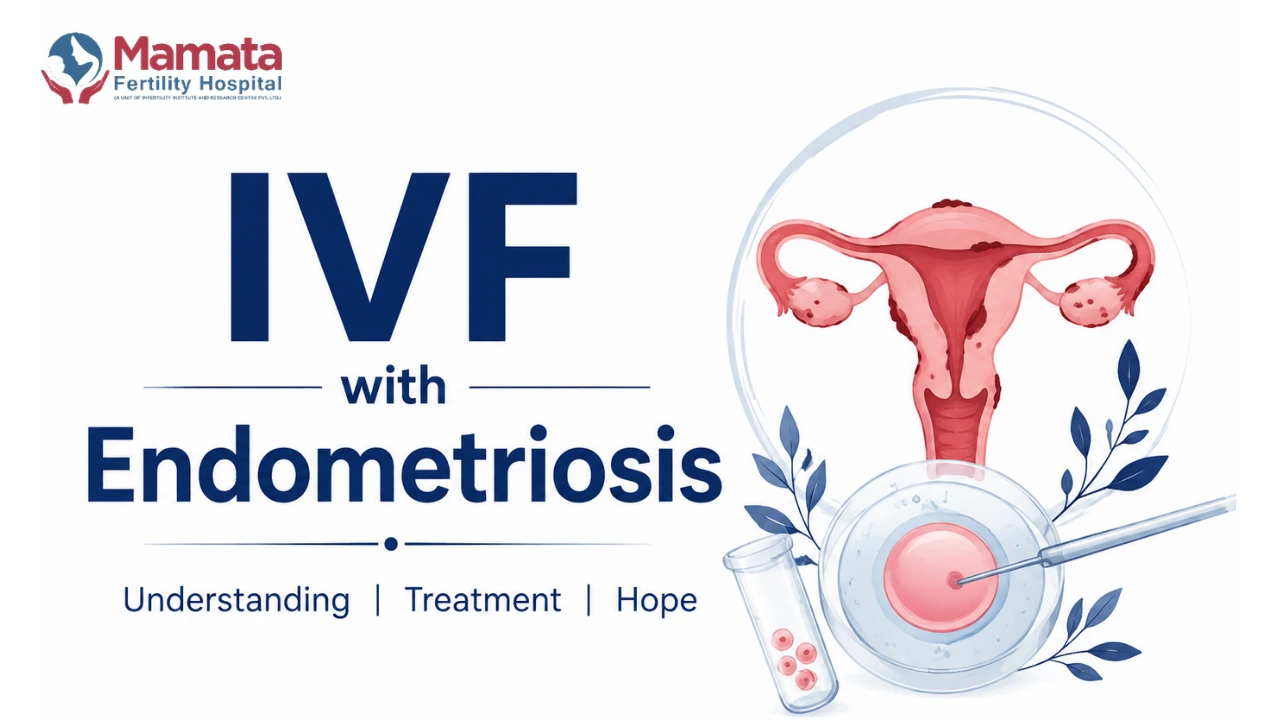
IVF with Endometriosis: What to Expect
and How It’s Managed
Medically reviewed by Dr. Aarti Deenadayal Tolani, Fertility Specialist & IVF Expert, Mamata Fertility Hospital, Hyderabad
IVF is a well-established fertility treatment option for people with endometriosis, and it’s often
recommended when the condition affects the pelvic organs, when other treatments haven’t
worked, or when there are additional causes of infertility involved. Endometriosis can lower IVF
success rates compared with other causes of infertility, but many people with the condition do
go on to have successful pregnancies, and treatment can often be adjusted to account for the
specific way endometriosis is affecting your fertility
How Does Endometriosis Affect Fertility?
Endometriosis can affect fertility through several overlapping mechanisms:
● Pelvic anatomy changes — scar tissue and adhesions can distort the fallopian tubes
and ovaries
● Inflammation — the pelvic environment becomes more inflamed, which may affect egg
quality, sperm function, and embryo implantation
● Ovarian endometriomas — cysts on the ovary that are associated with reduced ovarian
reserve, even before any surgery
● Altered egg and embryo quality — some research suggests eggs and embryos may
be affected in the presence of endometriosis, though this is an area of ongoing study
Does Endometriosis Reduce IVF Success Rates?
Yes, on average — ESHRE’s guideline notes that IVF pregnancy rates are lower in women with
endometriosis than in those with tubal-factor infertility. The extent of this difference varies by
disease severity and the presence of ovarian endometriomas specifically. A large retrospective
cohort study of infertile women found that those with stage 3–4 endometriosis and an ovarian
endometrioma needed more stimulation medication and had significantly lower pregnancy and
live birth rates than those with stage 3–4 endometriosis but no endometrioma.
This doesn’t mean IVF won’t work for you individually — outcomes vary widely between
patients, and many people with endometriosis, including more advanced stages, do achieve
pregnancy through IVF.
Stages of Endometriosis and What They Mean for Fertility Treatment
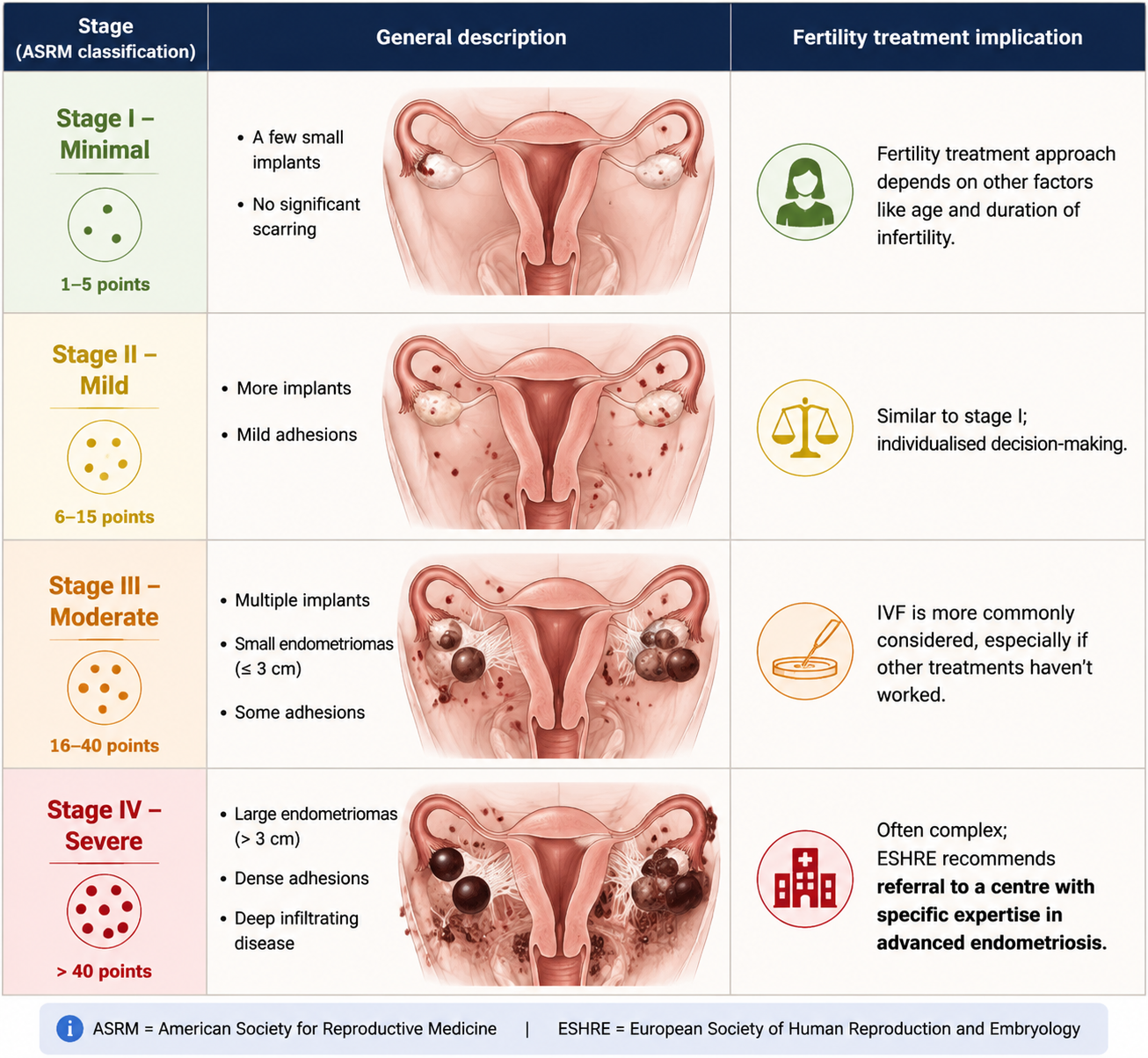
Note that ASRM/AFS staging reflects the extent of disease seen at surgery, not directly how difficult conception will be — the Endometriosis Fertility Index (EFI), which combines staging with other factors like age and prior pregnancies, is sometimes used specifically to help predict fertility outlook
Should You Have Surgery Before IVF?
This is one of the most common questions, and the honest answer is: it depends, and there isn’t a universal rule.
What the Evidence Says
- For minimal to mild endometriosis, ESHRE’s guideline notes that suppressing ovarian function medically doesn’t improve fertility, but surgical removal of the implants (with adhesiolysis) has shown benefit compared with diagnostic laparoscopy alone.
- For moderate to severe endometriosis, ESHRE states there is currently insufficient evidence to determine whether surgical excision improves pregnancy rates specifically.
- For ovarian endometriomas, the picture is more complicated. Endometriomas themselves are associated with reduced ovarian reserve — but surgery to remove them is also associated with a further, sometimes lasting, decline in anti-Müllerian hormone (AMH) levels, according to multiple systematic reviews. A review in the journal Diagnostics notes there is no strong evidence base to justify routine endometrioma surgery before every IVF cycle, and that the decision should weigh potential benefits (like symptom relief or improved egg access) against the risk of further reducing ovarian reserve.
When Surgery Is More Likely to Be Recommended
- Significant pain that is affecting quality of life
- Large or growing endometriomas
- Uncertainty about whether a cyst could be something other than endometriosis
- Endometriomas that may make egg retrieval technically difficult or risky
When Direct IVF (Without Surgery First) May Be Preferred
- Lower ovarian reserve, where further surgical impact on AMH is a significant concern
- Prior endometrioma surgery already performed
- Time-sensitive situations, such as older maternal age, where delaying treatment for surgery and recovery carries its own trade-offs
Your fertility specialist will weigh these factors specifically for your case — this is a genuinely individualised decision, not a fixed protocol.
Surgery Before IVF vs Direct IVF: Quick Comparison
| Factor | Surgery First | Direct IVF (No Surgery) |
| Ovarian reserve impact | Surgery is associated with a further decline in AMH, especially with bilateral cysts | Avoids additional surgical impact on ovarian reserve |
| Time to treatment | Adds recovery time before starting IVF | Can start sooner |
| Symptom relief | May reduce pain from large or symptomatic endometriomas | Doesn’t address pain directly |
| Evidence strength | Limited evidence of benefit for IVF outcomes specifically, in moderate–severe disease | Considered appropriate, especially per ESHRE, when other treatments have failed or disease is more advanced |
How Is IVF Adjusted for Endometriosis?
There isn’t one single “endometriosis IVF protocol,” but your care team may consider:
- Reviewing ovarian reserve testing (AMH, antral follicle count) carefully before planning stimulation
- Choosing a stimulation protocol tailored to your ovarian reserve and prior response, if any
- Considering pre-treatment medication, such as a course of a GnRH agonist or dienogest, in select cases — though ESHRE notes the previously common “ultra-long” GnRH agonist pre-treatment before IVF is no longer routinely recommended, since updated evidence has not confirmed the benefit suggested by earlier, smaller studies
- Careful, ultrasound-guided egg retrieval, particularly where endometriomas are present, to reduce procedural risk
- Monitoring for OHSS and other individual risk factors, as with any IVF cycle
Does Endometriosis Affect Egg or Embryo Quality?
Yes, endometriosis can negatively affect both egg (oocyte) and embryo quality, particularly in advanced stages or when cysts called endometriomas form on the ovaries. The disease alters the pelvic and ovarian environment, leading to lower developmental potential in eggs and fewer total embryos during fertility treatment
Fertility Preservation: An Option Worth Discussing
For some people — particularly before planned endometrioma surgery, or when ovarian reserve is already reduced — egg or embryo freezing (fertility preservation) may be discussed as an option to protect future fertility potential. This is a personal and clinical decision best made with your specialist based on your age, reserve, and family-building timeline.
When to See a Fertility Specialist
Consider a fertility consultation if you have diagnosed or suspected endometriosis and:
- You’ve been trying to conceive for 12 months without success (or 6 months if you’re over 35)
- You have known ovarian endometriomas
- You’ve had prior endometriosis surgery and are now trying to conceive
- You have significant pelvic pain alongside fertility concerns
Red Flags: When to Seek Prompt Medical Care
Contact your doctor promptly if you experience sudden, severe pelvic pain (which could indicate a ruptured or twisted ovarian cyst), fever, heavy abnormal bleeding, or symptoms that are rapidly worsening — these need timely assessment regardless of where you are in fertility treatment.
IVF and Endometriosis at Mamata Fertility Hospital, Hyderabad
At Mamata Fertility Hospital, women with endometriosis receive individually designed IVF protocols — not a standard approach applied to every patient. Before recommending treatment, we assess:
- Ovarian reserve (AMH, antral follicle count) to understand the impact of existing endometriosis on egg supply
- Endometrioma size and location via transvaginal ultrasound
- Uterine structure and any associated adenomyosis
- Previous surgical history and its impact on current reserve
- Stage of endometriosis and symptom profile
Based on this, we determine whether GnRH agonist pre-treatment, a freeze-all strategy, ERA testing, or laparoscopic intervention is appropriate before starting stimulation.
For women with PCOS and endometriosis together a combination that requires balancing OHSS risk alongside endometriosis management our team has specific experience in protocol design.
Our team will advise you on:
✅ Whether surgery is needed before IVF — or whether to proceed directly
✅ GnRH agonist pre-treatment to quieten endometriosis before stimulation
✅ Freeze-all and frozen embryo transfer strategy
✅ ERA testing if previous transfers have failed
✅ Endometrioma management during retrieval
✅ Egg quality support for endometriosis-related ovarian impact
Book a Fertility Consultation Today
Frequently Asked Questions
Can you do IVF if you have endometriosis?
Yes. IVF is a recognised and often effective treatment option for infertility related to endometriosis, particularly for more advanced disease or when other treatments haven’t worked.
Does endometriosis reduce IVF success rates?
On average, IVF pregnancy rates are lower in women with endometriosis compared with tubal-factor infertility, and the gap can be more pronounced with ovarian endometriomas — though outcomes vary a great deal by individual.
Should I have surgery to remove an endometrioma before IVF?
It depends on your specific situation. Surgery may help with pain or access for egg retrieval, but it’s also linked to a further decline in ovarian reserve, so the decision should weigh your symptoms, cyst size, and ovarian reserve testing with your specialist.
Does endometriosis affect egg quality?
Some research links endometriosis, particularly with endometriomas, to reduced oocyte numbers and possible effects on embryo development, but this is still being studied and doesn’t apply equally to everyone.
What is the Endometriosis Fertility Index (EFI)?
It’s a scoring system that combines surgical staging with factors like age and prior pregnancies to help estimate fertility outlook, used by some specialists alongside standard ASRM staging.
Can IVF make endometriosis pain worse?
This is a valid question to raise with your specialist, since ovarian stimulation raises estrogen levels temporarily. Your protocol can be discussed with your specific symptoms in mind.
How many IVF cycles might someone with endometriosis need?
There’s no fixed number — this depends on age, ovarian reserve, disease severity, and individual response to treatment. Your fertility team can give you a personalised outlook based on your results.
Does stage of endometriosis predict IVF outcome?
Not directly — surgical staging reflects disease extent, not fertility potential precisely. Tools like the EFI combine staging with other factors for a more individualised estimate.
Can I freeze my eggs before endometrioma surgery?
This is an option some people consider, especially if ovarian reserve is already reduced or surgery is being planned. It’s worth discussing with a fertility specialist ahead of any planned surgery.
Is IUI an option instead of IVF for endometriosis?
IUI with ovarian stimulation may be considered for milder, early-stage endometriosis, though ESHRE notes evidence on its benefit is limited; IVF is more commonly recommended for more advanced disease or when IUI hasn’t worked.

Dr Aarti Deenadayal Tolani
MBBS, MS ( OBGYN), FICOG
Clinical Director, Scientific In- Charge & Fertility Consultant with 20+ years Of Experience
Her Expertise:
CONSULT FERTILITY SPECIALIST

Latest Blogs

How to Read and Interpret a Semen Analysis Test Report?
Learn how to read and interpret a semen analysis report, including sperm count, motility, morphology, semen volume, vitality, Total Motile Count, and WHO 2021 reference values.

How to Choose an IVF Clinic: A Patient’s Checklist
Choosing an IVF clinic? Use this patient checklist to compare diagnosis, ART registration, success rates, costs, treatment teams, add-ons and support.

Understanding Sperm DNA Fragmentation Test and IVF Success
Understand sperm DNA fragmentation testing, DFI levels, causes of high sperm DNA damage, and how SDF can affect IVF, ICSI, embryo quality and miscarriage risk.
Oligospermia Treatment: Low Sperm Count & Pregnancy Options
Oligospermia means a low sperm count. Learn its causes, diagnosis, treatment options, IUI, IVF with ICSI, and chances of conception.
