
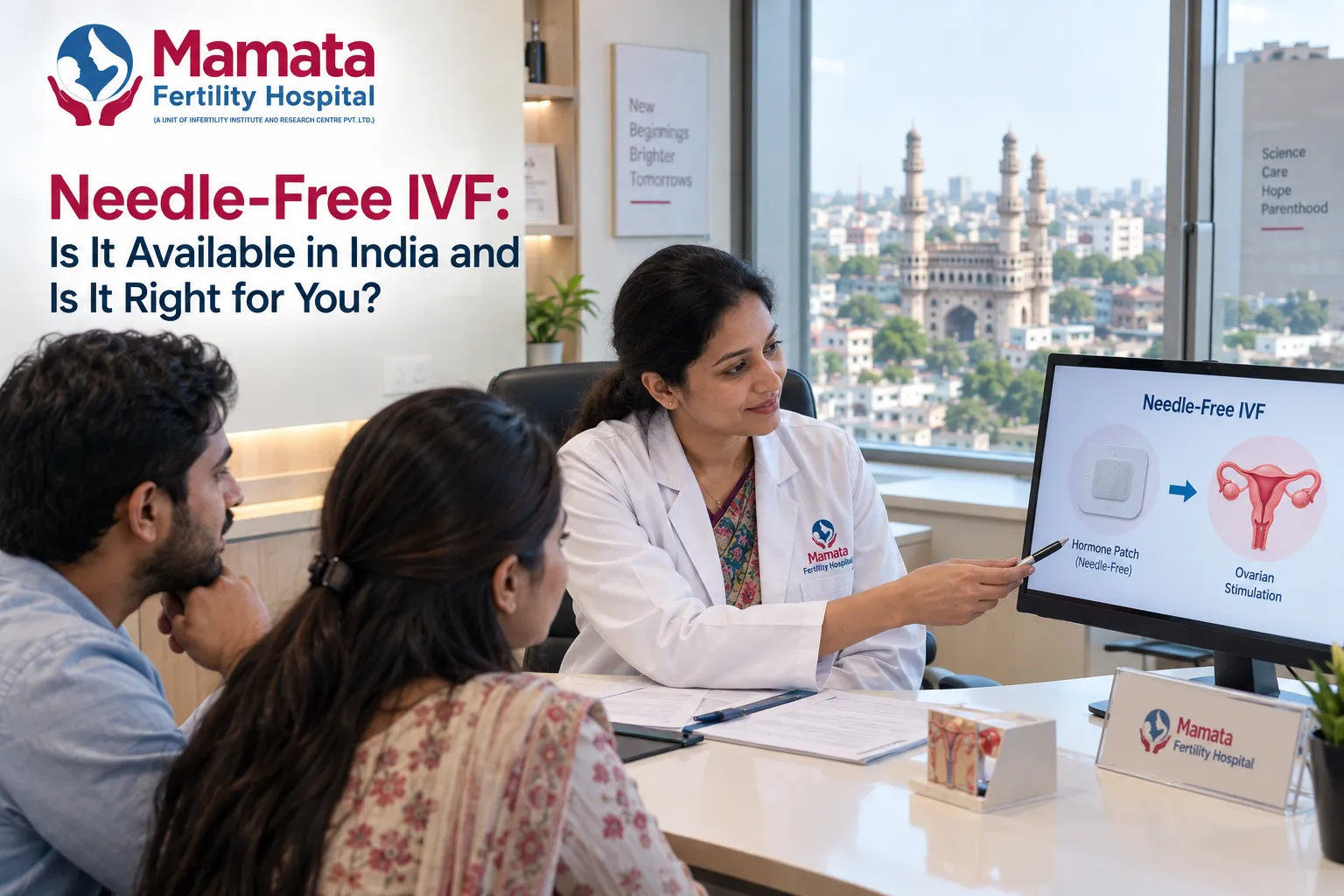
Needle-Free IVF: Is It Available in India and Is It Right for You?
Medically reviewed by Dr. Aarti Deenadayal Tolani, Fertility Specialist & IVF Expert, Mamata Fertility Hospital, Hyderabad
If the thought of daily injections for two weeks is the reason you keep postponing your IVF consultation, you are not alone. Studies show that needle anxiety is one of the top reasons couples delay or abandon fertility treatment altogether. The physical and emotional toll of 40 to 60 injections over a single IVF cycle is real, and it deserves a real answer, not dismissal.
Needle-free IVF, also called minimal stimulation IVF or gentle IVF, is a clinically recognised protocol that replaces most or all of those injections with oral medication. It is available in India, and at Mamata Fertility Hospital in Hyderabad, our specialists assess every patient individually to determine whether this gentler path is medically appropriate for them.
This article explains exactly what needle-free IVF involves, how it compares to conventional IVF, who the right candidates are, and what the honest success rates and costs look like in India as of August 2026.
Key Takeaways
- Needle-free IVF replaces injectable gonadotropins with oral medications during the ovarian stimulation phase, cutting the number of injections from 40-60 to as few as 1 to 8.
- The egg retrieval step still uses a thin needle under sedation; “needle-free” refers to the daily stimulation injections, not the entire procedure.
- It is available in India, including at Mamata Fertility Hospital, Hyderabad, and is regulated under the ART (Regulation) Act, 2021.
- Ideal candidates include women with poor ovarian reserve, high OHSS risk, older age, needle phobia, or prior failed conventional IVF cycles.
- Success rates per cycle are lower than conventional IVF, but medication costs drop by 50 to 70 percent as of 2026, so cumulative costs are comparable for many patients.
- A specialist assessment is essential before choosing any IVF protocol.
What is needle-free IVF?
Needle-free IVF (also called minimal stimulation IVF or natural cycle IVF) is an assisted reproduction protocol that uses oral medications such as clomiphene citrate or letrozole, instead of daily injectable hormones, to stimulate the ovaries. It typically produces fewer eggs per cycle but requires significantly fewer injections. The egg retrieval procedure itself still uses a transvaginal needle under sedation. The protocol is available in India and is suited for select patient profiles.
What Is Needle-Free IVF? A Clinical Definition
Needle-free IVF is a collective term for IVF protocols that eliminate or significantly reduce injectable gonadotropin use during ovarian stimulation. Instead of receiving daily subcutaneous injections of follicle-stimulating hormone (FSH) and luteinising hormone (LH) for 10 to 14 days, patients take oral medications that stimulate the ovaries more gently.
Three main protocols fall under the needle-free IVF umbrella: natural cycle IVF, minimal stimulation IVF (mini IVF), and oral IVF.
Natural cycle IVF uses no stimulation medication. The doctor monitors the single egg the woman naturally selects in that menstrual cycle and retrieves it at the precise moment of maturation. It involves zero stimulation injections, though it does require daily ultrasound monitoring and one trigger injection in most cases.
Minimal stimulation IVF (mini IVF) uses oral medications, typically clomiphene citrate or letrozole, for ovarian stimulation. Low-dose injectable FSH is sometimes added for a few days, reducing the total injection count from 40 to 60 in conventional IVF to 3 to 8 or fewer. This is the most commonly offered needle-free protocol in India.
Oral IVF is a variant of mini IVF that uses only oral medications throughout stimulation, with no injectable gonadotropins. It typically retrieves 2 to 5 eggs per cycle.
Important clarification: In all three protocols, the egg retrieval step still involves a transvaginal ultrasound-guided aspiration needle, performed under light sedation. Patients typically feel no pain during retrieval. “Needle-free” specifically refers to the elimination of daily self-administered stimulation injections, which is the step most patients find distressing.
Key Terms Defined
Minimal Stimulation IVF (also called mini IVF or gentle IVF) is an in vitro fertilisation protocol that uses low-dose oral medications, typically clomiphene citrate or letrozole, in place of high-dose injectable gonadotropins. It retrieves fewer eggs per cycle than conventional IVF but carries significantly lower medication costs and OHSS risk. As of 2026, it is the most widely available needle-free IVF option in India.
Natural Cycle IVF is an IVF protocol performed without any ovarian stimulation medications. The clinic monitors the single egg a woman produces naturally each month, retrieves it at the moment of maturation, and fertilises it in the laboratory. No stimulation injections are required, making it the gentlest IVF approach available and carrying near-zero risk of ovarian hyperstimulation.
Ovarian Reserve is a clinical measure of the number and quality of a woman’s remaining eggs, assessed using the anti-Müllerian hormone (AMH) blood test and antral follicle count (AFC) on transvaginal ultrasound. Low AMH (below 1.0 ng/mL) or low AFC (below 5) indicates diminished ovarian reserve and is one of the primary factors that makes a patient a suitable candidate for needle-free IVF protocols.
Ovarian Hyperstimulation Syndrome (OHSS) is a complication of conventional injectable IVF stimulation in which the ovaries over-respond to gonadotropins, becoming enlarged and painful. Severe OHSS can cause fluid accumulation in the abdomen and chest, requiring hospitalisation. Minimal stimulation IVF nearly eliminates OHSS risk by replacing high-dose injectables with low-dose oral medications.
Expert Perspective
“For patients with poor ovarian reserve or significant needle anxiety, minimal stimulation IVF is not a compromise, it is a clinically appropriate choice. The evidence supports its use in select patient groups, and at Mamata Fertility, we assess every patient individually to determine which protocol gives them the best chance of a successful outcome.”
— Dr. Aarti Deenadayal Tolani, MD (OBG), FICOG, Fellowship in Reproductive Medicine, Senior Consultant, Reproductive Medicine, Mamata Fertility Hospital, Hyderabad
Start your IVF journey with a team that explains everything clearly.
What the Evidence Says?
The European Society of Human Reproduction and Embryology (ESHRE) Poor Responder Guideline (2023) states: “Modified natural cycle IVF and minimal stimulation IVF represent evidence-based alternatives to conventional controlled ovarian stimulation in poor-prognosis patients, with comparable cumulative live birth rates at significantly lower medication burden and cost per cycle.”
A systematic review published in Human Reproduction Update (2020) concluded: “In poor-prognosis IVF patients, cumulative live birth rates following multiple minimal stimulation cycles are comparable to those achieved with conventional ovarian stimulation, at substantially lower per-cycle medication cost.” This finding supports the use of multiple low-cost minimal stimulation cycles as a clinically valid alternative to single high-cost conventional cycles for appropriate candidates.
Under India’s ART (Regulation) Act, 2021, Chapter IV, Section 21, all assisted reproductive technology procedures including IVF, ICSI, and modified natural cycle IVF must be performed exclusively at ICMR-registered ART clinics by certified reproductive medicine specialists. This regulatory framework ensures quality standards apply equally to all IVF protocols, conventional or needle-free.
The Real Problem With Conventional IVF Injections
To appreciate what needle-free IVF offers, it helps to understand what conventional IVF stimulation actually involves.
In a standard IVF cycle, a patient typically administers:
- Daily FSH/LH injections for 10 to 14 days (self-injected at home, usually into the abdomen or thigh)
- A GnRH antagonist injection for 5 to 7 days overlapping stimulation (to prevent premature ovulation)
- A trigger shot (hCG or GnRH agonist) 36 hours before retrieval
- Progesterone injections after retrieval in some protocols
That adds up to 40 to 60 individual needle sticks before the egg retrieval even begins.
For a significant number of patients, this is not just uncomfortable, it is a genuine psychological and physical barrier. Bruising, bloating, injection-site soreness, and the daily ritual of preparing and administering medication at precise times creates a level of treatment burden that affects mental health, work life, and relationships throughout the cycle.
Needle-free IVF does not eliminate every needle. It eliminates the daily burden of self-injected stimulation and replaces it with a tablet taken once a day.
How Needle-Free IVF Works: Step by Step?
Step 1: Pre-Treatment Assessment (Days 1-3 of your cycle) Your doctor performs a baseline ultrasound and blood tests (AMH, FSH, antral follicle count). These results determine whether you are a suitable candidate for a minimal stimulation or natural cycle protocol.
Step 2: Oral Stimulation (Days 3-9 approximately) You take a daily oral tablet, most commonly 50 to 100 mg of clomiphene citrate or 2.5 to 5 mg of letrozole. No injections during this phase in a true oral IVF protocol. In mini IVF, 2 to 4 low-dose FSH injections may be added on specific days.
Step 3: Monitoring (Days 6-12) Serial ultrasound scans every 1 to 2 days track follicle growth. Unlike conventional IVF, where monitoring is frequent due to many developing follicles, natural and minimal stimulation cycles require close monitoring to catch the optimal retrieval window because fewer, but precisely timed, eggs are expected.
Step 4: Trigger Injection (One Injection) When follicles reach the correct size (approximately 18-20 mm), you receive a single trigger injection to mature the egg(s) for retrieval. This is unavoidable in all IVF protocols.
Step 5: Egg Retrieval (Under Sedation) A thin transvaginal needle guided by ultrasound retrieves the egg(s). The procedure takes 5 to 15 minutes under intravenous sedation. Most patients feel no pain and go home within 2 to 3 hours.
Step 6: Fertilisation and Embryo Development Retrieved eggs are fertilised with your partner’s (or donor) sperm in the embryology lab. Embryos develop for 3 to 5 days.
Step 7: Embryo Transfer (Minimal or No Injections) In a natural or mildly stimulated cycle, the uterine lining is often prepared without heavy progesterone injections. Transfer is performed in the same or a subsequent cycle.
Step 8: Luteal Support and Pregnancy Test Progesterone support (vaginal pessaries rather than injections in many needle-free protocols) follows. A blood pregnancy test is performed approximately 14 days after transfer.
Needle-Free IVF vs. Conventional IVF: A Direct Comparison
|
Feature |
Conventional IVF |
Needle-Free / Mini IVF |
Natural Cycle IVF |
|
Stimulation injections |
40 to 60 |
3 to 8 (low-dose FSH) |
0 to 1 (trigger only) |
|
Oral medication |
Rarely |
Yes (clomiphene/letrozole) |
None |
|
Eggs retrieved (avg) |
8 to 15 |
2 to 5 |
1 |
|
OHSS risk |
Moderate to high |
Very low |
Negligible |
|
Medication cost (India, 2026) |
Rs. 80,000 to Rs. 1,20,000 |
Rs. 20,000 to Rs. 40,000 |
Rs. 5,000 to Rs. 15,000 |
|
Total cycle cost (India, 2026) |
Rs. 1,50,000 to Rs. 2,50,000 |
Rs. 70,000 to Rs. 1,30,000 |
Rs. 50,000 to Rs. 90,000 |
|
Success rate per cycle |
35 to 50% (age dependent) |
15 to 25% |
5 to 15% |
|
Monitoring visits |
5 to 8 |
3 to 5 |
4 to 7 (daily near retrieval) |
|
Cycle cancellation risk |
Lower |
Moderate |
Higher |
|
Suitable for embryo banking |
Yes |
Possible (across cycles) |
Difficult |
Is Needle-Free IVF Available in India?
Yes. Minimal stimulation IVF and natural cycle IVF are available in India. Both protocols are governed by the ART (Regulation) Act, 2021, which mandates that all IVF procedures be performed only at ICMR-registered ART clinics by qualified reproductive medicine specialists.
Not every fertility clinic in India offers natural or minimal stimulation IVF. These protocols require:
- Experience in monitoring cycles with few follicles (a different skill than managing high-response conventional cycles)
- A laboratory team comfortable fertilising 1 to 3 eggs with high technical precision
- The ability to time retrieval within an extremely narrow window in natural cycles
At Mamata Fertility Hospital in Hyderabad, our reproductive medicine team has experience with the full range of IVF protocols, from conventional controlled ovarian hyperstimulation to natural cycle retrieval, and can determine the right approach based on your specific ovarian response profile.
Who Is Needle-Free IVF Right For?
Not every patient is a good candidate. According to current reproductive medicine guidelines, the following profiles are most likely to benefit from a minimal stimulation or natural cycle approach.
Women with poor ovarian reserve are among the most suitable candidates. If your AMH is below 1.0 ng/mL or your antral follicle count is under 5, heavy conventional stimulation may retrieve only 2 to 3 eggs despite high medication doses. Natural or mini IVF may retrieve a comparable number at a fraction of the cost and without the injection burden. Learn more about poor ovarian reserve and IVF outcomes at Mamata Fertility.
Patients at high risk of ovarian hyperstimulation syndrome (OHSS) are also strong candidates. OHSS occurs when the ovaries over-respond to injectable hormones, and women with PCOS or high antral follicle counts are particularly vulnerable. Minimal stimulation protocols largely eliminate that risk. Read our guide on OHSS and how to prevent it.
Older women with reduced egg counts often respond poorly to high-dose conventional stimulation. Natural cycle IVF works with the body’s own selection mechanism rather than pushing for quantity, which matters because in women over 40, egg quality is a stronger predictor of success than egg count.
Patients with needle phobia deserve specific mention. Trypanophobia affects roughly 10 percent of the adult population, and if injection anxiety has been the reason you have delayed treatment, minimal stimulation IVF removes that barrier without giving up a medically credible path to conception.
Some couples who have been through multiple conventional IVF cycles with poor embryo quality or repeated implantation failure also benefit from this approach. Fewer but higher-quality eggs may produce more viable embryos than many poor-quality ones from aggressive stimulation. If you are navigating repeated IVF failure, this is worth discussing with your specialist.
Because medication costs drop by 50 to 70 percent per cycle, patients willing to undergo multiple gentler cycles can keep total treatment costs within the range of one or two conventional cycles. This suits patients with moderate ovarian reserve and time on their side.
Finally, certain medical conditions, including some hormone-sensitive conditions, prior thrombotic events, or specific cardiovascular risk factors, can make high-dose gonadotropin stimulation inadvisable. A minimal stimulation protocol may allow treatment to proceed safely under medical supervision.
Who Is Needle-Free IVF Right For?
Not every patient is a good candidate. According to current reproductive medicine guidelines, the following profiles are most likely to benefit from a minimal stimulation or natural cycle approach.
Women with poor ovarian reserve are among the most suitable candidates. If your AMH is below 1.0 ng/mL or your antral follicle count is under 5, heavy conventional stimulation may retrieve only 2 to 3 eggs despite high medication doses. Natural or mini IVF may retrieve a comparable number at a fraction of the cost and without the injection burden. Learn more about poor ovarian reserve and IVF outcomes at Mamata Fertility.
Patients at high risk of ovarian hyperstimulation syndrome (OHSS) are also strong candidates. OHSS occurs when the ovaries over-respond to injectable hormones, and women with PCOS or high antral follicle counts are particularly vulnerable. Minimal stimulation protocols largely eliminate that risk. Read our guide on OHSS and how to prevent it.
Older women with reduced egg counts often respond poorly to high-dose conventional stimulation. Natural cycle IVF works with the body’s own selection mechanism rather than pushing for quantity, which matters because in women over 40, egg quality is a stronger predictor of success than egg count.
Patients with needle phobia deserve specific mention. Trypanophobia affects roughly 10 percent of the adult population, and if injection anxiety has been the reason you have delayed treatment, minimal stimulation IVF removes that barrier without giving up a medically credible path to conception.
Some couples who have been through multiple conventional IVF cycles with poor embryo quality or repeated implantation failure also benefit from this approach. Fewer but higher-quality eggs may produce more viable embryos than many poor-quality ones from aggressive stimulation. If you are navigating repeated IVF failure, this is worth discussing with your specialist.
Because medication costs drop by 50 to 70 percent per cycle, patients willing to undergo multiple gentler cycles can keep total treatment costs within the range of one or two conventional cycles. This suits patients with moderate ovarian reserve and time on their side.
Finally, certain medical conditions, including some hormone-sensitive conditions, prior thrombotic events, or specific cardiovascular risk factors, can make high-dose gonadotropin stimulation inadvisable. A minimal stimulation protocol may allow treatment to proceed safely under medical supervision.
Who Should NOT Choose Needle-Free IVF?
Needle-free IVF is generally not recommended if you:
- Have good to excellent ovarian reserve (AMH above 2.5 ng/mL, AFC above 15) and want to maximise egg collection in a single cycle
- Need multiple embryos for preimplantation genetic testing (PGT-A), as you need sufficient embryos to test
- Are planning embryo banking across multiple cycles but have limited time due to age or medical urgency
- Have a time-sensitive diagnosis requiring the fastest possible path to embryo transfer
- Have a male factor requiring ICSI on very limited eggs, where retrieving only 1 to 2 eggs per cycle creates significant pressure on the embryology lab
Your fertility specialist at Mamata Fertility will assess your full clinical picture, including ovarian reserve markers, age, partner semen analysis, uterine factors, and prior treatment history, before recommending any protocol. You can learn more about the full IVF process and what to expect before making your decision.
Success Rates
Per-cycle clinical pregnancy rates for needle-free protocols are lower than conventional IVF. As of August 2026, the published ranges are:
- Natural cycle IVF: 5 to 15 percent per cycle (varies significantly with age and embryo quality)
- Minimal stimulation / Mini IVF: 15 to 25 percent per cycle
- Conventional IVF: 35 to 50 percent per cycle (age-dependent)
These numbers can feel discouraging at first glance. The more useful comparison, though, is cumulative success across multiple cycles.
A systematic review published in Human Reproduction Update (2020) found that in appropriately selected poor-prognosis patients, cumulative live birth rates after multiple minimal stimulation cycles approached those of conventional IVF, at significantly lower total cost and physical burden. The ESHRE Poor Responder Guideline (2023) similarly supports minimal stimulation protocols as a valid evidence-based choice for this patient group.
Three mini IVF cycles at Rs. 90,000 each (Rs. 2,70,000 total) compared to one conventional IVF cycle at Rs. 2,20,000 is roughly similar in cost, but the cumulative pregnancy opportunity across three cycles may be comparable or higher in specific patient groups.
Needle-free IVF does not give you the best odds in a single cycle. For the right patient profile, it may give you comparable odds cumulatively, at lower per-cycle cost and with far less physical burden.
Discuss your individual projected success rates with your doctor before committing to any protocol. At Mamata Fertility, we provide evidence-based success rate counselling tailored to your specific test results and history, not population averages. Learn about IVF success rates in India and how individual factors affect outcomes.
Cost of Needle-Free IVF in India
Medication cost is the single largest variable in IVF pricing, and this is where minimal stimulation IVF offers its most significant financial advantage. All figures below reflect indicative 2026 market rates in India.
Conventional IVF Medication Costs in India (2026) Injectable FSH/LH gonadotropins: Rs. 70,000 to Rs. 1,00,000 GnRH antagonist: Rs. 10,000 to Rs. 20,000 Trigger injection: Rs. 2,000 to Rs. 5,000 Total medication cost: Rs. 80,000 to Rs. 1,20,000
Needle-Free / Mini IVF Medication Costs in India (2026) Oral clomiphene or letrozole: Rs. 200 to Rs. 800 (total course) Low-dose injectable FSH (if used): Rs. 8,000 to Rs. 18,000 Trigger injection: Rs. 2,000 to Rs. 5,000 Total medication cost: Rs. 10,000 to Rs. 25,000
The saving on medications alone is Rs. 60,000 to Rs. 95,000 per cycle, as of 2026.
Estimated Total Cycle Costs in India (2026)
| Protocol | Lab + Procedure Cost | Medication | Estimated Total |
| Conventional IVF | Rs. 80,000 to Rs. 1,20,000 | Rs. 80,000 to Rs. 1,20,000 | Rs. 1,60,000 to Rs. 2,40,000 |
| Mini IVF | Rs. 65,000 to Rs. 95,000 | Rs. 15,000 to Rs. 30,000 | Rs. 80,000 to Rs. 1,25,000 |
| Natural Cycle IVF | Rs. 55,000 to Rs. 80,000 | Rs. 3,000 to Rs. 10,000 | Rs. 58,000 to Rs. 90,000 |
These are indicative ranges for 2026. Actual costs at Mamata Fertility Hospital depend on your specific protocol, monitoring requirements, and whether additional procedures such as ICSI, embryo freezing, or PGT are included. For a transparent breakdown of what is and is not included in our IVF packages, see our IVF package guide.
Needle-Free IVF and ICSI: Can They Be Combined?
Yes. Intracytoplasmic sperm injection (ICSI), where a single sperm is injected directly into each egg, can be performed on eggs retrieved through minimal stimulation or natural cycle protocols. In fact, ICSI is often recommended in needle-free IVF cycles precisely because fewer eggs are retrieved and the lab wants to maximise the fertilisation rate of each one.
If male factor infertility is a contributing diagnosis, ICSI is performed on whatever eggs the needle-free cycle retrieves. You are not forced to choose between a gentler stimulation protocol and the best embryology technique. Read more about ICSI vs conventional IVF fertilisation and how to determine which is right for your case.
Risks and Limitations of Needle-Free IVF
Natural cycle IVF carries a 15 to 30 percent cancellation rate if the follicle ovulates spontaneously before retrieval or if no suitable follicle develops. Mini IVF cancellation rates are lower but still higher than conventional IVF.
Retrieving 1 to 3 eggs means less opportunity to select the best embryo and fewer or no surplus embryos to freeze. If the single retrieved egg does not fertilise, the cycle produces no embryo.
Patients who need multiple embryos for preimplantation genetic testing (PGT-A), or who have uterine or tubal factors requiring optimal embryo quality, are generally not well served by a minimal retrieval protocol.
Particularly in natural cycle IVF, intensive ultrasound monitoring is required in the days around expected ovulation. This can mean daily clinic visits for 3 to 4 days, which is demanding for patients who work or travel.
Fertilising 1 to 2 eggs requires a highly skilled embryology team. Any technical issue, such as poor egg maturity or fertilisation failure, leaves the patient with no embryo that cycle. The choice of clinic matters more here than in conventional IVF, where the lab has more eggs to work with.
FAQ
Does needle-free IVF really mean no injections at all?
Not entirely. “Needle-free” refers to the elimination of daily stimulation injections (the 40 to 60 shots over 2 weeks that are the most burdensome part of conventional IVF). Most needle-free protocols still include one trigger injection to mature the eggs before retrieval, and the retrieval procedure itself uses a thin needle under sedation. In mini IVF, 2 to 5 low-dose FSH injections may also be added on specific days. The total injection count drops from 40-60 to 1-8 depending on the protocol.
Is needle-free IVF as successful as conventional IVF?
Per cycle, the success rate is lower. Natural cycle IVF achieves 5 to 15 percent clinical pregnancy rates per cycle, and mini IVF achieves 15 to 25 percent, compared to 35 to 50 percent for conventional IVF. However, because the cost per cycle is significantly lower, many patients in the right candidate group can undergo multiple needle-free cycles at comparable total cost and achieve similar cumulative success rates. The right protocol depends on your specific test results and diagnosis.
Can I do needle-free IVF if I have PCOS?
Patients with PCOS who are at high risk of ovarian hyperstimulation syndrome (OHSS) are actually among the better candidates for minimal stimulation IVF, precisely because the gentler protocol dramatically reduces OHSS risk. However, PCOS patients with good ovarian reserve may retrieve very few eggs in a natural cycle. A fertility specialist will review your AMH, AFC, and prior response history to advise the right protocol.
Is natural cycle IVF the same as needle-free IVF?
Natural cycle IVF is one type of needle-free IVF, but not the only one. The broader category includes natural cycle IVF (zero stimulation), mini IVF or minimal stimulation IVF (oral medication with very low or no injectable FSH), and oral IVF. Each has different monitoring requirements, egg yield expectations, and cancellation risks.
How many needle-free IVF cycles will I need?
Most specialists recommend planning for 3 to 6 minimal stimulation cycles when taking this approach, especially in poor-prognosis patients, to achieve cumulative success rates comparable to conventional IVF. Because each cycle costs significantly less, the total treatment cost often remains in a similar range. Your doctor will set realistic expectations based on your age, ovarian reserve, and embryo quality results from early cycles.
Is needle-free IVF available in Hyderabad?
Yes. Mamata Fertility Hospital in Hyderabad offers minimal stimulation IVF protocols for appropriate candidates. All ART procedures at our centre are performed under the ART (Regulation) Act, 2021 and conducted by ICMR-registered specialists.
Can I freeze embryos from a needle-free IVF cycle?
Yes, if an embryo is produced and reaches the blastocyst stage, it can be frozen for a later transfer. However, because needle-free cycles typically retrieve fewer eggs, the probability of having surplus embryos to freeze after a fresh transfer is lower than in conventional IVF. Some patients accumulate embryos by banking across multiple mini IVF cycles before their first transfer.
What medications are used in needle-free IVF?
The most common oral medications are clomiphene citrate (50 to 150 mg daily for 5 days) or letrozole (2.5 to 7.5 mg daily for 5 days), both of which have decades of safety data in fertility treatment. A GnRH antagonist to prevent premature ovulation and a single hCG or GnRH agonist trigger injection complete the protocol in most mini IVF cycles. No injectable gonadotropins are used in a true oral IVF protocol.
What is the age limit for needle-free IVF in India?
Under the ART (Regulation) Act, 2021, the upper age limit for a woman using her own eggs in IVF is 50 years. Medically, success rates decline significantly after 43 to 44 years with own eggs regardless of protocol. There is no lower age limit, but ART treatment is only indicated where clinical need is established.

Dr Aarti Deenadayal Tolani
MBBS, MS ( OBGYN), FICOG
Clinical Director, Scientific In- Charge & Fertility Consultant with 22+ years Of Experience
TSMC Reg. No. 51895
Her Expertise:
CONSULT FERTILITY SPECIALIST

LATEST BLOGS

Cost of Quality IUI Treatment in Hyderabad | Mamata fertility Hospital
IUI treatment costs in Hyderabad start at ₹ 7,000 per cycle at Mamata Fertility. See what’s included, what changes the price, and when IUI vs IVF is the right choice.

How to Improve Egg Quality for IVF Success?
How to Improve Egg Quality for IVF Success? Tips for improving it, and how Mamata Fertility Specialist Hospital in Hyderabad can support your IVF treatment.

Are Uterine Fibroids Cancerous?
Most uterine fibroids are noncancerous growths. Understand the difference between fibroids and uterine cancer, their symptoms, and diagnosis options in Hyderabad.

IVF Cost in Hyderabad 2026 — Full Breakdown & Transparent Pricing
IVF cost in Hyderabad starts from ₹ 125,000 at Mamata Fertility. See a full breakdown of basic IVF, ICSI, FET, donor cycles, medications & what’s excluded. No hidden costs.
