

Which is More Painful: IUI or IVF?
Medically reviewed by Dr. Aarti Deenadayal Tolani, Fertility Specialist & IVF Expert, Mamata Fertility Hospital, Hyderabad
IUI (Intrauterine Insemination) causes mild to no pain for most women , similar to period cramps, over in minutes. IVF involves more physical steps: daily injections for about 10–14 days, bloating as follicles grow, and an egg retrieval procedure that is done under sedation so you do not feel it. The embryo transfer at the end of IVF feels similar to IUI. Overall, IVF is more physically involved , but “painful” is not the word most patients use to describe either treatment.
Fear of pain is one of the most common reasons people delay or avoid starting fertility treatment. This guide gives you an honest, step-by-step account of what each procedure actually feels like , so you know what to expect before you begin.
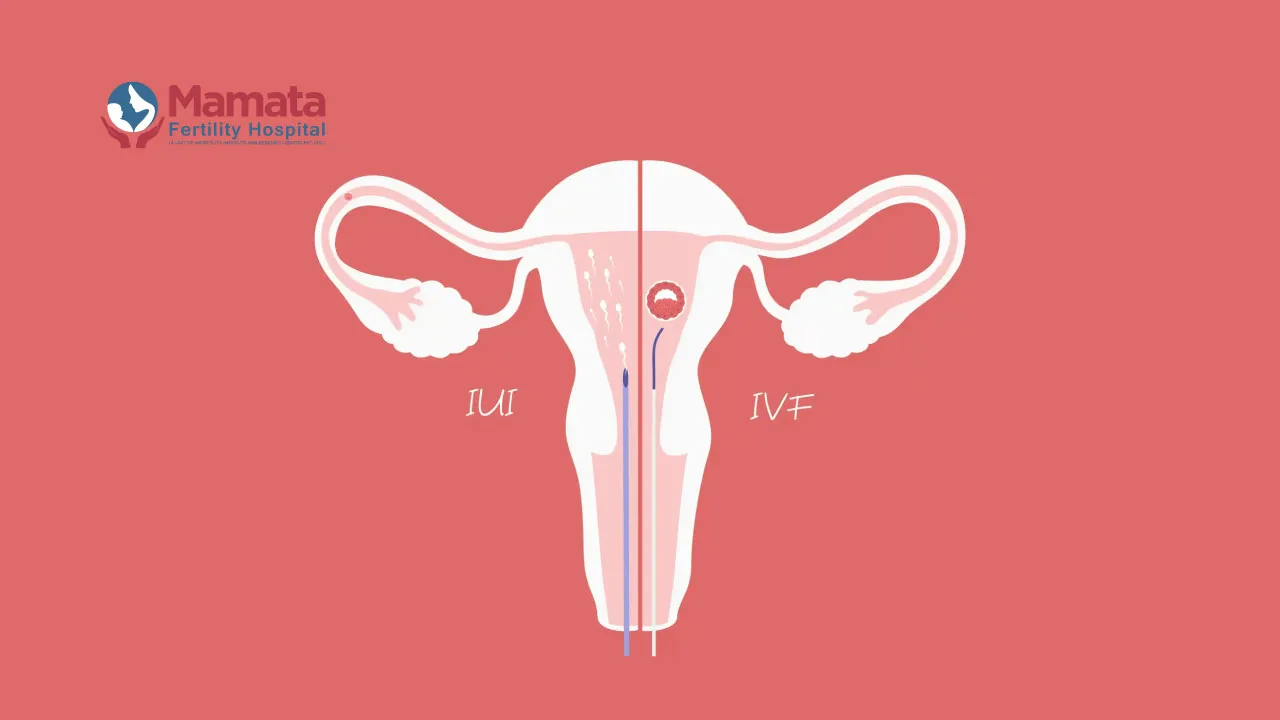
Understanding the Difference: IUI vs IVF at a Glance
Before comparing pain, it helps to understand what each treatment involves.
IUI (Intrauterine Insemination) is a relatively simple procedure. Sperm , either from a partner or donor , is washed and concentrated in the laboratory, then placed directly into the uterus using a thin, flexible catheter. The procedure takes about 5–10 minutes.
IVF (In Vitro Fertilisation) is a multi-step process spanning approximately 2–4 weeks per cycle. It involves ovarian stimulation (daily injections), monitoring scans, surgical egg retrieval, fertilisation in the laboratory, and embryo transfer into the uterus. For a full picture of the timeline, How Long Does the IVF Process Take From Start to Finish?
If you are trying to decide between the two, the comparison article IVF vs IUI , Which Is Right for You? covers the clinical differences in detail. This article focuses specifically on the physical experience , what you will actually feel at each stage.
What Does IUI Feel Like?
Most women describe IUI as mildly uncomfortable at most. Here is what happens at each step:
Before the Procedure: Medications
Depending on your protocol, you may take oral medications (Clomid or letrozole) or injectable gonadotropins to stimulate follicle development before IUI.
Oral medications (Clomid/letrozole) have no injection-related discomfort. Side effects can include mood swings, mild headaches, and hot flushes , but these are hormonal effects, not procedural pain.
Injectable gonadotropins involve daily subcutaneous (under the skin) injections, usually in the abdomen or thigh. These are thin, short needles , most patients describe a quick sting lasting a second or two. The injection site may be mildly sore afterwards. With practice, most patients find the injections manageable by day two or three.
The IUI Procedure Itself
You lie on an examination table as you would for a Pap smear. A speculum is inserted to visualise the cervix, and a thin, soft catheter is gently passed through the cervical opening into the uterus. The washed sperm sample is then deposited through the catheter.
What this feels like: mild cramping, similar to the onset of period pain, lasting a few seconds to a couple of minutes. Some women feel nothing. Some feel a brief, sharp twinge as the catheter passes through the cervix. Very rarely, some women experience stronger cramping , particularly if the cervix is narrow or the uterus is tilted.
The entire procedure takes 5–10 minutes. You rest for a few minutes afterwards, then go home. Most women return to work the same day.
After IUI
Mild cramping can continue for a few hours after the procedure. Some women experience light spotting. Neither is a cause for concern. You do not need pain medication for most IUI procedures, though a simple painkiller taken 30–60 minutes before can reduce any discomfort if you are anxious or know you are sensitive to cervical procedures.
What Does IVF Feel Like?
IVF involves more physical steps than IUI, and the experience is more prolonged. But “painful” is not the word most patients use. “Uncomfortable” and “tiring” come up more often. Here is what each stage feels like:
Stage 1: Stimulation Injections (Days 1–12 Approximately)
This is the most prolonged physical part of IVF. You give yourself daily subcutaneous injections (sometimes two injections per day) to stimulate the ovaries to produce multiple follicles.
The injections themselves feel like a quick pinch or sting , similar to IUI medications. The abdomen or thigh area may become tender over the course of the stimulation phase.
As the follicles grow, your ovaries enlarge. Most women notice:
- A feeling of bloating or fullness in the lower abdomen
- Mild to moderate pelvic heaviness
- Some breast tenderness and mild mood fluctuations
- Fatigue
These effects are at their strongest in the last few days before egg retrieval. They are not sharp pain for most women, but they are noticeable and can make physical activity feel less comfortable. Vigorous exercise is usually not recommended during this phase because the enlarged ovaries are at mild risk of twisting (ovarian torsion) , your fertility team will guide you on activity levels.
To understand what the 5 stages of IVF involve from start to finish, including what to expect at each one, read our full guide.
Stage 2: Monitoring Scans
During stimulation, you will have several transvaginal ultrasound scans to monitor follicle growth. These are internally performed scans using a smooth probe.
What this feels like: mild pressure and occasional discomfort , particularly in the later days of stimulation when the ovaries are full and enlarged. It is not painful for most women, but the pressure sensation may be noticeable.
Stage 3: The Trigger Injection
Around 36 hours before egg retrieval, you give a trigger injection (usually hCG or a GnRH agonist) to mature the eggs. This is another subcutaneous injection, similar to the stimulation injections. Some women notice an increase in pelvic pressure and bloating in the hours after the trigger.
Stage 4: Egg Retrieval , The Step Most Patients Worry About
This is the step that patients most often ask about in terms of pain. The answer: you are sedated, so you do not feel the procedure while it is happening.
Egg retrieval at Mamata Fertility Hospital is performed under intravenous (IV) sedation. You are drowsy or asleep, and the procedure takes approximately 20–30 minutes. A fine needle is passed vaginally under ultrasound guidance to aspirate the follicles , you are not awake and aware of this.
After the procedure, as the sedation wears off:
- Most women feel moderate cramping and pelvic soreness, similar to strong period pain
- This typically lasts a few hours, and most women manage it with standard oral painkillers
- Bloating and pelvic heaviness can continue for 24–48 hours
- Most women rest for the remainder of the day and feel well enough for light activity the following day
A small number of women develop OHSS (Ovarian Hyperstimulation Syndrome), particularly those with PCOS or a high follicle count. Mild OHSS causes increased bloating and discomfort. Moderate to severe OHSS (rare) causes significant abdominal swelling, nausea, and may require close monitoring or hospitalisation. Your fertility team monitors you throughout stimulation specifically to reduce this risk. Understanding how PCOS affects IVF is part of your pre-treatment assessment.
Stage 5: The Embryo Transfer
After fertilisation and embryo development in the laboratory (typically 3–5 days), the best-quality embryo is transferred to the uterus. This step is very similar to IUI.
A speculum, a thin catheter through the cervix, ultrasound guidance for precision, and the embryo is placed gently in the uterine cavity. Most women feel mild cramping for a few minutes. Most describe it as more emotionally significant than physically uncomfortable.
After the transfer, you rest for a short time and then go home. What to do after embryo transfer is important , your fertility team will give you specific guidance on activity, medications, and what to watch for.
IUI vs IVF Pain | A Side-by-Side Summary
| IUI | IVF | |
|---|---|---|
| Injections | Usually none, or a few days if injectable medications used | 10–14 days of daily injections |
| Procedure pain | Mild cramping, 5–10 minutes | Egg retrieval under sedation; embryo transfer similar to IUI |
| Bloating/fullness | Mild, if injectable medications used | Moderate; increases as stimulation progresses |
| Recovery time | Same day, back to work immediately | Rest day after egg retrieval; light activity resumes day 2 |
| Pain scale (most patients) | 1–3 out of 10 | Injections: 1–2; retrieval aftermath: 3–5; transfer: 1–2 |
| OHSS risk | Low (if injectables used) | Low to moderate; monitored throughout |
What Hurts More , IUI or IVF?
IVF involves more physical steps and a longer experience of mild-to-moderate discomfort. The daily injections, progressive bloating, and post-retrieval soreness make it more physically demanding than IUI.
But for most women, neither procedure crosses into “painful” territory as they might fear.
The most frequently cited challenges are:
- Fatigue from the stimulation process
- Bloating and fullness in the week before egg retrieval
- Emotional intensity throughout , which often feels harder than the physical experience
The fear of pain is understandable but frequently bigger than the reality. Many women say: “I was expecting much worse.”
If you are specifically worried about the egg retrieval, remember that this is the one step where sedation means you do not feel the procedure itself. The post-retrieval soreness is manageable and short-lived.
The Emotional Experience , Harder Than the Physical One
This is something fertility clinics do not always say clearly enough: for many patients going through IUI or IVF, the emotional experience is significantly harder than the physical one.
The uncertainty , waiting for fertilisation results, waiting for embryo development updates, waiting through the two-week wait , creates a specific kind of emotional strain that the physical discomfort of injections or cramping rarely matches.
Stress and its effect on fertility is real, and managing emotional wellbeing during treatment is not a soft extra , it is part of the clinical picture.
At Mamata Fertility Hospital, counselling services are integrated into IVF care , not an afterthought. If you are feeling overwhelmed by the process, speaking with a counsellor before, during, or after treatment is available and encouraged.
Tips for Managing Discomfort During IUI and IVF
For IUI:
- Take a simple painkiller (ibuprofen or paracetamol) 30–60 minutes before the procedure if you are concerned about discomfort
- Wear comfortable, loose clothing on the day
- Have someone accompany you if you feel anxious , the procedure is quick but emotional support helps
- Rest for a short period after; you can resume normal activity the same day
For IVF injections:
- Ice the injection site for 30 seconds before injecting to reduce the sting
- Rotate injection sites to avoid soreness building up in one area
- Allow the medication to reach room temperature before injecting if it has been refrigerated
- The first few injections feel the most foreign , most patients find them much easier by day four or five
For IVF stimulation phase:
- Wear loose, comfortable clothing , tight waistbands become uncomfortable as bloating increases
- Reduce high-impact exercise; walking and gentle yoga are usually fine unless your team advises otherwise
- Stay well hydrated , this also helps reduce OHSS risk
- Rest when you need to; fatigue is normal and not a sign that something is wrong
For egg retrieval:
- Arrange for someone to drive you home , you will not be able to drive after sedation
- Plan for a rest day; most women feel well enough for light activity the next day
- A warm compress on the lower abdomen can help with post-retrieval soreness
- Contact your clinic if cramping is severe, fever develops, or you notice significant abdominal distension (possible signs of OHSS)
For embryo transfer:
- A full or partially full bladder is usually required for ultrasound guidance , drink water as instructed
- Take a painkiller 30–60 minutes before if you experienced discomfort during IUI
- The transfer itself is quick; focus on breathing steadily
IUI and IVF at Mamata Fertility Hospital, Hyderabad
At Mamata Fertility Hospital, patient comfort during treatment is a priority , not a footnote. Our team will walk you through every step of the procedure before you experience it, answer your questions honestly, and use protocols designed to minimise discomfort at each stage.
For IVF, egg retrieval is always performed under sedation at our ICMR-registered facility. Our laboratory team provides regular embryo development updates so that you are not left wondering in silence.
For patients in Hyderabad and Secunderabad, our IVF team is accessible, communicative, and experienced in supporting patients through both the physical and emotional dimensions of fertility treatment. Whether you are starting with IUI or moving directly to IVF, your first step is a consultation where we review your diagnosis and recommend the most appropriate treatment for your specific situation.
Curious about what your first appointment involves?
What to Expect During Your First Fertility Consultation?
Thinking about cost? Check in Detailed IVF Cost in Hyderabad , A Transparent Guide
Frequently Asked Questions
Is IUI painful?
For most women, IUI is mildly uncomfortable , similar to period cramps , and lasts only a few minutes. Some women feel nothing at all. Very few women experience significant pain. A simple painkiller taken beforehand can reduce discomfort.
Is egg retrieval in IVF painful?
No , egg retrieval is performed under IV sedation, so you are not awake and aware during the procedure. After the sedation wears off, most women experience cramping and pelvic soreness similar to strong period pain, which usually settles within a few hours to a day with standard pain relief.
Which is more uncomfortable , IUI or IVF?
IVF involves more physical steps and a longer period of mild discomfort (injections, bloating, retrieval recovery). IUI is a single short procedure with minimal discomfort for most women. IVF is more physically demanding overall, but neither is typically described as severely painful.
Do IVF injections hurt?
The injections use thin, short needles and most patients describe a quick sting or pinch lasting one to two seconds. Some soreness at the injection site is normal. Most patients find the injections much more manageable than they expected, particularly after the first few days.
Can I take a painkiller before IUI or embryo transfer?
Yes , ibuprofen or paracetamol taken 30–60 minutes before the procedure can reduce cramping. Always confirm with your fertility team which medication is appropriate, particularly during the IVF two-week wait when some medications are not recommended.
What does the two-week wait after IVF feel like?
Physically, the two-week wait is usually unremarkable , some bloating may continue from stimulation, and progesterone support medications may cause some local side effects. Emotionally, the two-week wait is one of the most challenging parts of IVF for many patients. Symptoms to look for after IVF and how to manage the wait are covered in our guide.
Is the embryo transfer painful?
The embryo transfer is very similar to IUI , a thin catheter through the cervix, mild cramping for a few minutes. For most patients it is more emotionally significant than physically uncomfortable. It is performed without sedation.
Will I need time off work for IUI or IVF?
IUI: most women return to work or normal activity the same day. IVF: a rest day is recommended after egg retrieval; most women return to normal activity within 1–2 days. The stimulation phase itself does not require time off, but monitoring appointments (usually early morning) need to be factored into your schedule.
The Pain Question Has a Simple Answer , The Decision Is More Complex
IUI causes mild, brief discomfort for most women. IVF is more physically involved but structured carefully to minimise pain , particularly at the egg retrieval stage, where sedation means you do not feel the procedure.
What most patients tell us, looking back, is that the emotional experience was harder than the physical one. The uncertainty, the waiting, and the emotional intensity of fertility treatment are what people most remember , not the injections or the cramping.
If fear of pain has been stopping you from taking the next step, the honest answer is: it is more manageable than most people expect. The right clinic will prepare you thoroughly, answer your questions honestly, and support you through both the physical and emotional side of treatment.
Ready to Understand What Treatment Is Right for You?
You deserve honest answers , about what each procedure feels like, what it involves, and which option gives you the best chance of success based on your specific situation.
At Mamata Fertility Hospital Hyderabad, your initial consultation is a detailed, unhurried conversation with a fertility specialist who will review your diagnosis, explain your options clearly, and answer every question you have , including the ones you have been afraid to ask.
✅ IUI and IVF at our ICMR-registered facility
✅ IV sedation for egg retrieval , you will not feel the procedure
✅ Patient counselling integrated into care
✅ Transparent, step-by-step preparation before every procedure
✅ Hyderabad & Secunderabad locations
Book a Fertility Consultation Today
040 45678899 | 91 8790337035 📍 Secunderabad,Hyderabad
Your Title Goes Here
Your content goes here. Edit or remove this text inline or in the module Content settings. You can also style every aspect of this content in the module Design settings and even apply custom CSS to this text in the module Advanced settings.
Your Title Goes Here
Your content goes here. Edit or remove this text inline or in the module Content settings. You can also style every aspect of this content in the module Design settings and even apply custom CSS to this text in the module Advanced settings.

Dr Aarti Deenadayal Tolani
MBBS, MS ( OBGYN), FICOG
Clinical Director, Scientific In- Charge & Fertility Consultant with 20+ years Of Experience
Her Expertise:
CONSULT FERTILITY SPECIALIST

LATEST BLOGS

How to Read and Interpret a Semen Analysis Test Report?
Learn how to read and interpret a semen analysis report, including sperm count, motility, morphology, semen volume, vitality, Total Motile Count, and WHO 2021 reference values.

How to Choose an IVF Clinic: A Patient’s Checklist
Choosing an IVF clinic? Use this patient checklist to compare diagnosis, ART registration, success rates, costs, treatment teams, add-ons and support.

Understanding Sperm DNA Fragmentation Test and IVF Success
Understand sperm DNA fragmentation testing, DFI levels, causes of high sperm DNA damage, and how SDF can affect IVF, ICSI, embryo quality and miscarriage risk.

Oligospermia Treatment: Low Sperm Count & Pregnancy Options
Oligospermia means a low sperm count. Learn its causes, diagnosis, treatment options, IUI, IVF with ICSI, and chances of conception.
