
IVF Diet: What to Eat Before and During Treatment
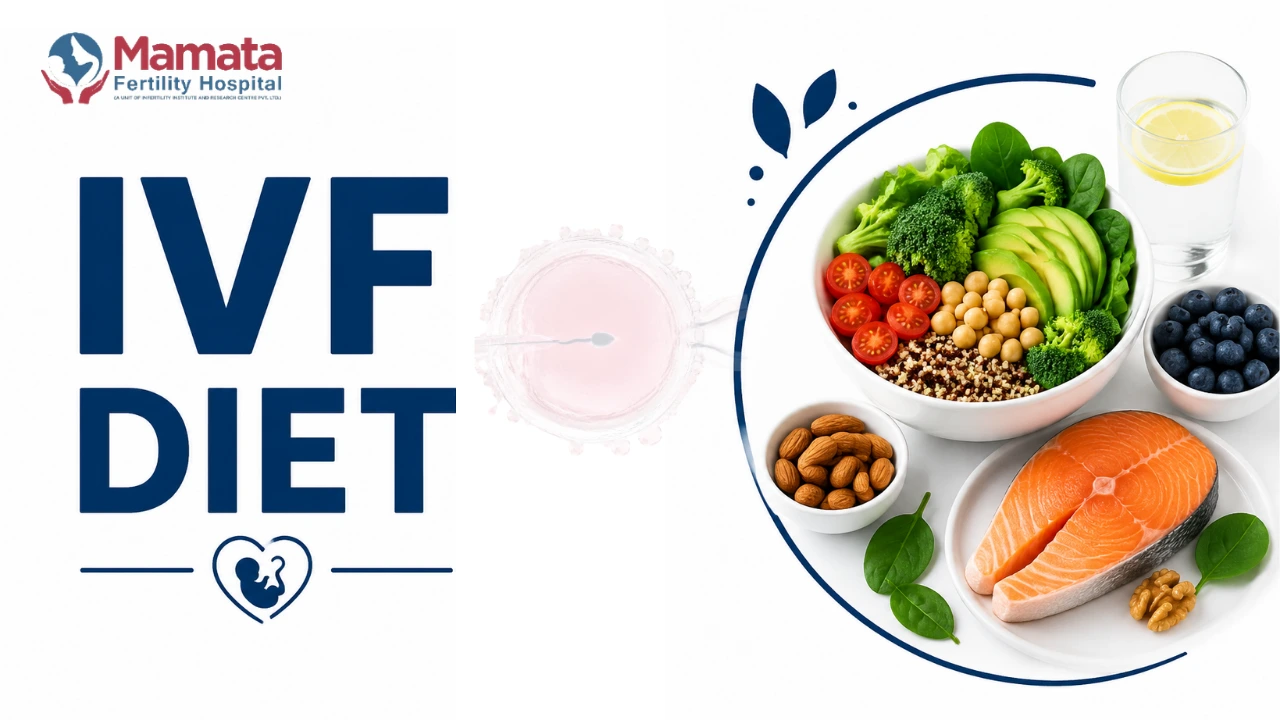
A Mediterranean-style diet — high in vegetables, fruit, whole grains, legumes, fish, and olive oil, and low in processed food, red meat, and sugar — is the eating pattern most consistently linked to better IVF outcomes in current research, according to a 2022 ASRM committee opinion. Evidence isn’t uniformly positive: while several cohort studies link this diet to higher pregnancy rates, at least one study found no significant association, so it should be treated as a reasonable, evidence-informed choice rather than a proven guarantee. Maintaining a healthy body weight, adequate folate intake, and avoiding alcohol and smoking are more firmly established recommendations than any single “fertility food.”
Foods Generally Encouraged During IVF
| Food group | Examples | Why it’s included |
| Vegetables and fruit | Leafy greens, berries, colourful vegetables | Provide folate, antioxidants, and fibre |
| Whole grains | Oats, brown rice, whole wheat | Associated with the Mediterranean/pro-fertility pattern |
| Legumes and nuts | Lentils, chickpeas, walnuts, almonds | Plant protein and healthy fats |
| Fish | Salmon, sardines, mackerel | Source of omega-3 fatty acids linked to embryo development in some studies |
| Healthy fats | Olive oil | Core component of the Mediterranean dietary pattern |
| Dairy | Low-fat dairy, in moderation | Included in most studied “pro-fertility” diet patterns |
There’s no single “IVF diet” proven to guarantee success, but growing research suggests that eating patterns like the Mediterranean diet — rich in vegetables, whole grains, fish, and healthy fats — are associated with better IVF outcomes compared with a typical Western diet high in processed food and red meat.
Diet is one piece of a much bigger picture that includes age, egg and sperm quality, and the specific fertility issue being treated, so it should be seen as a supportive habit, not a guaranteed fix.
Key Nutrients That Come Up in Fertility Nutrition Research
- Folate/folic acid — well-established for preventing neural tube defects; adequate intake is recommended before and during pregnancy attempts.
- Vitamin D — some research associates sufficient vitamin D status with reproductive outcomes, though evidence for supplementation specifically to boost IVF success is still developing.
- Omega-3 fatty acids — found in fish; some studies link higher intake to improved embryo development, though this isn’t established as a guaranteed benefit.
- Iron and B12 — relevant for overall health and are commonly reviewed as part of preconception bloodwork.
Supplement needs vary by individual, and taking supplements beyond what your fertility team recommends is not automatically beneficial and, in some cases, can interact with medications. Ask your clinic before starting anything new.
What Does a Normal BPD Range Indicate?
The BPD ranges vary depending on your stage of pregnancy. Here’s a rough guide to what normal ranges might look like:
- At 20 weeks gestation: BPD typically measures around 4.4 to 4.7 cm.
- At 28 weeks gestation: BPD increases to approximately 7.2 to 7.6 cm.
- At 36 weeks gestation and beyond: The measurement reaches about 8.6 to 9.6 cm.
A BPD within these ranges indicates healthy and consistent fetal brain and skull growth. However, the healthcare provider also interprets this result alongside other fetal measurements, such as the head circumference (HC), abdominal circumference (AC), and femur length (FL), for a complete view of your baby’s development.
Does Diet Actually Affect IVF Success?
Diet is one of several modifiable factors that may influence IVF outcomes, alongside body weight, smoking, alcohol use, and stress management. ASRM’s 2022 committee opinion on optimizing natural fertility notes that couples with higher adherence to a Mediterranean or similar “pro-fertility” dietary pattern before treatment showed higher rates of positive pregnancy tests and, in some studies, live birth. One frequently cited cohort study found the Mediterranean diet increased the probability of pregnancy in couples undergoing IVF/ICSI, with an odds ratio of 1.4.
That said, the evidence isn’t unanimous. A separate cohort study found no significant association between Mediterranean diet adherence and IVF success. Most of this research is observational, meaning it shows a pattern, not proof that diet directly causes better outcomes — other factors, like overall health consciousness, could play a role too. This is why fertility specialists generally frame diet as a supportive factor worth optimising, rather than a treatment in itself.
Foods and Habits Generally Limited or Avoided
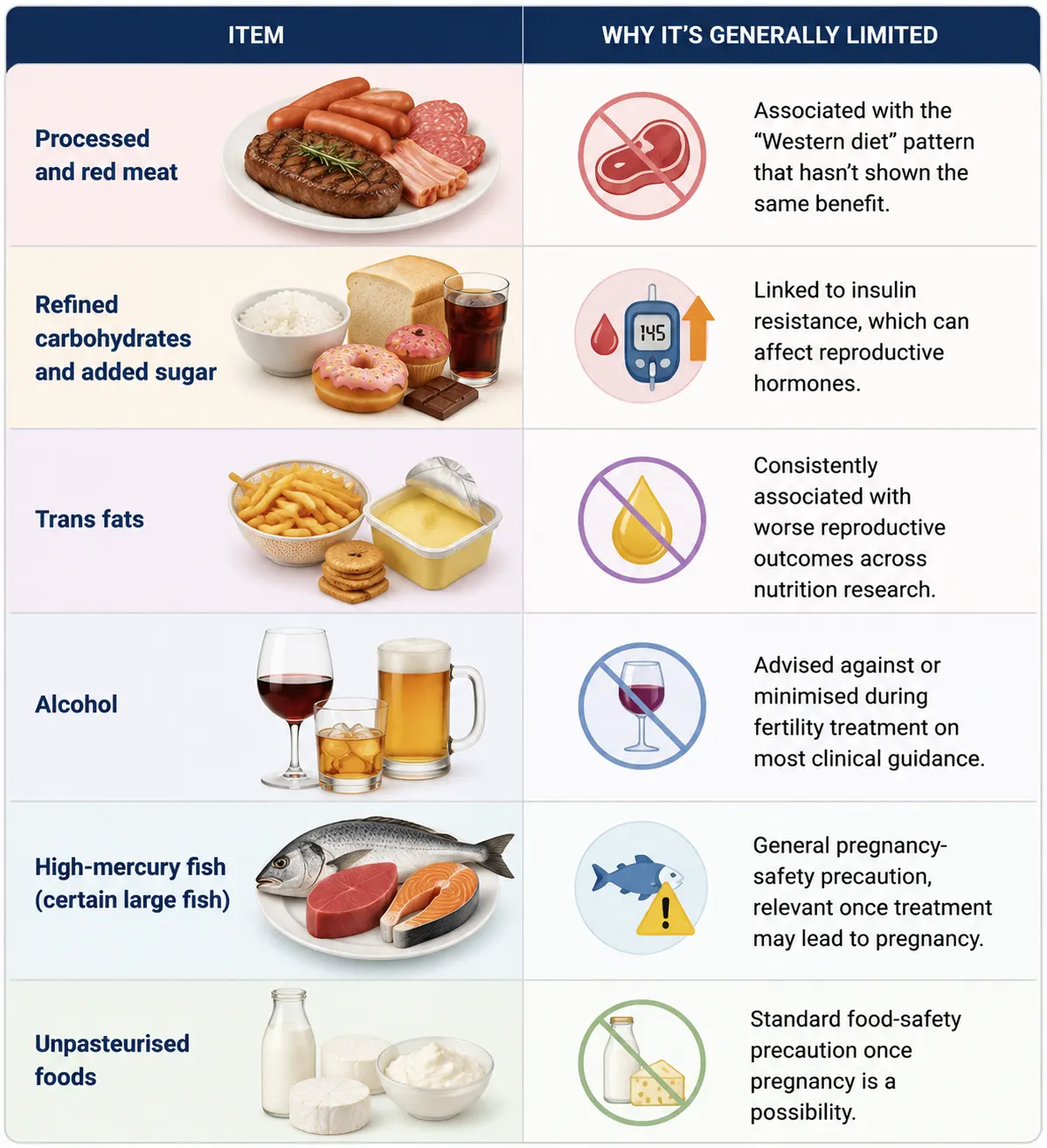
|
Item |
Why it’s generally limited |
|
Processed and red meat |
Associated with the “Western diet” pattern that hasn’t shown the same benefit |
|
Refined carbohydrates and added sugar |
Linked to insulin resistance, which can affect reproductive hormones |
|
Trans fats |
Consistently associated with worse reproductive outcomes across nutrition research |
|
Alcohol |
Advised against or minimised during fertility treatment on most clinical guidance |
|
High-mercury fish (certain large fish) |
General pregnancy-safety precaution, relevant once treatment may lead to pregnancy |
|
Unpasteurised foods |
Standard food-safety precaution once pregnancy is a possibility |
Mediterranean Diet vs Western Diet for IVF
|
Feature |
Mediterranean Pattern |
Western Pattern |
|
Core foods |
Vegetables, fruit, whole grains, fish, olive oil |
Red/processed meat, refined grains, fried food, sugar-sweetened drinks |
|
Associated IVF research findings |
Linked to higher pregnancy rates in several cohort studies |
Not associated with improved fertility outcomes in comparative studies |
|
Inflammation profile |
Generally considered anti-inflammatory |
Generally considered more pro-inflammatory |
|
Evidence strength |
Moderate — mostly observational cohort studies, one study found no link |
N/A — used as the comparison baseline in most studies |
Does Body Weight Matter for IVF?
Body weight — both underweight and higher-weight ranges — can influence hormone levels and ovarian response to stimulation medications. Rather than focusing on a specific number, most fertility teams assess weight as one factor alongside ovarian reserve testing and overall health, and may suggest gradual, medically supervised changes if relevant to your specific treatment plan.
Does the Male Partner’s Diet Matter Too?
Yes — sperm quality can be influenced by diet, weight, and lifestyle factors like smoking and alcohol. Research on the Mediterranean diet and similar patterns generally studies couples together, since both partners’ health can affect IVF outcomes. If your partner is also preparing for treatment, the same general principles — more whole foods, less processed food and alcohol — are commonly recommended.
Practical Steps: Building an IVF-Friendly Plate
- Fill half your plate with vegetables at most meals.
- Swap refined grains for whole grains where practical (brown rice instead of white, whole wheat instead of white bread).
- Include fish twice a week where possible, choosing lower-mercury options.
- Use olive oil as your main cooking fat where suitable for your cooking style.
- Limit sugary drinks and highly processed snacks, replacing them with fruit, nuts, or plain yogurt.
- Check your folic acid intake with your doctor, since needs may differ from general population guidance.
- Talk to your clinic about alcohol and caffeine limits specific to your treatment stage.
When to Talk to a Dietitian or Fertility Specialist
Consider asking for a referral to a registered dietitian if you have a specific condition like PCOS, diabetes, a diagnosed nutrient deficiency, disordered eating, or if you’re finding it hard to make sustainable changes on your own. A dietitian can tailor recommendations to your bloodwork and treatment plan rather than relying on general advice alone.
FAQ
Is there one specific "IVF diet" doctors recommend?
No single diet is officially prescribed for IVF. The Mediterranean-style eating pattern has the most consistent research support among the patterns studied so far.
How soon before IVF should I change my diet?
There’s no fixed timeline established by research, but many clinics suggest starting dietary changes a few months before treatment, since egg and sperm maturation happens over roughly that timeframe.
Can a bad diet cause IVF failure?
Diet is one of many contributing factors, not a sole cause of IVF outcomes. Age, egg/sperm quality, and the underlying fertility diagnosis typically play a larger role than diet alone.
Do fertility supplements actually work?
Evidence varies by supplement. Folic acid has well-established benefits for pregnancy; others, like CoQ10 or specific antioxidants, have more limited or mixed evidence. Discuss any supplement with your clinic before starting it.
Is caffeine safe during IVF treatment?
Guidance varies by clinic. Many recommend moderating caffeine intake during treatment; ask your specific clinic what limit they recommend
Should I avoid dairy during IVF?
There’s no strong evidence that dairy needs to be avoided entirely; low-fat dairy is included in most studied “pro-fertility” diet patterns. If you suspect an intolerance, discuss it with your care team.
Does weight loss improve IVF success?
For some patients, weight changes can affect ovarian response and hormone levels, but this is individual. Your fertility specialist can advise whether weight is a relevant factor in your specific treatment plan
Can diet improve egg quality?
Some nutrients (like antioxidants and omega-3s) are studied for a possible role in egg quality, but evidence for a direct, reliable effect is still developing, and diet alone cannot reverse age-related changes in egg quantity or quality
Is intermittent fasting safe during IVF?
This hasn’t been well studied specifically in IVF patients, and fasting protocols can affect blood sugar and hormone levels. Check with your fertility team before trying it during treatment

Dr Aarti Deenadayal Tolani
MBBS, MS ( OBGYN), FICOG
Clinical Director, Scientific In- Charge & Fertility Consultant with 20+ years Of Experience
Her Expertise:
CONSULT FERTILITY SPECIALIST

LATEST BLOGS

How to Read and Interpret a Semen Analysis Test Report?
Learn how to read and interpret a semen analysis report, including sperm count, motility, morphology, semen volume, vitality, Total Motile Count, and WHO 2021 reference values.

How to Choose an IVF Clinic: A Patient’s Checklist
Choosing an IVF clinic? Use this patient checklist to compare diagnosis, ART registration, success rates, costs, treatment teams, add-ons and support.

Understanding Sperm DNA Fragmentation Test and IVF Success
Understand sperm DNA fragmentation testing, DFI levels, causes of high sperm DNA damage, and how SDF can affect IVF, ICSI, embryo quality and miscarriage risk.
Oligospermia Treatment: Low Sperm Count & Pregnancy Options
Oligospermia means a low sperm count. Learn its causes, diagnosis, treatment options, IUI, IVF with ICSI, and chances of conception.
