

Successful IUI Symptoms and Signs
Medically reviewed by Dr. Aarti Deenadayal Tolani, Fertility Specialist & IVF Expert, Mamata Fertility Hospital, Hyderabad
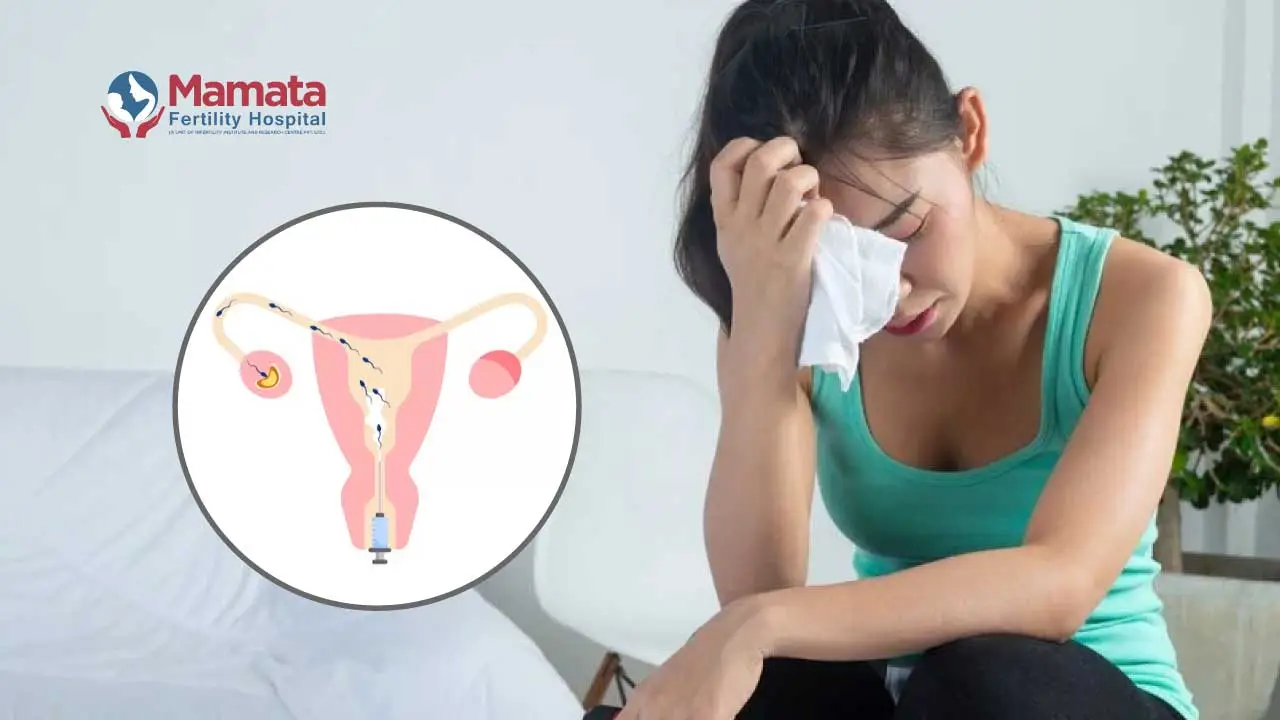
Early signs of a successful IUI may include light spotting, mild cramping, breast tenderness, and fatigue, typically appearing between 6 and 14 days after the procedure. However, many of these symptoms are also caused by fertility medications such as progesterone and the hCG trigger shot. The only reliable confirmation of a successful IUI is a positive pregnancy test taken 14 days after the procedure.
What Is IUI and How Does It Work?
Intrauterine insemination (IUI) is a fertility procedure in which washed, concentrated sperm is placed directly into the uterus around the time of ovulation. It is one of the first-line fertility treatments recommended for unexplained infertility, mild male factor infertility, and certain cases of PCOS.
After the procedure, fertilisation must occur in the fallopian tube. If successful, the embryo travels to the uterus and implants in the endometrial lining — a process that takes between 6 and 10 days. It is only after implantation that the body begins producing hCG (human chorionic gonadotropin), the hormone detected by a pregnancy test.
Are Your Symptoms from Pregnancy or Your Medication?
This is the question every IUI patient asks and the one most articles fail to answer honestly.
If your IUI cycle included an hCG trigger shot to induce ovulation, that synthetic hCG remains in your system for up to 10 days after injection. It can cause breast tenderness, bloating, and mild nausea and it can even produce a false positive on a home pregnancy test if taken too early.
If you are taking progesterone suppositories or pessaries as luteal phase support (which most IUI patients are), these cause nearly identical symptoms to early pregnancy: breast soreness, bloating, fatigue, mood changes, and cramping. Your body cannot tell the difference and neither can you, based on symptoms alone.
The practical takeaway: Symptoms during the first 10 days post-IUI are almost always medication-related, not pregnancy-related. Do not read too much into how you feel during this window. The only way to know is to test at 14 days.
Early Signs of Successful IUI
While symptoms are unreliable indicators, some signs are more associated with implantation and early pregnancy than with medication:
Implantation Bleeding: Light spotting or pinkish discharge between day 6 and day 10 after IUI can indicate that the fertilised egg has attached to the uterine lining. It is usually lighter than a normal period and lasts only 1–2 days. Not everyone experiences this its absence does not mean IUI failed.
Implantation Cramping: Mild, short-lived cramping around days 6–10 different in character from period cramps, can accompany implantation. It is usually one-sided and brief.
Persistent Breast Tenderness: While progesterone causes breast tenderness, some women report that breast soreness after a successful IUI feels more intense and continues beyond day 10.
Fatigue: Deep tiredness, beyond what your medication typically causes, can be an early pregnancy signal — though it is difficult to distinguish from progesterone-induced fatigue.
Absence of Period: The clearest positive sign. If your period does not arrive when expected, take a pregnancy test.
IUI Symptoms vs PMS: How to Tell the Difference
| Symptom | PMS | Early Pregnancy After IUI |
|---|---|---|
| Breast tenderness | Common, eases when period starts | Persistent, may intensify |
| Cramping | Starts 1–2 days before period | May occur at implantation (6–10 days post-IUI) |
| Spotting | Rare | Light implantation bleeding possible |
| Bloating | Common | Common |
| Fatigue | Common | Often more pronounced |
| Nausea | Uncommon | More likely in early pregnancy |
| Mood changes | Common | Common |
| Symptom duration | Resolve when period arrives | Continue or worsen after missed period |
The most meaningful differentiator is timing and persistence. PMS symptoms resolve when your period begins. Early pregnancy symptoms do not.
“Understanding early signs of successful IUI is crucial. Symptoms vary, so stay informed and consult your healthcare provider.”
Day-by-Day Timeline After IUI
Days 1–2: Mild cramping and light spotting from the catheter placement. This is procedural — not a sign of implantation or failure.
Days 3–5: If you had a trigger shot, residual hCG is still in your system. Any symptoms during this window are almost entirely medication-related. Follicle monitoring at this stage may confirm ovulation occurred.
Days 6–10: The implantation window. If fertilisation occurred, the embryo is travelling to the uterus and beginning to attach. You may notice mild spotting or cramping — or nothing at all. Both are normal.
Days 10–12: If implantation was successful, hCG levels are beginning to rise. A blood test (beta hCG) at your clinic can detect pregnancy at this point. Home tests may still be inconclusive.
Day 14: The recommended date for a home pregnancy test. Use first morning urine, which contains the highest concentration of hCG. A positive result at this point is a reliable indicator of pregnancy.
Day 15 and Beyond: If no period has arrived and you have not tested, test now. A persistent absence of menstruation combined with ongoing early pregnancy symptoms strongly suggests a successful outcome.
Signs That IUI May Not Have Worked
Knowing what a negative result looks like is just as important as knowing the positive signs.
- Your period arrives at its expected time
- A negative home pregnancy test at 14 days (when taken correctly)
- No pregnancy symptoms, followed by a normal period
A negative result from one IUI cycle does not mean treatment has failed overall. Most fertility specialists recommend 3–6 IUI cycles before reassessing. Success rates improve cumulatively, couples who do not conceive in cycle one have a meaningful chance in cycles two, three, and beyond.
If you have had multiple unsuccessful cycles, it may be time to discuss IVF treatment with your specialist.
What Are the Real Success Rates of IUI?
IUI success rates vary significantly based on several factors:
- Under 35: 15–20% per cycle
- Age 35–40: 10–15% per cycle
- Over 40: 5–10% per cycle
Diagnosis also plays a role. Patients with unexplained infertility or mild male factor infertility generally respond better to IUI than those with blocked tubes or severe sperm issues. Female hormone testing and a full fertility assessment before starting IUI helps predict your personal probability of success.
Cumulative success rates over 3–6 cycles are significantly higher than single-cycle figures which is why persistence, where appropriate, is often recommended.
When to Call Your Doctor?
Contact your fertility specialist immediately if you experience:
- Heavy bleeding (heavier than a normal period) before day 14
- Severe abdominal pain or bloating possible sign of ovarian hyperstimulation syndrome (OHSS)
- Fever alongside cramping
- No period and a negative test at day 16 or beyond
Our team at Mamata Fertility Hospital is available during and after your cycle. Do not hesitate to call — 040 45678899.
Managing the Two-Week Wait
The emotional toll of the two-week wait is real and valid. Uncertainty is genuinely difficult to sit with. Some practical strategies:
- Avoid testing before day 14 early testing raises anxiety without giving reliable results
- Stay gently active light walking, yoga, and breathing exercises support circulation without stress
- Limit time on fertility forums anecdotal symptom comparisons fuel anxiety more than calm
- Lean on your support network or consider our fertility counselling service if the emotional load feels heavy
When to Consult a Fertility Specialist?
If you are unsure about your symptoms, experiencing anxiety during the two-week wait, or want to discuss your results positive or negative our team at Mamata Fertility Hospital is here.
Dr. Aarti Deenadayal Tolani, Clinical Director and Fertility Consultant, leads a specialist team experienced in every stage of IUI care from pre-cycle assessment to post-result planning.

Dr Aarti Deenadayal Tolani
MBBS, MS ( OBGYN), FICOG
Clinical Director, Scientific In- Charge & Fertility Consultant with 20+ years Of Experience
Her Expertise:
CONSULT FERTILITY SPECIALIST

LATEST BLOGS

How to Read and Interpret a Semen Analysis Test Report?
Learn how to read and interpret a semen analysis report, including sperm count, motility, morphology, semen volume, vitality, Total Motile Count, and WHO 2021 reference values.

How to Choose an IVF Clinic: A Patient’s Checklist
Choosing an IVF clinic? Use this patient checklist to compare diagnosis, ART registration, success rates, costs, treatment teams, add-ons and support.

Understanding Sperm DNA Fragmentation Test and IVF Success
Understand sperm DNA fragmentation testing, DFI levels, causes of high sperm DNA damage, and how SDF can affect IVF, ICSI, embryo quality and miscarriage risk.

Oligospermia Treatment: Low Sperm Count & Pregnancy Options
Oligospermia means a low sperm count. Learn its causes, diagnosis, treatment options, IUI, IVF with ICSI, and chances of conception.
