
Stage 4 Endometriosis and Life Expectancy
Is stage 4 endometriosis life-threatening?
As an endometriosis specialist with over 15 years of experience, the first thing I clarify for my patients is that Stage 4 endometriosis is a classification, not a life sentence.
It is the most severe grade according to the American Society for Reproductive Medicine (ASRM) staging system.
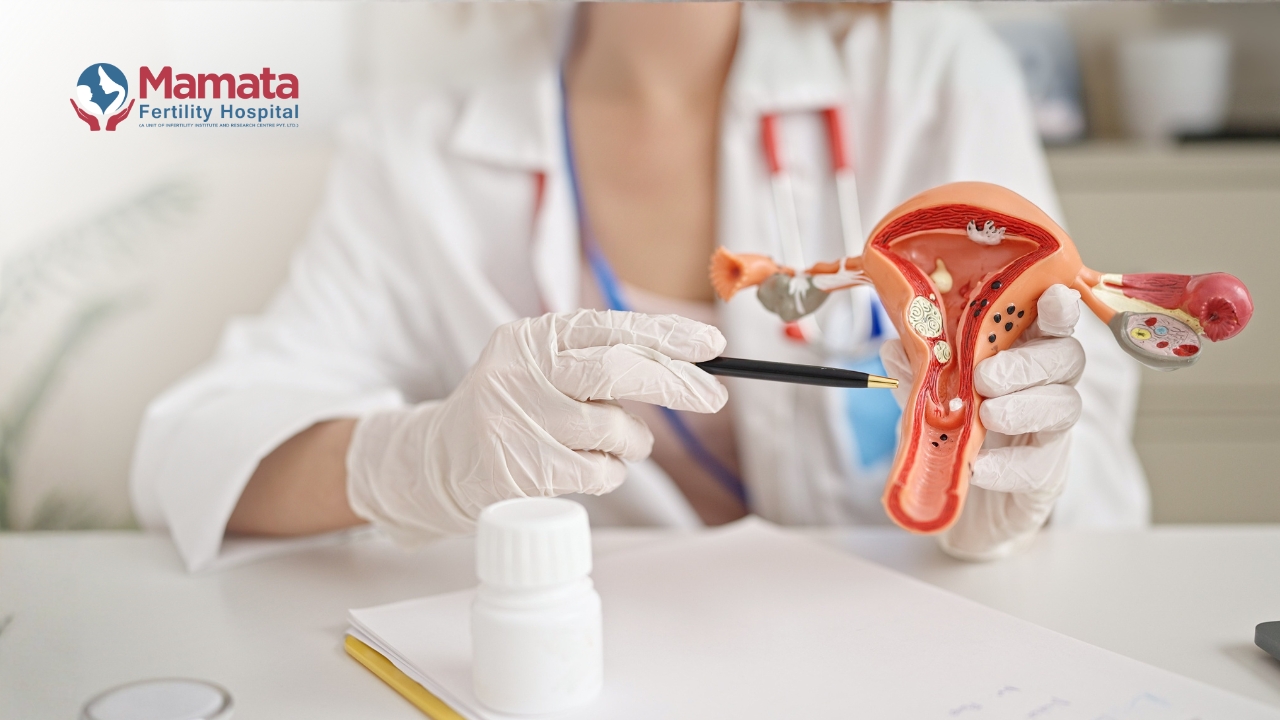
This stage is defined by the extensive presence of endometrial-like tissue outside the uterus, leading to deep infiltration into pelvic organs, the formation of large ovarian cysts called ‘endometriomas’ (often known as chocolate cysts), and the development of widespread, dense scar tissue or adhesions.
In my practice, I often explain this as a condition where organs like the uterus, ovaries, and bowel can become fused together by this scar tissue, a state we call a “frozen pelvis.”
This severe anatomical distortion is the primary reason Stage 4 disease poses significant challenges to fertility and daily quality of life.
Quick Summary
- Is it Life-Threatening? No. Stage 4 endometriosis is a benign (non-cancerous) condition. It does not shorten your life expectancy, but it requires lifelong management to protect your health and well-being.
- Fertility Impact: Natural conception is extremely difficult due to distorted anatomy and a hostile inflammatory pelvic environment. However, treatments like advanced laparoscopic surgery and IVF make parenthood a very realistic goal.
- Gold-Standard Treatment: The most effective strategy often involves a combination of laparoscopic excision surgery to remove the disease, followed by Assisted Reproductive Technology (ART) like IVF to maximise pregnancy chances.
- Why You Shouldn’t Wait: Endometriosis is a progressive disease. Delaying treatment can lead to a significant decline in your ovarian reserve (egg count), making future fertility treatments more complex and less successful.
- Holistic Management: Effective long-term control combines expert medical intervention with targeted diet, stress management, and lifestyle adjustments.
Understanding the Diagnosis: “Doctor, Does Stage 4 Mean It’s Cancer?”
In my 15 years of practice at Mamata Fertility Hospital in Hyderabad, this is the most common question I hear when I deliver a Stage 4 diagnosis.
The term “Stage 4” sounds aggressive, and for an educated woman who researches her condition online, it can trigger immense fear.
Let me state this with absolute certainty:
“Stage 4 endometriosis is NOT cancer and does not lower your life expectancy.”
However, it is a chronic and progressive inflammatory condition that can severely impact your quality of life.
My goal is to move you past the initial panic and provide the scientific clarity you need to make informed decisions, just as I would during a one-on-one consultation in my clinic.
What Symptoms Should I Look For?
While symptoms can vary, Stage 4 endometriosis usually presents a distinct pattern that goes far beyond typical period cramps.
When a patient visits our Endometriosis clinic in Hyderabad, I listen for a specific cluster of signs that point towards severe disease:
- Chronic Pelvic Pain: A persistent, dull ache that may be present throughout the month, worsening significantly during menstruation.
- Severe Dysmenorrhoea: Debilitating period pain that forces you to miss work, social events, or daily activities.
- Deep Dyspareunia: Sharp, deep pain during or after sexual intercourse. This is a major red flag for deep infiltrating endometriosis affecting the uterosacral ligaments.
- Painful Bowel or Bladder Function: Pain during bowel movements (dyschezia) or urination (dysuria), especially around your period, suggests the disease may have infiltrated the bowel or bladder walls.
- Chronic Fatigue: A relentless feeling of exhaustion not relieved by rest, caused by the body’s constant battle with inflammation.
- Infertility: The inability to conceive after one year of trying (or six months if you are over 35).
A common misconception I encounter is patients believing that severe pain is a “normal” part of being a woman.
I recently had a patient, a 34-year-old architect, who had endured painful periods for over a decade.
It was only when she and her husband started trying for a baby that her “normal” pain was correctly identified as a symptom of Stage 4 disease that had fused her ovaries to her uterus.
Early identification is crucial.
–Dr. Arti Deenadayal Tolani
(Clinical Director, Fertility Specialist aat Mamata Fertility Hospital )
How Exactly Does Stage 4 Endometriosis Cause Infertility?
This is the core concern for most of my patients.
Global guidelines from bodies like ESHRE (European Society of Human Reproduction and Embryology) confirm that severe endometriosis creates a perfect storm against fertility.
- Anatomical Distortion (The “Mechanical” Problem): The dense adhesions of a “frozen pelvis” act as a physical barrier. They can block the fallopian tubes, preventing the egg from being picked up after ovulation, or trap the ovaries, making egg release difficult.
- Damage to Ovarian Reserve (The “Egg Count” Problem): Endometriomas are not benign cysts. They are filled with old blood and inflammatory fluid that is toxic to healthy ovarian tissue. As they grow, they compress and destroy the follicles that contain your precious eggs. This directly results in a lower egg count, which we measure with an AMH (Anti-Müllerian Hormone) test. An AMH below 1.2 ng/mL is often a sign of diminished reserve.
- Inflammatory Environment (The “Chemical” Problem): The endometriotic lesions release inflammatory markers (cytokines) into the pelvic fluid. This creates a toxic environment that can impair sperm function, damage egg quality, and interfere with the embryo’s ability to implant in the uterine lining.
What Are My Treatment Options? A Fertility-Focused Approach
When planning your treatment, we must first establish your primary goal: are you focused on pain relief or achieving pregnancy? The strategy will differ.
Medical Management (Hormonal Suppression)
This involves using medications like Dienogest or GnRH agonists to stop periods and suppress the growth of endometrial tissue.
While effective for pain, these drugs prevent ovulation, so they are not suitable when you are actively trying to conceive. They are a “pause button,” not a solution for infertility.
Laparoscopic Excision Surgery (The Gold Standard)
This is a minimally invasive “keyhole” surgery to meticulously cut out (excise) the disease, remove cysts, and restore normal pelvic anatomy.
Unlike ablation (which just burns the surface), excision removes the disease from its root, offering better long-term relief and fertility outcomes.
This surgery is complex and should only be performed by a high-volume, experienced Best Fertility Specialist & Gynecologists to avoid damage to surrounding organs like the bowel or ureter.
Assisted Reproductive Technology (IVF)
For most women with Stage 4 endometriosis, In-Vitro Fertilisation (IVF) is the fastest and most effective path to pregnancy.
The procedure bypasses all the mechanical and chemical barriers by retrieving eggs directly from the ovaries, fertilising them in the lab, and placing the resulting embryo into the uterus.
My Decision Guide: Surgery First or IVF First?
This is one of the most critical decisions we make.
It’s not a one-size-fits-all answer.
Here is a simplified checklist that I use to guide my patients:
| Consider IVF First if… | Consider Surgery First if… |
| Your ovarian reserve (AMH) is already low (e.g., AMH < 1.0 ng/mL). | You have debilitating pain that severely impacts your daily life. |
| You are over 37 years old. | You have very large endometriomas (>5-6 cm) causing symptoms. |
| Your fallopian tubes are known to be blocked. | There is a suspicion of bowel or bladder involvement. |
| This would be a repeat surgery for endometriosis. | You want to attempt natural conception for a short period post-surgery. |
What Happens After Treatment? Long-Term Expectations
Endometriosis is a chronic condition. Even after successful surgery or pregnancy, it can recur. Long-term management involves regular follow-ups and often includes suppressive hormonal therapy (if you are not trying to conceive) to keep the disease at bay. A healthy, anti-inflammatory lifestyle is also a non-negotiable part of the long-term plan.
When to See an Endometriosis Specialist?
If you answer “Yes” to more than two of these questions, it is time to bypass general check-ups and consult an Endometriosis Specialist.
- Do you regularly miss work or social events due to period pain?
- Do you experience deep pain during or after intercourse?
- Have you been trying to conceive for over a year without success?
- Has an ultrasound report mentioned “complex cysts,” “adhesions,” or “stuck ovaries”?
- Do you experience painful bowel movements or urination during your period?
Frequently Asked Questions (FAQs)
- Can endometriosis turn into cancer?
The risk is extremely low (less than 1%), but not zero. A specific subtype, clear cell ovarian cancer, has been linked to endometriosis, which is why managing the disease is important. - Will pregnancy cure my endometriosis?
Pregnancy can suppress symptoms temporarily because it stops menstruation. However, it is not a cure. Symptoms often return after delivery and breastfeeding. - What is the success rate of IVF with Stage 4 endometriosis?
Success rates depend heavily on age and ovarian reserve. For a woman under 35 with a decent egg count, the per-cycle success rate can be as high as 40-50%.
Your Path Forward: A Message of Hope
A diagnosis of Stage 4 endometriosis can feel overwhelming, but it is not an end to your dreams of motherhood or a pain-free life.
With today’s advanced surgical techniques and reproductive technologies, we have more tools than ever to manage this disease effectively.
Do not let fear or misinformation lead to delay. The most critical factor in your success is taking timely, informed action.
At Mamata Fertility Hospital, we combine decades of specialised surgical experience with world-class IVF technology.
We are committed to providing you with a transparent, evidence-based, and compassionate treatment plan.
If you are ready to move from uncertainty to action, I invite you to book a consultation. Let us build your roadmap to a healthier, more hopeful future together.

Dr Aarti Deenadayal Tolani
MBBS, MS ( OBGYN), FICOG
Clinical Director, Scientific In- Charge & Fertility Consultant with 20+ years Of Experience
Her Expertise:
CONSULT FERTILITY SPECIALIST

LATEST BLOGS

How to Read and Interpret a Semen Analysis Test Report?
Learn how to read and interpret a semen analysis report, including sperm count, motility, morphology, semen volume, vitality, Total Motile Count, and WHO 2021 reference values.

How to Choose an IVF Clinic: A Patient’s Checklist
Choosing an IVF clinic? Use this patient checklist to compare diagnosis, ART registration, success rates, costs, treatment teams, add-ons and support.

Understanding Sperm DNA Fragmentation Test and IVF Success
Understand sperm DNA fragmentation testing, DFI levels, causes of high sperm DNA damage, and how SDF can affect IVF, ICSI, embryo quality and miscarriage risk.

Oligospermia Treatment: Low Sperm Count & Pregnancy Options
Oligospermia means a low sperm count. Learn its causes, diagnosis, treatment options, IUI, IVF with ICSI, and chances of conception.
