

Miscarriage Risk by Week and Age
Medically reviewed by Dr. Aarti Deenadayal Tolani, Fertility Specialist & IVF Expert, Mamata Fertility Hospital, Hyderabad
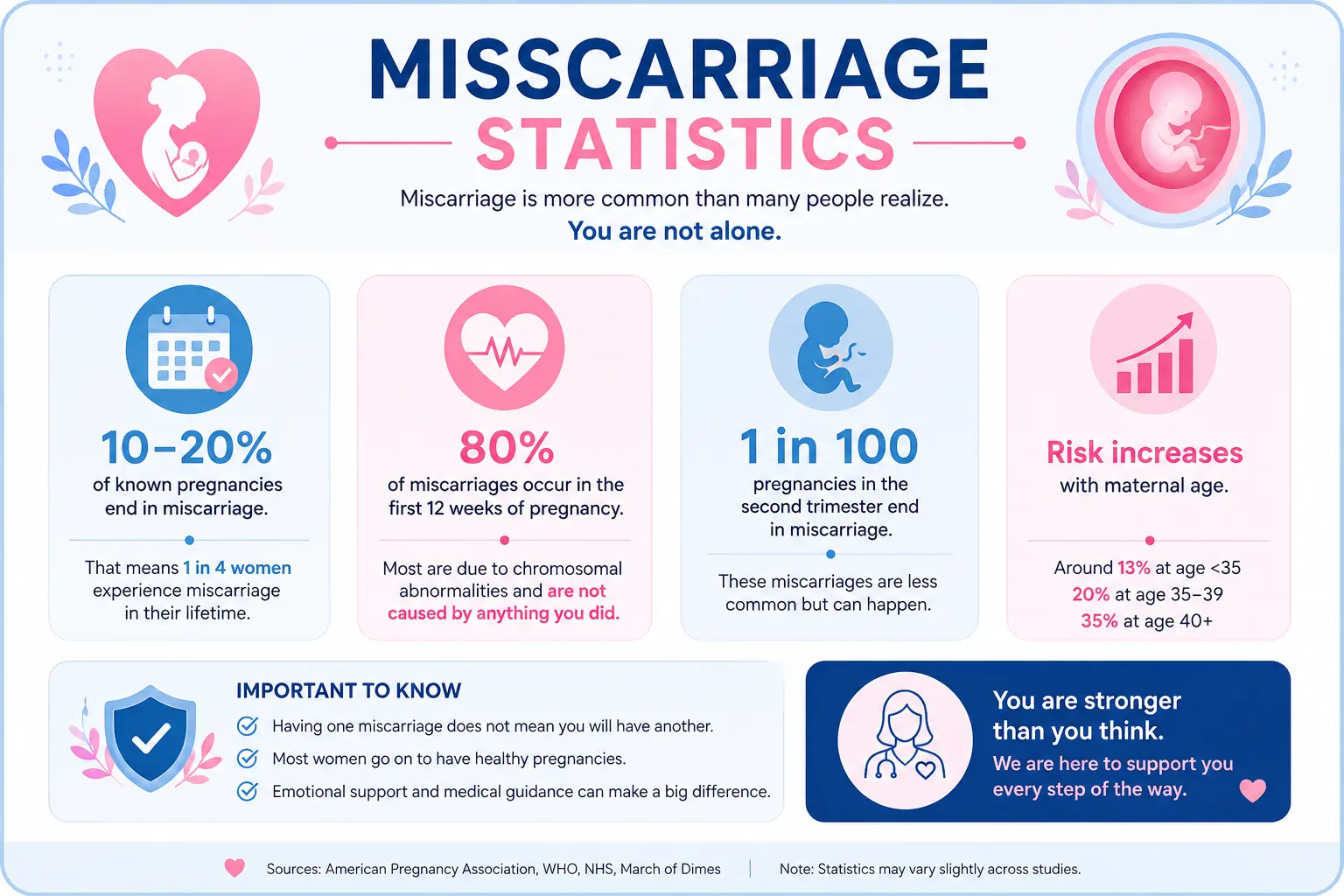
Miscarriage risk is highest in the first four weeks of pregnancy (10–25%) and decreases significantly as pregnancy progresses. By week 13, risk drops below 3%. Maternal age is also a major factor, risk rises from approximately 10% in women under 30 to over 50% in women aged 45 and older. Most miscarriages are caused by chromosomal abnormalities in the embryo and are not preventable. With the right support and investigation, most people who experience miscarriage go on to have a healthy pregnancy.

Understanding Miscarriage Risk — What the Statistics Mean?
A miscarriage is the loss of a pregnancy before 20 weeks of gestation. It is the most common complication of early pregnancy, affecting approximately 10–20% of known pregnancies. The actual figure, including very early losses before a pregnancy is confirmed, may be higher.
The most important thing to understand about miscarriage statistics is that they reflect population-level probabilities, not personal destiny. A 15% risk does not mean you will miscarry; it means that for every 100 pregnancies at that stage, 15 will end in loss. Most will not.
Miscarriage Rates by Week
Every pregnancy carries some level of risk, but the likelihood of miscarriage decreases as the pregnancy progresses. Most miscarriages occur within the first trimester, so understanding these week-by-week risks can provide clarity.
| Week of Pregnancy | Miscarriage Risk (%) |
| Week 1-4 | 10-20 |
| Week 5-8 | 5-10 |
| Week 9-12 | 3-5 |
| Week 13-16 | 1-3 |
| Week 17-20 | <1 |
Miscarriage Risk by Age
| Maternal Age | Approximate Miscarriage Risk |
|---|---|
| Under 25 | 8–10% |
| 25–29 | 10–12% |
| 30–34 | 12–15% |
| 35–39 | 20–35% |
| 40–44 | 40–50% |
| 45 and older | 50–60%+ |
Knowing how miscarriage risk changes week by week can provide reassurance, but every pregnancy is unique. If you have questions about your pregnancy progress, call 8790337035 to speak with our team
Common Risk Factors and Signs of Miscarriage
Being aware of key risk factors and signs can help you seek medical assistance promptly. Some of the most common risk factors include the following:
- Advanced Maternal Age: Women aged 35 and older have a higher risk of miscarriage.
- Lifestyle Choices: Smoking, alcohol consumption, and substance abuse significantly increase miscarriage risks.
- Medical Conditions: Conditions like diabetes, thyroid issues, and autoimmune diseases can contribute to pregnancy loss.
- Previous Miscarriages: If you’ve experienced prior miscarriages, your likelihood of another increases, although it depends on individual circumstances.
Signs of Miscarriage to Watch For:
- Vaginal bleeding or spotting
- Severe abdominal cramps
- Loss of pregnancy symptoms such as nausea
- Passing tissue or clots
If you encounter any of these symptoms, seeking immediate medical attention is crucial.
Miscarriage Rates and Statistics in the Second Trimester
After the 12th week, pregnancies often progress smoothly, but second-trimester losses, while rare, require careful consideration. The miscarriage rates at this stage are approximately 1–2%, with contributing factors including uterine abnormalities, placental issues, and infections.
Proper medical care and routine prenatal checkups can significantly reduce these risks.
Why Do Miscarriages Happen? Common Causes
Chromosomal Abnormalities (Most Common)
Approximately 50–60% of early miscarriages are caused by random chromosomal errors in the embryo. These are not inherited from either parent and are not caused by anything the mother did. They occur during cell division and result in an embryo that cannot develop normally.
Hormonal Factors
Low progesterone levels, thyroid disorders, and insulin resistance associated with PCOS are all linked to increased miscarriage risk. Hormone testing before or after pregnancy loss can identify treatable causes.
Uterine Abnormalities
Uterine septum, fibroids (particularly submucosal), polyps, or intrauterine adhesions (Asherman’s syndrome) can interfere with implantation or foetal development.
Blood Clotting Disorders
Antiphospholipid syndrome (APS) an autoimmune condition causing blood to clot too easily is a treatable cause of recurrent pregnancy loss, managed with low-dose aspirin and low-molecular-weight heparin.
Lifestyle and Environmental Factors
Smoking, heavy alcohol consumption, and recreational drug use are associated with increased miscarriage risk. High caffeine intake (over 200mg/day) has also been linked to adverse outcomes in some studies.
Recurrent Miscarriage Causes and Coping Strategies
Experiencing multiple miscarriages can be devastating, but understanding the causes and finding support can help you move forward.
Causes of Recurrent Miscarriage
Recurrent miscarriage, defined as three or more consecutive pregnancy losses, often stems from factors like chromosomal abnormalities, hormonal imbalances, or uterine issues. Other causes can include blood clotting disorders (thrombophilia) or chronic infections.
A fertility specialist in Hyderabad, such as those at Mamata Fertility Hospital, can help diagnose and address the specific causes, offering tailored solutions to improve pregnancy outcomes.
Coping Strategies for Recurrent Miscarriage
- Counseling: Seek emotional support from a therapist specializing in fertility issues.
- Support Groups: Joining a community of individuals with shared experiences can ease feelings of isolation.
- Medical Consultation: Work closely with a fertility specialist to develop a plan for future pregnancies.
Pregnancy After Miscarriage Reasons for Hope
After one miscarriage, the chance of a successful pregnancy in the next attempt is approximately 80%. Even after two or three consecutive miscarriages, with investigation and appropriate treatment, the majority of couples achieve a healthy pregnancy.
Medically, ovulation typically returns within four to six weeks. Many specialists suggest waiting for one natural menstrual cycle before trying again, to allow the body to recover and to help date a new pregnancy accurately.
If you are ready to try again after a pregnancy loss and would like a personalised plan, our team at Mamata Fertility is here.
How Many Pregnancy Losses Require Clinical Evaluation?
Clinical evaluation for recurrent miscarriage is recommended after three or more consecutive pregnancy losses. However, earlier evaluation is advised if:
- You are 35 or older with two or more losses
- Fetal heartbeat was confirmed before the loss
- You have had difficulty conceiving alongside the losses
Recurrent miscarriage affects around 7.4% of women in India, and even after a full investigation, the cause remains unexplained in nearly 50% of cases. Despite this, women with unexplained recurrent loss still have up to a 75% chance of a successful future pregnancy with proper supportive care.
Our recurrent pregnancy loss clinic offers comprehensive testing to find the cause and a clear treatment plan.Had two or more miscarriages?
Ectopic Pregnancy and Its Impact on Miscarriage Risk
An ectopic pregnancy occurs when a fertilized egg implants outside the uterus, often in the fallopian tubes. Unfortunately, ectopic pregnancies cannot progress normally and pose significant health risks.
Symptoms of an ectopic pregnancy include severe abdominal pain, dizziness, and vaginal bleeding. Early diagnosis and treatment are critical to prevent complications. While ectopic pregnancies don’t directly impact future fertility, consulting with a specialist is recommended to assess potential risks in subsequent pregnancies.
When Should You Consider ART Treatment?
ART is not always the first step, but it becomes necessary in specific situations.
Consider ART when:
- You or your partner carry a chromosomal translocation → IVF with Preimplantation Genetic Testing (PGT)
- Losses are linked to age-related chromosomal errors (35+) → IVF with PGT-A
- Uterine abnormalities cannot be surgically corrected → IVF with gestational surrogate
- Antiphospholipid syndrome (APS) does not respond to aspirin + heparin treatment
- Sperm DNA fragmentation is identified → IVF with ICSI
- Unexplained recurrent loss in women over 38 → IVF with PGT-A
ART is not yet needed if:
- You are under 35 with fewer than three losses and no identified risk factors
- A correctable cause exists, thyroid disorder, PCOS, uterine septum, treat that first before escalating to ART
Reducing Risk and Preventing Miscarriage
While many miscarriages are beyond anyone’s control, adopting certain practices can reduce preventable risks.
-
Avoid Harmful Substances
Steer clear of tobacco, alcohol, and recreational drugs during pregnancy. These substances can significantly increase the risk of miscarriage and other complications.
-
Proper Prenatal Care
Regular checkups with your obstetrician ensure that your pregnancy is progressing as expected. Prenatal care can help identify potential issues early on and create a plan to address them.
-
Maintaining a Healthy Weight
Obesity and being underweight can both increase miscarriage risks. Eating a balanced diet and engaging in moderate exercise can help maintain a healthy weight.
-
Genetic Counseling
For couples with a history of genetic conditions or recurrent miscarriages, genetic counseling offers valuable insights. Specialists can evaluate the risk of inherited conditions and recommend testing if needed.
-
Managing Chronic Conditions
Conditions like diabetes, high blood pressure, and autoimmune diseases require careful monitoring and management during pregnancy. Follow your doctor’s recommendations to minimize risks to both you and your baby.
Finding Hope and Getting Help
Miscarriage, whether experienced once or recurrently, can leave individuals feeling emotionally drained. However, with the right medical support and lifestyle changes, many people go on to have healthy pregnancies.
For those seeking personalized care and expert guidance, consider consulting Mamata Fertility Hospital. With state-of-the-art facilities and compassionate care, they offer a comprehensive approach to fertility and pregnancy management.
If you’re looking to reduce your miscarriage risk or need support following a loss, reach out to a trusted healthcare provider and explore the available resources for a brighter path ahead.
FAQ
What is the most common cause of miscarriage?
How common is miscarriage?
At what point does miscarriage risk drop significantly?
Can a miscarriage happen without bleeding?
Is it normal to have a period after miscarriage?
What tests are done after recurrent miscarriage?
Can stress cause a miscarriage?
How long should I wait before trying to conceive again?
Does a miscarriage affect future fertility?
When should I see a specialist after miscarriage?

Dr Aarti Deenadayal Tolani
MBBS, MS ( OBGYN), FICOG
Clinical Director, Scientific In- Charge & Fertility Consultant with 20+ years Of Experience
Her Expertise:
CONSULT FERTILITY SPECIALIST

LATEST BLOGS

How to Read and Interpret a Semen Analysis Test Report?
Learn how to read and interpret a semen analysis report, including sperm count, motility, morphology, semen volume, vitality, Total Motile Count, and WHO 2021 reference values.

How to Choose an IVF Clinic: A Patient’s Checklist
Choosing an IVF clinic? Use this patient checklist to compare diagnosis, ART registration, success rates, costs, treatment teams, add-ons and support.

Understanding Sperm DNA Fragmentation Test and IVF Success
Understand sperm DNA fragmentation testing, DFI levels, causes of high sperm DNA damage, and how SDF can affect IVF, ICSI, embryo quality and miscarriage risk.

Oligospermia Treatment: Low Sperm Count & Pregnancy Options
Oligospermia means a low sperm count. Learn its causes, diagnosis, treatment options, IUI, IVF with ICSI, and chances of conception.
