

Best IUI Treatment in Hyderabad
Medically reviewed by Dr. Aarti Deenadayal Tolani, Fertility Specialist & IVF Expert, Mamata Fertility Hospital, Hyderabad
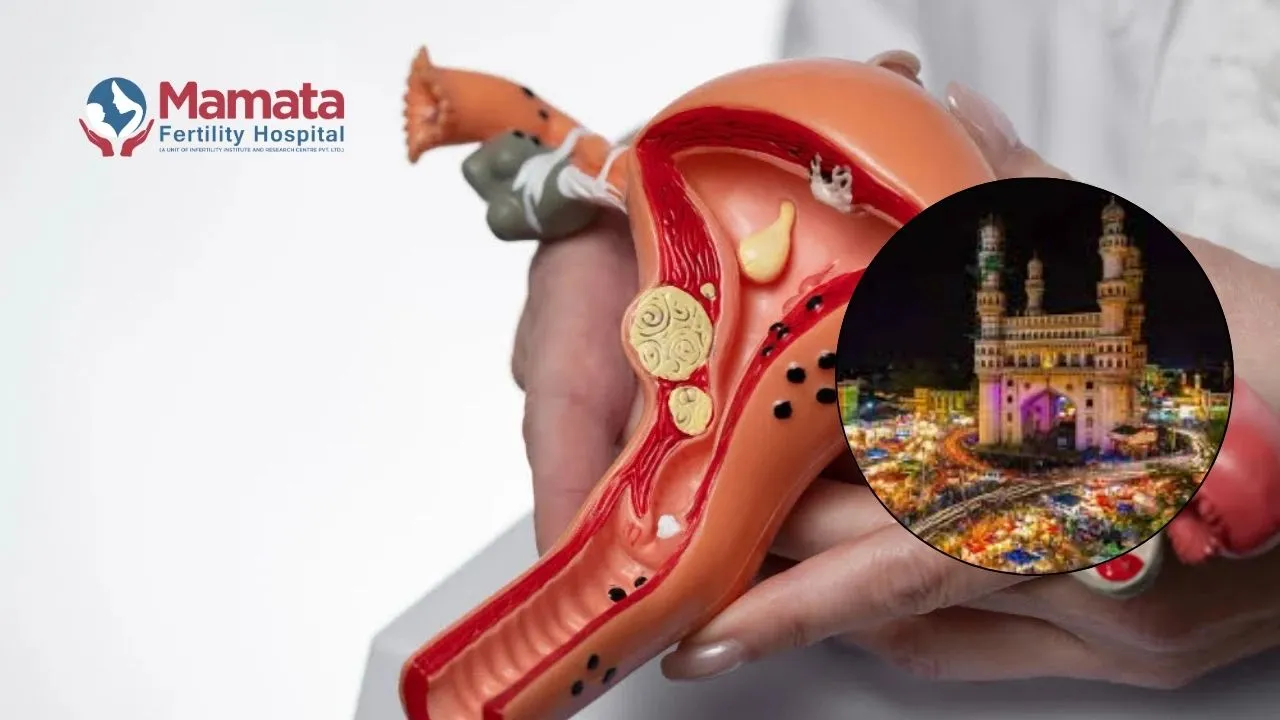
IUI (Intrauterine Insemination) is a fertility procedure in which washed, concentrated sperm is placed directly into the uterus around the time of ovulation. It is one of the first-line treatments for unexplained infertility, mild male factor infertility, and PCOS-related fertility challenges. At Mamata Fertility Hospital, Hyderabad, IUI is performed under ultrasound-monitored protocols with a structured process from pre-cycle assessment through to post-procedure support.
The decision to begin fertility treatment can feel overwhelming especially when you’re trying to understand which treatment is right for you, what it actually involves, and whether it can work for your specific situation.
This guide answers every question patients ask us before, during, and after IUI treatment — from how the procedure works and what it costs in Hyderabad, to realistic success rates and what to do after the procedure.
What Is IUI (Intrauterine Insemination)?
IUI, or Intrauterine Insemination, is a fertility procedure in which specially prepared sperm is placed directly into the uterus at the time of ovulation, reducing the distance sperm must travel to reach and fertilise an egg.
Unlike natural conception where sperm must travel from the vagina through the cervix and into the uterus, IUI bypasses the cervix entirely. This increases the concentration of motile sperm near the fallopian tubes, improving the probability of fertilisation.
IUI is a minimally invasive, outpatient procedure. It takes approximately 10–15 minutes and does not require anaesthesia. It is typically one of the first treatments considered before progressing to more intensive options like IVF.
Who Is IUI Recommended For?
IUI is not a one-size-fits-all treatment. Before recommending it, our fertility specialists at Mamata assess each couple’s complete clinical picture — including hormonal profile, sperm analysis, and fallopian tube status.
IUI is generally recommended for:
Unexplained Infertility
Couples who have been unable to conceive after 12 months of trying, with no identifiable cause found on standard testing. IUI with ovulation stimulation improves the likelihood of egg release and fertilisation occurring in the same cycle.
Mild Male Factor Infertility
Men with mildly reduced sperm count, motility, or morphology — but not severe sperm factor — may benefit significantly from IUI. Sperm washing concentrates the best-performing sperm and delivers them directly to the uterus.
PCOS and Ovulatory Disorders
Women with PCOS who do not ovulate regularly are strong candidates for IUI with ovulation induction, which combines medication to trigger egg release with timed insemination.
Cervical Factor Infertility
When cervical mucus is hostile to sperm or structurally abnormal, bypassing the cervix with IUI removes that barrier entirely.
Single Women and Same-Sex Female Couples
IUI using donor sperm is a well-established pathway to conception for those without a male partner.
IUI is not recommended when there is severe male factor infertility, bilateral tubal blockage, or repeated IUI failure. In these cases, IVF is the more appropriate treatment.
The IUI Process Step by Step at Mamata Fertility Hospital
Pre-Cycle Testing and Assessment
Before beginning an IUI cycle, you will undergo a set of baseline investigations including:
- Female hormone blood tests (FSH, LH, AMH, oestradiol)
- Pelvic ultrasound to assess the uterus and ovarian reserve
- Semen analysis for your partner (or donor sperm selection)
- Hysterosalpingography (HSG) or saline sonohysterography to confirm open fallopian tubes
These tests take approximately one menstrual cycle to complete. Results guide whether IUI is appropriate and which protocol is best for your cycle.
Ovarian Stimulation and Follicle Monitoring
Most IUI cycles include mild ovarian stimulation, oral medications (typically clomiphene or letrozole) or low-dose injectable gonadotropins to encourage the development of one or two mature follicles.
A follicle monitoring scan tracks follicle growth during this phase, usually beginning on day 8–10 of your cycle. Once a follicle reaches 18–20mm in size, an hCG trigger injection is given to induce ovulation within 36–40 hours.
Sperm Preparation (Sperm Washing)
On the day of the IUI procedure, a fresh semen sample is produced. The sample undergoes a laboratory process called sperm washing, which:
- Separates motile sperm from seminal fluid
- Removes non-motile sperm, debris, and prostaglandins (which can cause uterine cramping if left in)
- Concentrates the highest-quality sperm into a small volume suitable for insemination
The result is a prepared sperm sample with a significantly higher concentration of fast-moving sperm than the original ejaculate.
The Insemination Procedure
The prepared sperm is drawn into a fine, flexible catheter and gently passed through the cervix into the uterine cavity. The procedure takes approximately 10–15 minutes. Most patients describe a sensation similar to a cervical smear, mild pressure or brief discomfort, but not pain.
After the procedure, you will rest for 10–15 minutes before leaving the clinic. Normal activities can be resumed the same day.
Post-Procedure Care
You will typically be prescribed progesterone supplementation (pessaries or suppositories) to support the uterine lining during the two-week wait, the period between insemination and a pregnancy test.
A blood beta hCG test is performed 14 days after the procedure. This is more sensitive than a home pregnancy test and provides a definitive result.
How to Prepare for IUI Treatment?
Before your cycle begins:
- Complete all recommended pre-cycle blood tests and scans
- Avoid smoking, it reduces ovarian response to stimulation and sperm quality
- Reduce alcohol intake; avoid entirely during the stimulation phase
- Maintain a healthy weight, BMI significantly affects ovulation and IUI success
- Begin folic acid supplementation (400–800mcg daily) if not already doing so
- Discuss any current medications with your fertility team before starting
During stimulation:
- Attend all follicle monitoring appointments, these are time-sensitive
- Take medications exactly as prescribed, at the same time each day
- Report any severe bloating, pain, or nausea, these can be early signs of ovarian hyperstimulation
Day of the procedure:
- No special preparation is required, a full or empty bladder is not typically necessary for IUI (unlike embryo transfer)
- Bring your partner if providing a fresh sperm sample (abstinence of 2–5 days beforehand improves sample quality)
- Plan for a relaxed day; heavy exercise immediately post-procedure is not recommended
IUI Treatment Cost in Hyderabad
| Component | Estimated Cost (₹) |
|---|---|
| Pre-cycle investigations (hormones, ultrasound, semen analysis) | ₹5,000 – ₹8,000 |
| Ovulation induction medication (oral) | ₹1,500 – ₹4,000 |
| Ovulation induction medication (injectable) | ₹5,000 – ₹15,000 |
| Follicle monitoring scans (2–3 per cycle) | ₹2,000 – ₹4,500 |
| hCG trigger injection | ₹800 – ₹1,500 |
| Sperm preparation (IUI lab fee) | ₹3,000 – ₹5,000 |
| IUI insemination procedure | ₹4,000 – ₹8,000 |
| Progesterone supplementation | ₹1,500 – ₹3,000 |
| Pregnancy test (beta hCG blood test) | ₹500 – ₹800 |
| Total estimated cost per cycle | ₹18,000 – ₹42,000 |
Costs vary based on whether oral or injectable stimulation is used, the number of monitoring scans required, and any additional investigations. At Mamata Fertility, we provide a detailed cost estimate at your initial consultation based on your specific clinical needs.
IUI remains significantly more affordable than IVF, which typically costs ₹1.5–2.5 lakh per cycle in Hyderabad. For many couples, attempting 2–3 IUI cycles before IVF is both clinically and financially sensible.
IUI Success Rates — What Affects Your Chances?
Success rates for IUI are reported per cycle, not cumulatively. A single cycle success rate gives you one part of the picture; what matters more for most patients is cumulative success over 3–6 cycles.
| Age Group | Success Rate Per Cycle | Cumulative (3 Cycles) |
|---|---|---|
| Under 35 | 15–20% | 40–50% |
| 35–38 | 10–15% | 28–38% |
| 38–40 | 8–12% | 22–30% |
| Over 40 | 5–8% | 13–20% |
Note: Rates vary based on diagnosis, sperm parameters, and protocol used. Individual outcomes differ. These figures reflect published clinical literature, not Mamata-specific data.
Factors that improve IUI success:
- Younger patient age (under 35)
- Normal or mildly reduced sperm parameters (not severe male factor)
- Use of ovarian stimulation alongside IUI (stimulated IUI consistently outperforms natural-cycle IUI)
- Open fallopian tubes confirmed by HSG
- No significant uterine abnormality (fibroids, polyps, adhesions)
- Optimal endometrial thickness at the time of insemination (8–12mm)
IUI vs IVF — How Do You Choose?
| Feature | IUI | IVF |
|---|---|---|
| Invasiveness | Minimally invasive | Surgical egg retrieval required |
| Anaesthesia | None | Sedation / general anaesthesia |
| Success rate per cycle | 10–20% | 40–60% (age-dependent) |
| Cost per cycle | ₹18,000–₹42,000 | ₹1.5–2.5 lakh |
| Laboratory involvement | Sperm preparation only | Full embryology laboratory |
| Suitable for tubal blockage | No | Yes |
| Suitable for severe male factor | No | Yes (with ICSI) |
| Number of eggs fertilised | Depends on natural ovulation | Multiple eggs retrieved and fertilised |
| Emotional intensity | Lower | Higher |
| Typical starting point | Yes — first-line treatment | After IUI failure or specific diagnoses |
The rule of thumb: Start with IUI if you have unexplained infertility, mild male factor, or PCOS with open tubes and are under 38. Move to IVF if you have blocked tubes, severe male factor, advanced maternal age, or have completed 3–4 IUI cycles without success.
Not sure whether IUI or IVF is the right path? Our specialists assess your case and give you a direct recommendation — not a sales pitch.
How Many IUI Cycles Should You Try Before Moving to IVF?
Most fertility specialists, including our team at Mamata, recommend completing 3–4 IUI cycles before reassessing. Here is why:
- Single-cycle success rates are inherently low (15–20%)
- Cumulative success rates increase substantially with each additional cycle
- If cycles 1–3 are negative, the clinical response data from each cycle informs whether the protocol needs adjustment
- Age is the critical variable: patients over 38 should not wait through 4–6 cycles — a faster transition to IVF is clinically appropriate
If you have completed 3 IUI cycles with no pregnancy and no clear reason for failure, your IUI specialist should conduct a thorough cycle review before recommending whether to continue IUI or progress to IVF.
After IUI: The Two-Week Wait
The 14 days between insemination and your pregnancy test is one of the most emotionally demanding periods in any fertility treatment cycle. Understanding what to expect helps.
What you may experience:
- Mild cramping in the first 1–2 days (procedural, not a sign of success or failure)
- Light spotting around days 6–10 may indicate implantation
- Breast tenderness and fatigue, often caused by progesterone supplementation, not necessarily pregnancy
- A feeling of uncertainty, this is universal and expected
What you should do:
- Continue your prescribed progesterone as directed
- Avoid testing before day 14 — hCG from your trigger shot can cause a false positive if tested too early
- Avoid heavy exercise, alcohol, and anti-inflammatories during this period
- Reach out to our team if you experience heavy bleeding, severe abdominal pain, or significant bloating
For a detailed guide on interpreting your symptoms during the two-week wait, read: Successful IUI Symptoms and Signs: What to Really Expect.
Common Myths About IUI Treatment
Myth 1: IUI guarantees pregnancy
IUI improves the probability of fertilisation — it does not guarantee it. Per-cycle success rates are 10–20% depending on age and diagnosis.
Myth 2: IUI is painful
The procedure involves mild discomfort, comparable to a cervical smear. Most patients resume normal activities the same day.
Myth 3: Bed rest after IUI improves success
There is no clinical evidence that bed rest after IUI improves outcomes. Normal, light activity is appropriate. Avoid only strenuous exercise and heavy lifting on the day of the procedure.
Myth 4: IUI is only for male factor infertility
IUI is used across a range of diagnoses — unexplained infertility, PCOS, cervical factor, and single/same-sex patients using donor sperm.
Myth 5: If IUI fails once, it won’t work at all
A negative result from one IUI cycle is not predictive of future cycles. Protocol adjustments after failed cycles often improve outcomes.
Why Choose Mamata Fertility Hospital for IUI in Hyderabad?
Clinical Leadership
Dr. Aarti Deenadayal Tolani, MBBS, MS (OB-GYN), FICOG — Clinical Director and Fertility Consultant with over 15 years of specialist experience in reproductive medicine. Every IUI cycle at Mamata is overseen by a qualified fertility specialist, not delegated to general practitioners.
Monitored Protocols
We do not offer single-scan, unmonitored IUI cycles. Every stimulated IUI cycle includes follicle tracking from day 8 onward, trigger timing optimised to the individual response, and luteal phase support.
Integrated Laboratory
Our in-house andrology laboratory performs sperm preparation to ISO-standard protocols, ensuring consistent semen processing quality for every cycle.
Transparent Costs
No hidden fees. You receive a complete written cost estimate at your first consultation, before committing to treatment.
Continuity of Care
From your first scan to your beta hCG result, you are seen by the same clinical team. We are available for questions throughout your two-week wait — not just at scheduled appointments.
📞 040 45678899 | 📞 +91 87903 37035
Book a Consultation at Mamata Fertility

Dr Aarti Deenadayal Tolani
MBBS, MS ( OBGYN), FICOG
Clinical Director, Scientific In- Charge & Fertility Consultant with 20+ years Of Experience
Her Expertise:
CONSULT FERTILITY SPECIALIST

LATEST BLOGS

How to Read and Interpret a Semen Analysis Test Report?
Learn how to read and interpret a semen analysis report, including sperm count, motility, morphology, semen volume, vitality, Total Motile Count, and WHO 2021 reference values.

How to Choose an IVF Clinic: A Patient’s Checklist
Choosing an IVF clinic? Use this patient checklist to compare diagnosis, ART registration, success rates, costs, treatment teams, add-ons and support.

Understanding Sperm DNA Fragmentation Test and IVF Success
Understand sperm DNA fragmentation testing, DFI levels, causes of high sperm DNA damage, and how SDF can affect IVF, ICSI, embryo quality and miscarriage risk.

Oligospermia Treatment: Low Sperm Count & Pregnancy Options
Oligospermia means a low sperm count. Learn its causes, diagnosis, treatment options, IUI, IVF with ICSI, and chances of conception.
