
Endometriosis Vs PCOS: Which One is Worse? Let’s Understand Scientifically.
As a fertility specialist with over 15 years of clinical practice, one of the most common points of confusion for my patients is the difference between Polycystic Ovary Syndrome (PCOS) and Endometriosis.
Both conditions are leading causes of infertility and can significantly impact a woman’s quality of life, yet they are fundamentally different.
The question of “which is worse” is complex because the answer depends entirely on the primary concern: pain or metabolic health and fertility challenges.
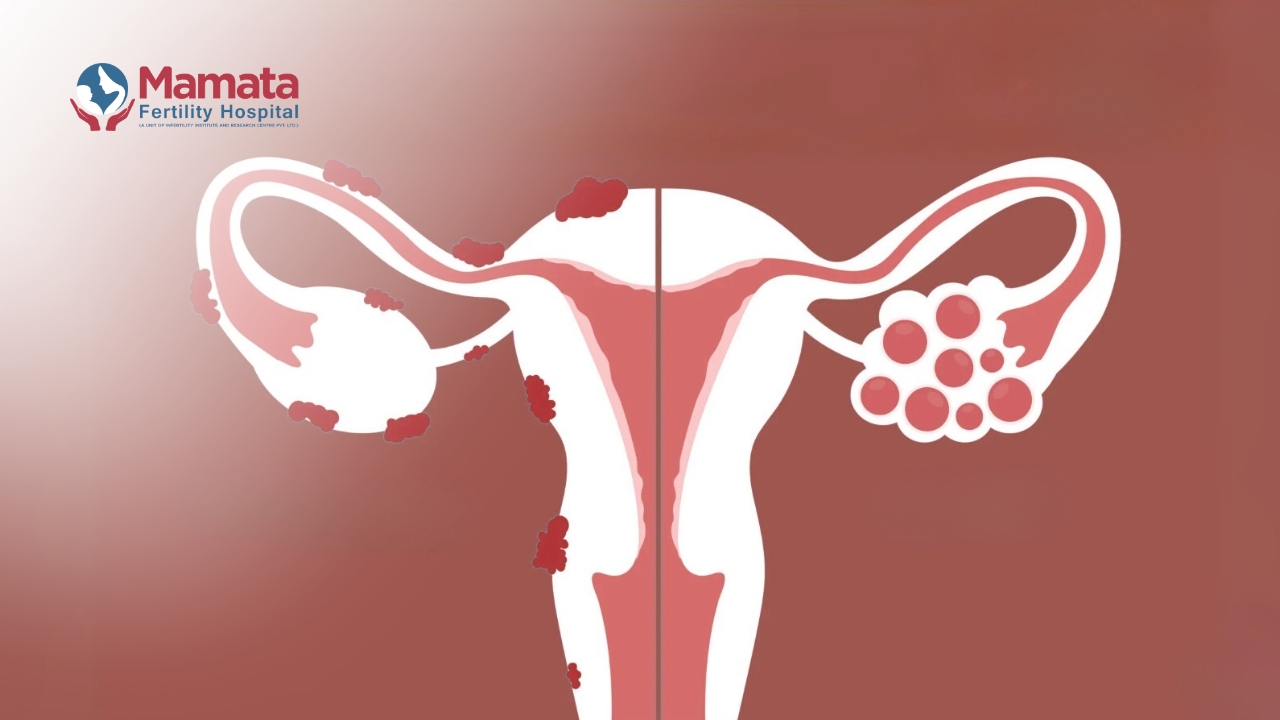
Endometriosis is primarily an inflammatory condition causing severe pain, while PCOS is a hormonal disorder that disrupts metabolism and ovulation.
At Mamata Fertility Hospital, we believe in empowering our patients with clear, scientific knowledge.
Understanding the distinct nature of each condition is the first step towards effective management and achieving your family-planning goals.
Table of Contents
- A Quick Comparison: Endometriosis vs. PCOS
- What is the Fundamental Difference Between PCOS and Endometriosis?
- Can You Have Both PCOS and Endometriosis?
- Is PCOS or Endometriosis Worse for Fertility?
- How Do We Differentiate PCOS from Endometriosis in a Diagnosis?
- Endometriosis vs. PCOS vs. Fibroids: A Comparative Overview
- When Should You Consult a Specialist?
A Quick Comparison: Endometriosis vs. PCOS
|
Feature |
Endometriosis |
PCOS (Polycystic Ovary Syndrome) |
|---|---|---|
|
Primary Nature |
Inflammatory and structural disease. |
Hormonal and metabolic disorder. |
|
Core Problem |
Tissue similar to the uterine lining grows outside the uterus. |
A hormonal imbalance interferes with ovulation, causing cysts to form on the ovaries. |
|
Key Symptoms |
Severe, debilitating period pain, chronic pelvic pain, painful intercourse, painful bowel movements. |
Irregular or absent periods, excess androgen (male hormone) levels leading to acne and hair growth, weight gain, and insulin resistance. |
|
Impact on Periods |
Extremely painful and often heavy periods. |
Irregular, infrequent, or completely absent periods. |
|
Pain Level |
Often severe and chronic, significantly impacting quality of life. |
Pain is not a primary symptom, though some experience mild pelvic discomfort. |
|
Fertility Impact |
Infertility due to inflammation, scar tissue (adhesions), distorted anatomy, and poor egg quality. |
Infertility primarily due to lack of ovulation (anovulation). |
|
Appearance on Ultrasound |
May show “chocolate cysts” (endometriomas) on ovaries or signs of deep disease. A normal scan does not rule it out. |
Classic “string of pearls” appearance with multiple small follicles (cysts) on the ovaries. |
|
Hormonal Profile |
Primarily an oestrogen-dependent condition. |
Characterised by high androgen levels, insulin resistance, and an altered LH/FSH ratio. |
What is the Fundamental Difference Between PCOS and Endometriosis?
Though both conditions affect the reproductive organs, they originate from entirely different biological processes.
Endometriosis is a disease of location and inflammation. Tissue that behaves like the endometrium (the uterine lining) grows in places it shouldn’t be—on the ovaries, fallopian tubes, and pelvic walls.
Every month, this misplaced tissue responds to hormonal signals, breaking down and bleeding.
With no way to exit the body, this internal bleeding causes intense inflammation, scarring (adhesions), and chronic pain.
Think of it as an internal inflammatory reaction that can physically distort your pelvic anatomy.
PCOS, on the other hand, is a metabolic and hormonal disorder.
The core issue is an imbalance in hormones, particularly an excess of androgens (like testosterone) and often insulin resistance. This hormonal chaos prevents the ovaries from releasing an egg each month.
Instead, the follicles, which contain the eggs, fail to mature and remain as small cysts on the ovaries. The problem is not misplaced tissue; it’s a systemic hormonal disruption that stops the fundamental process of ovulation.
In my practice at Mamata fertility Hospital, Hyderabad, I often use this analogy:
Endometriosis is like a fire in the pelvis, causing structural damage and pain. PCOS is like a problem with the body’s internal communication system, disrupting signals for ovulation and metabolism.
Can You Have Both PCOS & Endometriosis?
Yes, and this is a crucial point that is often overlooked. It is estimated that around 7-10% of women with one condition may also have the other.
When a patient comes to our clinic presenting with both irregular periods (a hallmark of PCOS) and severe pelvic pain (a sign of endometriosis), it raises my suspicion for a dual diagnosis.
Diagnosing both can be challenging because the symptoms can overlap or mask each other.
For instance, hormonal treatments for endometriosis might regulate periods, masking the irregularity typical of PCOS.
This is why a comprehensive evaluation, including detailed symptom history, hormonal blood tests, and advanced ultrasound imaging, is vital.
Managing both conditions simultaneously requires a carefully balanced treatment plan that addresses both the hormonal and inflammatory aspects.
Is PCOS or Endometriosis Worse for Fertility?
This is a question I address nearly every day.
From a purely scientific and clinical standpoint, severe endometriosis generally presents a more complex challenge for fertility than PCOS.
With PCOS, the primary barrier to fertility is the lack of ovulation.
The good news is that this is often a very treatable problem.
We have excellent medications that can induce ovulation, and for many women with PCOS, this is enough to help them conceive.
Their pelvic anatomy is usually normal, and egg quality is often good, especially in younger patients.
With Endometriosis, fertility is attacked on multiple fronts:
- Anatomical Distortion: Adhesions can block the fallopian tubes, preventing the egg and sperm from meeting.
- Inflammation: The chronic inflammatory environment in the pelvis is toxic to eggs, sperm, and embryos.
- Reduced Ovarian Reserve: Endometriomas can damage healthy ovarian tissue, reducing a woman’s egg count.
- Implantation Issues: The inflammation may affect the uterine lining, making it harder for an embryo to implant.
Therefore, while we have effective treatments for both, overcoming the multi-faceted assault of severe endometriosis often requires more invasive and advanced interventions, such as laparoscopic surgery followed by IVF.
How Do We Differentiate PCOS from Endometriosis in a Diagnosis?
A precise diagnosis is the foundation of any successful treatment. At Mamata Fertility Hospital, we use a systematic process to distinguish between these two conditions.
- The Clinical Conversation: This is the most important step. I listen for the defining symptoms. Is the main complaint debilitating pain that disrupts life? That points towards endometriosis. Is it irregular periods, acne, and difficulty managing weight? That suggests PCOS.
- Hormonal Blood Work: A simple blood test can reveal the hormonal signature of PCOS. We look for elevated levels of androgens, an altered ratio of Luteinizing Hormone (LH) to Follicle-Stimulating Hormone (FSH), and markers of insulin resistance. Endometriosis does not have such a clear hormonal fingerprint.
- Transvaginal Ultrasound: This is a key diagnostic tool. In PCOS, we see the classic “string of pearls”—multiple small follicles lining the ovaries. In endometriosis, the scan might be normal, or it could reveal an endometrioma (“chocolate cyst”), which has a very specific “ground-glass” appearance on ultrasound. An expert sonographer can also look for signs of deep endometriosis, like tethered ovaries.
- Laparoscopy: While not required for a PCOS diagnosis, laparoscopy is the gold standard for definitively diagnosing endometriosis. It allows us to directly visualise and confirm the presence of endometriotic lesions.
Endometriosis vs. PCOS vs. Fibroids: Understanding Differences
To add another layer of clarity, it’s helpful to compare these conditions with uterine fibroids, another common issue affecting female fertility.
|
Condition |
Primary Issue |
Key Symptom |
Primary Treatment Approach |
|---|---|---|---|
|
Endometriosis |
Inflammatory tissue outside the uterus. |
Severe Pain |
Surgical excision and hormonal suppression. |
|
PCOS |
Hormonal imbalance preventing ovulation. |
Irregular Periods |
Lifestyle changes and ovulation induction. |
|
Fibroids |
Benign muscular tumours inside the uterine wall. |
Heavy Bleeding & Pressure |
Observation, medication, or surgical removal (myomectomy). |
When Should You Consult a Specialist?
It’s time to seek expert help if you are experiencing any of the following:
- Period pain that is not relieved by standard painkillers and forces you to miss work or school.
- Irregular menstrual cycles (fewer than 8 periods a year or more than 35 days between cycles).
- Pain during or after intercourse.
- You have been trying to conceive for over 12 months (or 6 months if you are over 35) without success.
Living with chronic pain or fertility struggles is not something you have to accept as normal.
A definitive diagnosis is the first step toward regaining control over your health.
At Mamata Fertility Hospital in Secunderabad, we specialise in unravelling complex cases and creating personalised, evidence-based treatment plans that address your unique needs and goals.
Deciding which condition is “worse” is less important than getting an accurate diagnosis for the one you have.
Both endometriosis and PCOS are manageable, and with the right expert guidance, a healthy and fulfilling life, including the possibility of parenthood, is absolutely achievable.

Dr Aarti Deenadayal Tolani
MBBS, MS ( OBGYN), FICOG
Clinical Director, Scientific In- Charge & Fertility Consultant with 20+ years Of Experience
Her Expertise:
CONSULT FERTILITY SPECIALIST

Latest Blogs

How to Read and Interpret a Semen Analysis Test Report?
Learn how to read and interpret a semen analysis report, including sperm count, motility, morphology, semen volume, vitality, Total Motile Count, and WHO 2021 reference values.

How to Choose an IVF Clinic: A Patient’s Checklist
Choosing an IVF clinic? Use this patient checklist to compare diagnosis, ART registration, success rates, costs, treatment teams, add-ons and support.

Understanding Sperm DNA Fragmentation Test and IVF Success
Understand sperm DNA fragmentation testing, DFI levels, causes of high sperm DNA damage, and how SDF can affect IVF, ICSI, embryo quality and miscarriage risk.

Oligospermia Treatment: Low Sperm Count & Pregnancy Options
Oligospermia means a low sperm count. Learn its causes, diagnosis, treatment options, IUI, IVF with ICSI, and chances of conception.
