

Can Uterine Fibroids Stop Menstruation? Understanding the Truth
Menstrual health is a vital indicator of overall well-being for women. When your cycle changes—whether it becomes heavier, lighter, painful, or stops altogether—it is natural to feel concerned. One of the most common gynaecological conditions affecting women of reproductive age is uterine fibroids. These benign growths are notorious for causing a range of disruptive symptoms, leading many women to wonder about the extent of their impact. A frequent question we hear is: can uterine fibroid stop menstruation?
There is often confusion surrounding fibroids symptoms, with misinformation leading some to believe that these growths can cause periods to cease. This article aims to clear up that confusion. We will explore the relationship between uterine fibroids and periods, explain how these growths actually affect the menstrual cycle, and discuss what it means if your periods have stopped.
At Mamata Fertility Hospital, Hyderabad, we believe that informed patients are empowered patients. By understanding your body and the nature of fibroids, you can seek the right care at the right time.
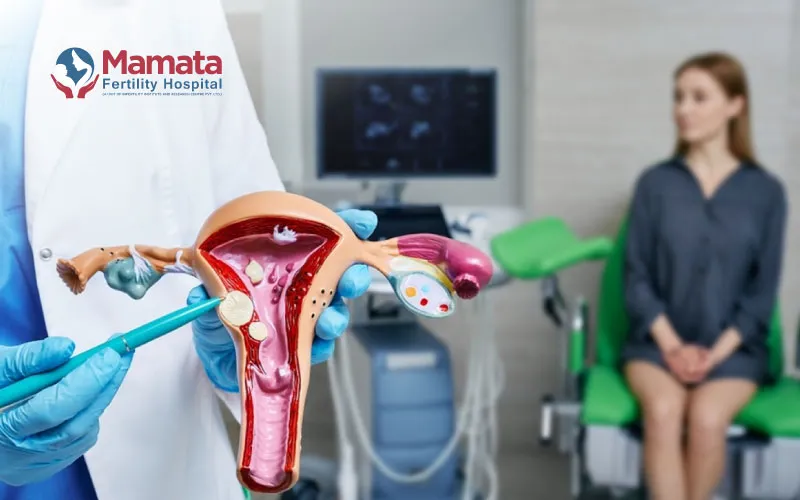
What Are Uterine Fibroids?
Before understanding their impact on menstruation, it is helpful to know exactly what fibroids are. Uterine fibroids, medically known as leiomyomas, are non-cancerous tumours that grow in or on the muscular wall of the uterus. They are incredibly common, with studies suggesting that up to 70-80% of women may develop them by age 50.
Fibroids are composed of muscle and fibrous tissue and can vary significantly in size. Some are as small as a pea and cause no issues, while others can grow to the size of a melon, distorting the shape of the uterus. Their growth is largely influenced by hormones, specifically oestrogen and progesterone.
Can Uterine Fibroid Stop Menstruation?
The short and direct answer is no, uterine fibroids typically do not stop menstruation. In fact, the opposite is usually true. The hallmark symptom of fibroids is heavy bleeding due to fibroids, not the absence of bleeding.
If your periods have stopped completely (a condition known as amenorrhea), it is highly unlikely to be caused directly by fibroids. While fibroids can disrupt the uterine environment, they do not interfere with the ovulation process or the hormonal signals from the brain that trigger menstruation in a way that causes periods to cease.
If you have been diagnosed with fibroids and your periods have stopped, it is crucial to look for other causes. Common reasons for stopped menstruation include:
- Pregnancy
- Polycystic Ovary Syndrome (PCOS)
- Perimenopause or Menopause
- Extreme stress or significant weight changes
- Thyroid disorders
How Fibroids Affect the Menstrual Cycle
While they do not stop periods, the relationship between fibroids and menstrual cycle changes is significant. Fibroids are notorious for making periods more difficult, painful, and difficult to manage.
1. Heavy and Prolonged Bleeding (Menorrhagia)
This is the most common symptom. Fibroids increase the surface area of the uterine lining and can prevent the uterus from contracting properly to stop menstrual blood flow. This leads to periods that are much heavier than normal—often requiring frequent changes of sanitary protection—and last longer than the typical 5–7 days.
2. Spotting Between Periods
Some women experience bleeding or spotting in between their regular cycles. This can be confusing and frustrating, making it difficult to predict when bleeding will occur.
3. Painful Periods (Dysmenorrhea)
Fibroids can cause the uterus to cramp more intensely as it tries to expel menstrual blood and clots. This can lead to severe pelvic pain and lower back ache during your period.
4. Passing Clots
Due to the volume of blood being lost, the body’s anticoagulants (which usually keep menstrual blood fluid) cannot keep up, leading to the passage of large, dark red clots.
Missing Period Because of Fibroids: Debunking the Myth
If you are searching for information on “missing period because of fibroids,” it is important to understand why this search might lead you down the wrong path.
There is a specific, though rare, scenario where fibroids might indirectly relate to missed periods, but it usually involves confusion with other conditions. For example, a woman might have both PCOS (which causes missed periods) and fibroids (which are common). In this case, the missed period is due to the PCOS, not the fibroid.
It is also possible to mistake the irregular bleeding of perimenopause for fibroid symptoms. As women approach menopause, periods become irregular and eventually stop. Since fibroids are most common in women in their 30s and 40s—the same age range as perimenopause—symptoms can overlap. However, the fibroid itself is not the “off switch” for menstruation.
Struggling with heavy bleeding or missed periods?
Don’t rely on assumptions. Get clarity from experienced fertility specialists.
Types of Fibroids Most Likely to Cause Menstrual Changes
Not all fibroids behave the same way. Their location within the uterus plays a major role in how they impact your period.
- Submucosal Fibroids: These grow just underneath the uterine lining and bulge into the uterine cavity. Even small submucosal fibroids can cause severe heavy bleeding due to fibroids because they directly disrupt the lining where menstruation occurs.
- Intramural Fibroids: These grow within the muscular wall of the uterus. If they become large enough, they can distort the uterine cavity and increase blood flow to the area, leading to heavier periods.
- Subserosal Fibroids: These grow on the outside of the uterus. While they can cause pressure symptoms on the bladder or bowel, they are generally less likely to cause changes to menstrual bleeding compared to the other types.
Warning Signs: When to See a Doctor
While fibroids are benign, the symptoms they cause can have serious health consequences. You should seek medical advice if:
- You have signs of anaemia: Chronic heavy bleeding can deplete your iron stores, leading to fatigue, weakness, shortness of breath, and pale skin.
- Your periods stop: As discussed, this is likely not the fibroids. You need an evaluation to rule out pregnancy or hormonal disorders.
- Bleeding is excessive: If you are soaking through a pad or tampon every hour, or if bleeding lasts longer than a week.
- Pain is unmanageable: If period pain prevents you from doing normal daily activities.
- You experience bleeding after menopause: This is never a symptom of fibroids and requires immediate investigation to rule out uterine cancer.
Diagnosis and Treatment Options
Diagnosing fibroids is usually straightforward. It typically begins with a pelvic examination followed by an ultrasound scan. In some cases, an MRI or a hysteroscopy (using a small camera to look inside the uterus) may be recommended for a detailed view.
Treatment depends on the severity of symptoms and your fertility goals:
- Medications: Hormonal contraceptives or tranexamic acid can help manage heavy bleeding.
- Minimally Invasive Procedures: Uterine Artery Embolisation (UAE) can shrink fibroids by cutting off their blood supply.
- Surgery: A myomectomy (removal of fibroids) is often chosen by women who wish to preserve their uterus, while a hysterectomy provides a permanent cure for those who have completed their families.
Why Consulting Experts at Mamata Fertility Hospital, Hyderabad Can Help
Navigating gynaecological health can be overwhelming, especially when symptoms like heavy bleeding or irregular cycles interfere with your life. At Mamata Fertility Hospital, Hyderabad, we specialise in diagnosing and treating complex uterine conditions.
Our team of expert gynaecologists and fertility specialists understands the nuance of uterine fibroids and periods. We don’t just treat the condition; we treat the patient. Whether you are struggling with heavy bleeding or are concerned about why your periods have stopped, we offer comprehensive diagnostic tools to pinpoint the exact cause.
We provide a full range of treatments, from medical management to advanced, minimally invasive surgeries, ensuring that your reproductive health is protected. If your periods have stopped, our fertility experts can quickly determine if causes like PCOS or hormonal imbalances are at play, ensuring you don’t waste time treating the wrong issue.
FAQs
1: Can uterine fibroids completely stop periods?
No. Uterine fibroids typically cause heavy or prolonged periods, not complete stoppage. If menstruation stops, other causes must be evaluated.
2: I have fibroids but missed my period. Should I worry?
Yes. Missed periods are usually linked to pregnancy, PCOS, thyroid imbalance, or menopause—not fibroids. Medical evaluation is essential.
3: Which fibroids affect periods the most?
Submucosal fibroids affect periods the most as they grow inside the uterine cavity and disrupt the lining.
4: Can fibroids cause hormonal imbalance?
Fibroids themselves do not cause hormonal imbalance but are influenced by hormones like oestrogen.
5: When should I see a fertility specialist for fibroids?
If periods are excessively heavy, painful, stopped, or affecting fertility, consult a specialist immediately.
Conclusion
To summarise: can uterine fibroid stop menstruation? No. Fibroids are agents of excess—causing more bleeding, more pain, and longer periods—rather than absence. If your periods have ceased, it is a signal from your body to investigate other potential causes, even if you have a known diagnosis of fibroids.
Do not let menstrual irregularities rule your life. Whether you are facing heavy bleeding or unexpected missed periods, clarity is the first step toward recovery. We encourage you to reach out to the Fertilty Clinic Hyderabad for a thorough evaluation. Let us help you restore your cycle and your peace of mind.

Dr Aarti Deenadayal Tolani
MBBS, MS ( OBGYN), FICOG
Clinical Director, Scientific In- Charge & Fertility Consultant with 22+ years Of Experience
TSMC Reg. No. 51895
Her Expertise:
CONSULT FERTILITY SPECIALIST

Latest Blogs

Best IUI Treatment in Hyderabad
Home > Blogs > Best IUI...

How to Read and Interpret a Semen Analysis Test Report?
Learn how to read and interpret a semen analysis report, including sperm count, motility, morphology, semen volume, vitality, Total Motile Count, and WHO 2021 reference values.

How to Choose an IVF Clinic: A Patient’s Checklist
Choosing an IVF clinic? Use this patient checklist to compare diagnosis, ART registration, success rates, costs, treatment teams, add-ons and support.

Understanding Sperm DNA Fragmentation Test and IVF Success
Understand sperm DNA fragmentation testing, DFI levels, causes of high sperm DNA damage, and how SDF can affect IVF, ICSI, embryo quality and miscarriage risk.
