

Can Pregnancy Be Mistaken for a Fibroid on Ultrasound?
An ultrasound scan can bring a wave of emotions, from excitement about a potential pregnancy to anxiety about a health concern. In some cases, the lines can blur, leading to a confusing and stressful question: could this be a pregnancy mistaken for a fibroid, or vice versa? This situation, while not common, can happen, especially in the very early stages of gestation. Understanding the technology, the biology, and the diagnostic process can provide much-needed clarity and reassurance.
This article will explain how and why this confusion occurs, detail the key differences between a fibroid and an early pregnancy on an ultrasound, and outline how medical experts ensure an accurate diagnosis. The goal is to demystify the process and empower you with knowledge, reducing anxiety around your ultrasound results.
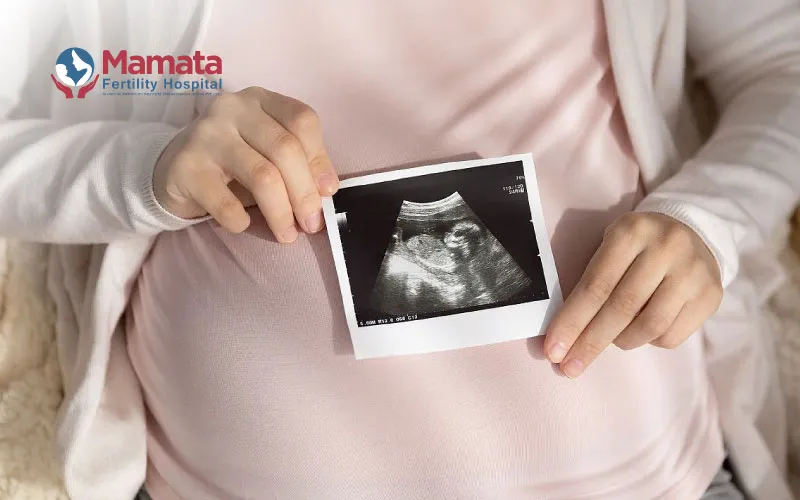
Understanding Fibroids and Pregnancy
To grasp how a mix-up can happen, it is helpful to first understand what fibroids and early pregnancies look like on an ultrasound scan. Both are structures within the uterus, but they have distinct characteristics.
What Fibroids Are and How They Appear
Uterine fibroids, also known as leiomyomas, are common, non-cancerous growths that develop from the muscle tissue of the uterus. They can vary greatly in size, number, and location. On an ultrasound, a fibroid typically appears as a well-defined, solid, round mass. Its appearance can be dark (hypoechoic) or similar in texture to the surrounding uterine muscle. Some fibroids may have calcifications, which show up as bright white spots.
How Early Pregnancy Appears on Ultrasound
An early pregnancy looks very different. The first sign is a gestational sac, which appears as a small, dark, fluid-filled circle surrounded by a bright white ring, known as a decidual reaction. This sac is usually found in the upper part of the uterine cavity. Inside the sac, a yolk sac and eventually an embryo with a heartbeat will become visible as the pregnancy progresses.
Can Pregnancy Be Mistaken for a Fibroid in Ultrasound?
Yes, in certain situations, a pregnancy can be mistaken for a fibroid, and this early pregnancy ultrasound fibroid confusion is a known, though infrequent, clinical challenge. The reverse is also true, where a fibroid might be initially misinterpreted as an unusual pregnancy.
Situations Where Confusion May Happen
The most common scenario for this mix-up occurs in very early pregnancy, often before 5-6 weeks of gestation. At this stage, the gestational sac can be very small or difficult to visualise clearly. Certain types of fibroids, particularly those that are degenerating or have internal fluid, can mimic the appearance of a gestational sac. An unusually located pregnancy, such as an interstitial or cornual pregnancy (located high up in the corner of the uterus), can also look very similar to a fibroid.
Technical and Biological Reasons
The primary reason for this confusion is the similar echogenicity (the way sound waves reflect) of some fibroids and early pregnancy structures. A fibroid that has undergone cystic degeneration contains fluid, making it appear dark on an ultrasound, much like a gestational sac. Furthermore, if a pregnancy is non-viable or a “blighted ovum” (where a gestational sac develops without an embryo), it may have an atypical appearance that can be confused with a fibroid.
Differences Between a Fibroid and Early Pregnancy on Ultrasound
Radiologists and sonographers are trained to look for specific signs to differentiate between a fibroid and a pregnancy. This is where the skill of the operator and the quality of the equipment play a crucial role.
Appearance
As mentioned, a classic gestational sac has a very specific look: a dark centre with a thick, bright (echogenic) rim. This double decidual sign is a key indicator of an early intrauterine pregnancy. Most fibroids are solid and more uniform in texture, lacking this distinct fluid-filled sac with a bright border.
Blood Flow
Doppler imaging is a special ultrasound technique that shows blood flow. A healthy, developing pregnancy has a characteristic pattern of high blood flow around the gestational sac. In contrast, the blood supply to a fibroid is typically located around its periphery. Analysing the blood flow pattern is a critical step in making a correct fibroid diagnosis during pregnancy or when differentiating the two.
Location and Growth Pattern
A gestational sac is almost always located within the endometrial cavity (the uterine lining). Fibroids can be located anywhere in the uterus—within the wall, on the outside, or bulging into the cavity. Additionally, a gestational sac grows rapidly and predictably, doubling in size every few days in early pregnancy. A fibroid, on the other hand, grows much more slowly, if at all.
Factors That Increase the Chances of Misinterpretation
Several factors can make a clear diagnosis more challenging, increasing the risk of a pregnancy being mistaken for a fibroid.
- Retroverted Uterus: When the uterus is tilted backwards, it can be harder to get a clear view of the uterine cavity, especially with a transabdominal ultrasound.
- Multiple Fibroids: The presence of many fibroids can distort the uterus and obscure the view of a small, early gestational sac, making it easy to miss.
- Technician Experience: The accuracy of an ultrasound is highly dependent on the skill of the person performing the scan. An experienced sonographer is more likely to identify the subtle signs that distinguish a pregnancy from a fibroid.
- Low-Quality Equipment: Older or lower-resolution ultrasound machines may not provide the detailed images needed to make a definitive diagnosis in complex cases. This is why specialised centres like Mamata Fertility Hospital Hyderabad invest in advanced imaging technology.
What You Should Do if You Have Fibroids and Suspect Pregnancy
If you have a known history of fibroids and think you might be pregnant, it is important to seek medical advice promptly. Do not rely solely on a home pregnancy test. Schedule an appointment with your doctor or a fertility specialist. They will recommend an early ultrasound and a beta-hCG test to confirm the pregnancy and determine its location. Following up as advised is crucial for a healthy pregnancy outcome.
FAQs
1: Can pregnancy really be mistaken for a fibroid on ultrasound?
Yes, in very early pregnancy, a gestational sac may resemble a fibroid, especially if imaging is done before 5–6 weeks.
2: How do doctors confirm whether it is a fibroid or pregnancy?
Doctors use repeat ultrasounds along with beta-hCG blood tests to confirm pregnancy and monitor growth patterns.
3: What ultrasound feature clearly indicates pregnancy?
A gestational sac with a decidual reaction and rising hCG levels confirms pregnancy.
4: Can fibroids hide an early pregnancy on ultrasound?
Yes, multiple or large fibroids can distort the uterus and obscure a very early pregnancy.
5: Should I worry if my ultrasound report is unclear?
No. Unclear findings are usually resolved with follow-up scans and expert evaluation.
Conclusion
The thought that a pregnancy could be mistaken for a fibroid on an ultrasound is undoubtedly stressful. However, this diagnostic challenge is rare and typically limited to the very earliest stages of gestation. Through a combination of high-quality imaging, blood tests, and expert interpretation, a correct diagnosis is almost always achieved. Repeat scanning and correlating findings with hCG levels remain the gold standard for resolving any uncertainty.
If you have been given a confusing or unclear diagnosis, remember that seeking a second opinion from a specialist is always a good option. The expertise available at dedicated centres like Mamata Fertility Hospital Hyderabad can provide the accurate diagnosis and reassurance you need to move forward with confidence.

Dr Aarti Deenadayal Tolani
MBBS, MS ( OBGYN), FICOG
Clinical Director, Scientific In- Charge & Fertility Consultant with 22+ years Of Experience
TSMC Reg. No. 51895
Her Expertise:
CONSULT FERTILITY SPECIALIST

LATEST BLOGS

Best IUI Treatment in Hyderabad
Home > Blogs > Best IUI...

How to Read and Interpret a Semen Analysis Test Report?
Learn how to read and interpret a semen analysis report, including sperm count, motility, morphology, semen volume, vitality, Total Motile Count, and WHO 2021 reference values.

How to Choose an IVF Clinic: A Patient’s Checklist
Choosing an IVF clinic? Use this patient checklist to compare diagnosis, ART registration, success rates, costs, treatment teams, add-ons and support.

Understanding Sperm DNA Fragmentation Test and IVF Success
Understand sperm DNA fragmentation testing, DFI levels, causes of high sperm DNA damage, and how SDF can affect IVF, ICSI, embryo quality and miscarriage risk.
